
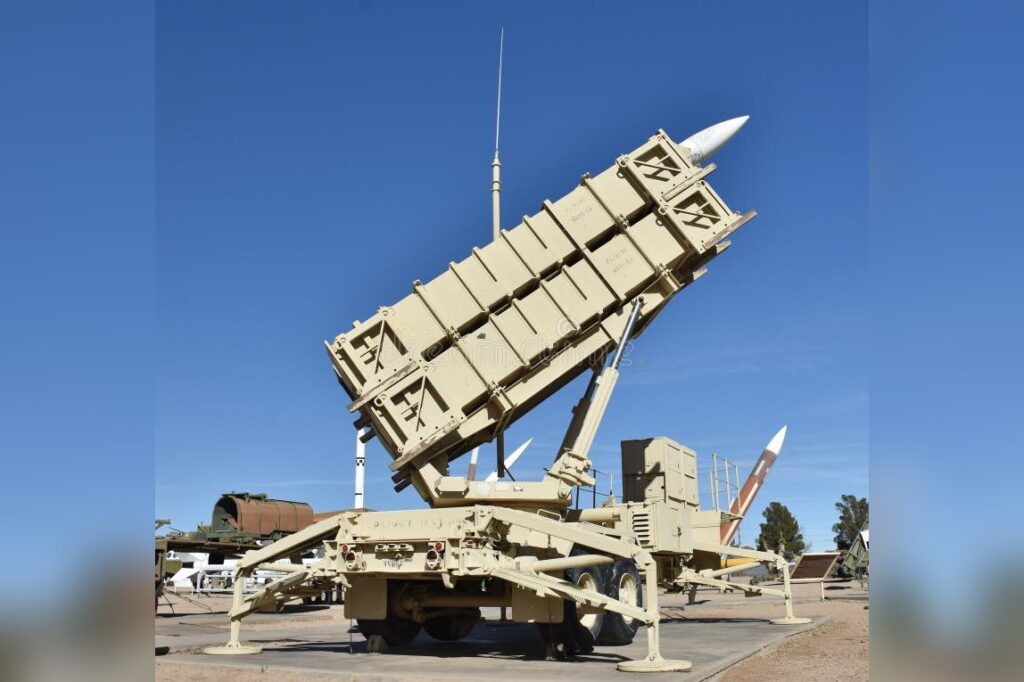
WASHINGTON, July 8 — The MIM-104 Patriot missile system, developed by Raytheon in the 1970s and operational with the U.S. Army since 1981, remains a central pillar of American and allied air defense more than four decades after its introduction. The system first saw combat during the 1991 Gulf War, where it was deployed to intercept Iraqi Scud missiles, though the effectiveness of those early engagements was debated. According to the historical record, the Patriot underwent significant upgrades in the decades that followed.
The PAC-2 variant entered service in the 1990s, followed by the PAC-3 in 2001, which introduced hit-to-kill technology — a capability that allows the interceptor to destroy incoming missiles by direct collision rather than a proximity-fused warhead. This technological evolution has kept the system relevant against increasingly sophisticated threats.
The system has been exported to over a dozen countries. Among the nations operating the Patriot are Germany, Japan, Israel, Saudi Arabia, and the United Arab Emirates. Each of these deployments reflects a strategic calculation by the United States and its partners to maintain layered air defense coverage across multiple theaters.
Ukraine deployment and combat performance
In 2023, the United States and allied nations sent Patriot systems to Ukraine to counter Russian airstrikes. The first Ukrainian Patriot battery became operational in April 2023. This marked a significant shift in the conflict, providing Kyiv with a capability previously reserved for NATO and major allied militaries.
As of 2024, Ukraine has used Patriots to intercept Russian Kinzhal hypersonic missiles, according to the record. The Kinzhal, or “Dagger,” had been described by Russian military officials as virtually unstoppable due to its high speed and maneuverability.
The Patriot’s demonstrated success against this weapon system has reshaped the strategic assessment of hypersonic threats. The financial cost of the Patriot system is substantial. A single Patriot battery costs approximately $1 billion.
Each PAC-3 interceptor missile costs around $4 million. These figures underscore the resource commitment required to field and sustain such a system, particularly in a high-intensity conflict where missile stocks can be depleted rapidly.
Strategic implications
The Patriot’s performance in Ukraine carries implications beyond the current conflict. For the United States and its allies, the system’s ability to intercept advanced Russian munitions validates decades of investment in hit-to-kill technology and network-centric air defense. For Russia, the public failure of the Kinzhal to penetrate Patriot defenses represents a strategic setback, both operationally and in terms of the weapon’s reputation.
Looking ahead, the continued deployment of Patriot systems in Ukraine will likely influence future defense planning in Europe, the Middle East, and the Indo-Pacific. Nations that already operate the system may accelerate upgrades to the PAC-3 standard, while countries considering procurement will weigh the system’s combat record against its high cost.
The question of how many batteries Ukraine can field, and how quickly Western allies can replenish expended missiles, remains a key variable in the broader air defense equation.




