
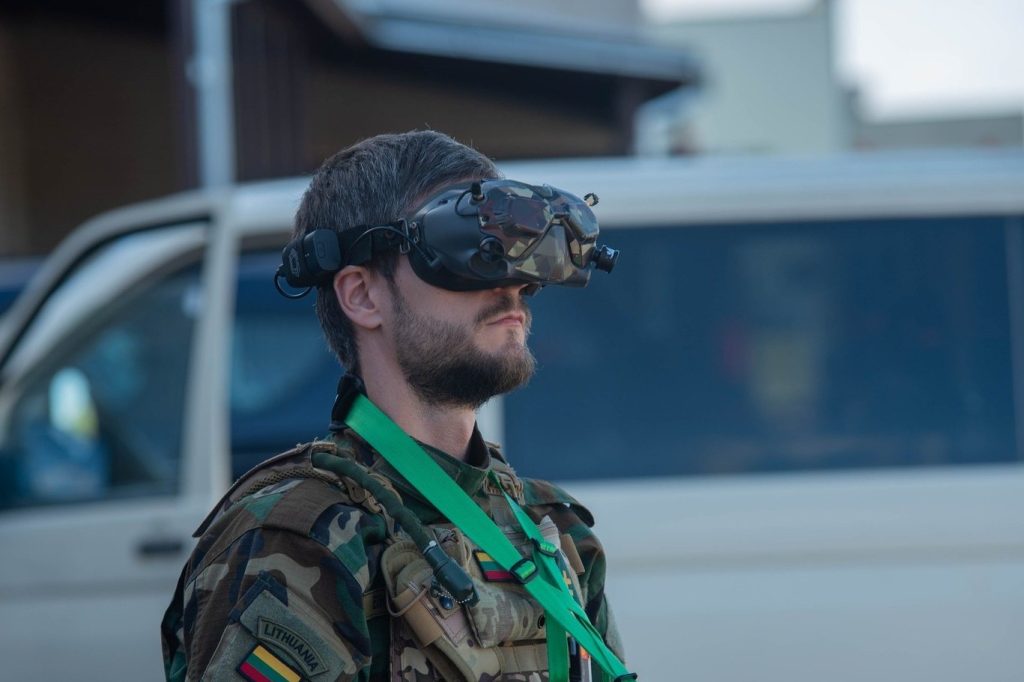
Training Under Fire
The core of the program takes place in a mock-up of a building held by Russian forces. Trainees must navigate a drone through the structure room by room, but the exercise is far from a sterile simulation. Instructors fire live ammunition at the walls around the pilot, creating an environment where the threat is immediate and the consequences of distraction are severe. One pilot, a lawyer in civilian life, described the intense pressure of learning to hunt while bullets crack past. “You have to be able to fly the drone while people are shooting at you,” the pilot told the outlet. “If you can’t, you won’t survive.”
The Killhouse forces pilots to lock their eyes on the drone’s video feed and ignore the chaos unfolding just feet away. If they flinch, they fail; if they fail, they may not get a second chance on the actual battlefield. Instructors push students through the building systematically, with the goal not simply to fly but to hunt effectively while under direct threat. The course is designed to replicate the conditions pilots will face in urban combat zones where Russian troops hold fortified positions, ensuring that the transition from training to deployment is as seamless as possible.
From Observation to Assault
What is changing in Ukraine’s approach is the speed of adaptation. Forces are compressing training cycles, pushing pilots from basic control to live-fire drills in a matter of days. This reflects a broader strategic shift: drones are no longer treated primarily as observation tools but as frontline weapons that require battlefield instincts honed under stress. The pilot who spoke about his transition from a civilian legal career to flying combat missions described the learning curve as steep, but noted that the training is built to close that gap fast.
The Killhouse model represents a deliberate departure from traditional instruction that might emphasize technical proficiency in a quiet classroom. Instead, it treats drone piloting as a combat skill tested under real fire. The concept has roots in military practices developed over decades. Indoor shooting ranges and tactical simulation sites have long been used to prepare soldiers for real-world threats before deployment, allowing them to adapt to new tools and tactics under pressure. The Killhouse itself is a specialized facility designed to simulate close-quarters combat, often used to train personnel in urban or confined battle scenarios. Today, the rise of unmanned aerial systems has expanded the role of such training spaces.
Lessons for Modern Militaries
As drone warfare evolves, the Killhouse approach — live fire, tight spaces, high stress — is likely to spread. Other militaries are already studying how Ukraine trains its pilots, observing that survival starts before the mission does. Drones, once primarily used for reconnaissance, are now central to offensive and defensive operations in contested zones. For armed forces adapting to these new demands, the ability to replicate real battlefield conditions can determine operational success.
The shift happening inside the Killhouse underscores a crucial lesson: mastery of the machine must be matched by mastery of the moment. The pilot who began as a lawyer now operates in a world where the margin for error is measured in inches and seconds. By imposing live fire during training, Ukraine’s military is ensuring that those errors are made in a controlled environment rather than on a real battlefield. As other nations observe this model, the standard for drone training is quietly being rewritten.




