
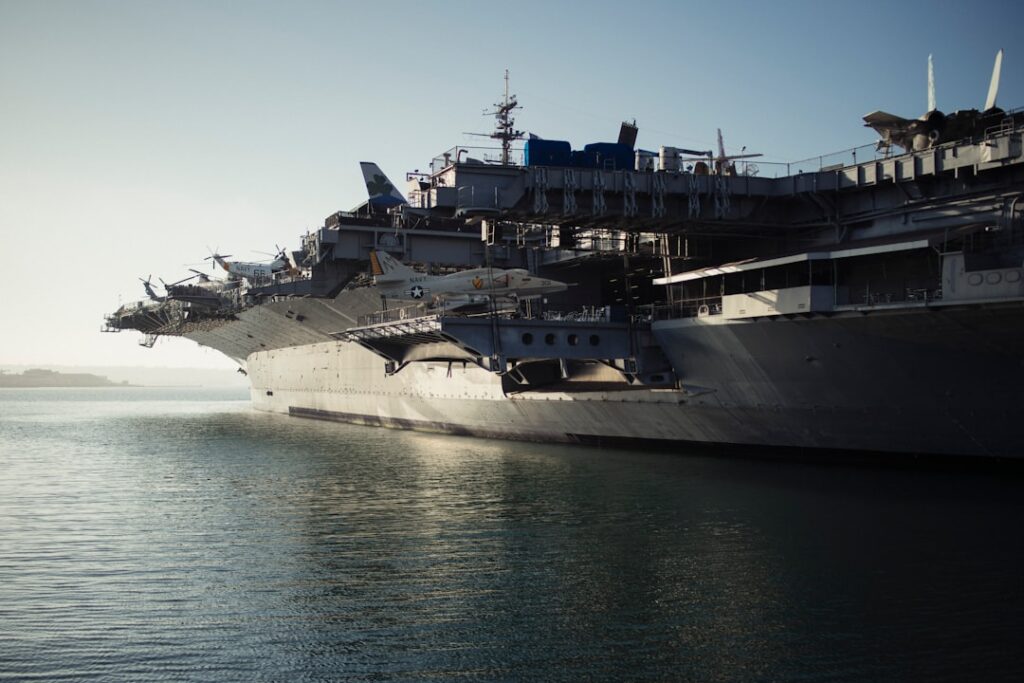
The U.S. Navy has launched an investigation into the loss of two aircraft from the USS Nimitz on October 26, 2025, over the South China Sea, an incident that now prompts broader questions about the health of the Pacific Fleet. An MH-60R Seahawk helicopter and an F/A-18F Super Hornet fighter jet went down in separate events on the same day. All crew members were rescued safely, but the cause of both crashes remains unknown.
The inquiry will determine whether these were isolated failures or signs of a deeper problem. The Nimitz, a nuclear-powered carrier, serves as a cornerstone of U.S. naval power in the Asia-Pacific region.
Losing two aircraft in a single day raises concerns about operational tempo, maintenance cycles, and crew fatigue on a deployment that has been ongoing for months. The F/A-18F Super Hornet is a multi-role fighter used for air-to-air combat, reconnaissance, and ground attack. The MH-60R Seahawk handles anti-submarine warfare and search and rescue.
Both are frontline workhorses, not obscure or aging platforms. Their simultaneous loss, even without casualties, disrupts a carrier air wing’s schedule and readiness.
Every flight hour lost to the investigation is an hour the Nimitz cannot project power. Rescue crews performed effectively, and the Seahawk’s design, intended for such operations, was utilized. However, the Navy’s safety record and maintenance protocols are now under scrutiny.
Investigators will examine pre-flight checks, mechanical history, and pilot training records. The service’s transparency on this matter will be closely watched by the public and by every other carrier commander in the Pacific.
There is a human cost beyond the rescued crews. Pilots and aircrew on the Nimitz must now fly the same models of aircraft over the same waters. Morale depends on finding answers. If the investigation points to a mechanical flaw, similar aircraft across the fleet could be grounded for inspections.
If it points to human error, training procedures may need overhauling. Either outcome would ripple through the entire Pacific Fleet’s schedule.
The South China Sea is a crowded, contested environment where the Nimitz operates as a deliberate show of force. Two crashes in one day, even without fatalities, undercut that message. Rivals and allies alike will note the incident.
The Navy’s response—how quickly it finds answers and how openly it communicates—will shape how the incident is interpreted. For now, the focus is on the investigation.
The Navy has not released a timeline. If recovered, the aircraft wreckage will be shipped to a lab. Black boxes, if intact, will be read.
Maintenance records for both airframes will be compared. The pilots will be debriefed extensively, and every second of radio traffic and radar data will be replayed.
This is not a tragedy, but it is a warning. Losing two aircraft in a single day off one carrier is a rare event. The Navy’s safety culture will be tested by how it handles the aftermath.
The crew members are safe, but the questions are just beginning.




