
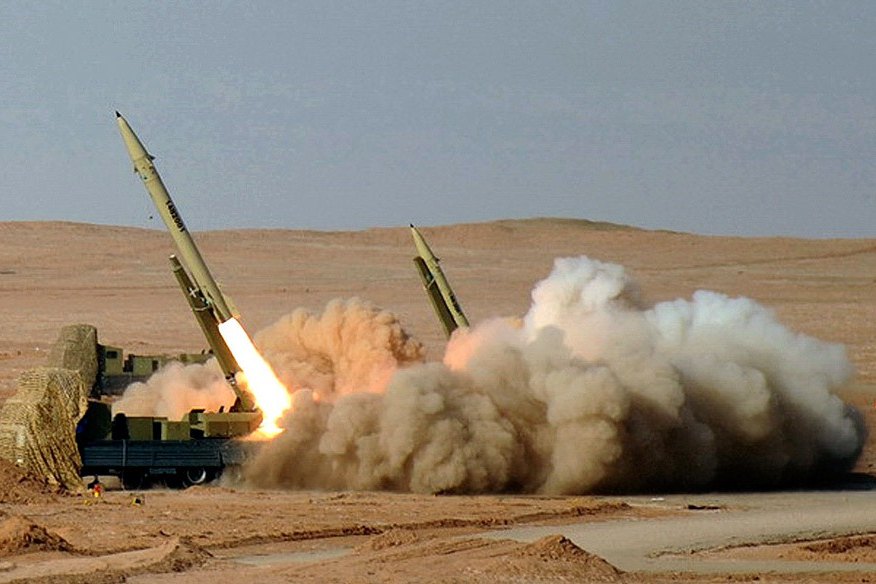
TEHRAN, July 14 — For decades, Iran’s ballistic missile program has been a quiet, steady drumbeat in the background of Middle Eastern geopolitics. Today, that drumbeat has grown into something far more urgent, as these weapons systems sit at the very center of a widening international conflict. The program itself began in the 1980s, born out of the grinding brutality of the Iran-Iraq War that lasted from 1980 to 1988.
In those early years, Iran received initial support from China, North Korea, and Russia. What started as a wartime necessity has since evolved into a sophisticated and sprawling arsenal, one that now poses a direct threat to key U.S. allies in the region, including Israel and Saudi Arabia.
A Family of Missiles
Iran operates a tiered family of ballistic missiles, each with a different reach. The Shahab-1 can travel about 300 kilometers. The Shahab-2 extends that to 500 kilometers.
Then comes the Shahab-3, with a range of 1,000 to 2,000 kilometers. More advanced systems include the Emad, which can reach 1,700 kilometers, and the Khorramshahr, capable of 2,000 kilometers.
There is also the Sajjil-2, a solid-fuel missile that was tested in 2008. It has a range of 2,000 to 2,500 kilometers, making it one of the longest-reaching weapons in Iran’s inventory. All of these forces are controlled by the Islamic Revolutionary Guard Corps Aerospace Force, a branch of Iran’s military that operates independently from the regular army.
This structure gives the IRGC direct command over the country’s most strategic weapons.
International Pressure and Sanctions
The United States and its allies have long viewed Iran’s missile program with deep concern. Under United Nations Security Council Resolution 2231, which was adopted in 2015 as part of the broader nuclear deal, Iran was called upon not to develop missiles capable of delivering nuclear weapons. The resolution did not outright ban the program, but it placed significant political and diplomatic pressure on Tehran.
In response, the U.S. and its allies have imposed sanctions targeting Iran’s missile activities. Iran has rejected these restrictions outright, maintaining that its missiles are designed solely for conventional defense.
The government in Tehran insists the program is not intended to carry nuclear warheads, a claim that many in the West view with skepticism. This standoff has become a central flashpoint in the current conflict. For Israel and Saudi Arabia, two of America’s most important partners in the region, the growing range and accuracy of Iranian missiles represent a direct and immediate security challenge.
A missile with a 2,000-kilometer range can reach deep into both countries from launch sites inside Iran.
What Comes Next
For now, the missile program remains a key factor driving the trajectory of the conflict. The IRGC Aerospace Force has shown no signs of slowing its development, and international sanctions have not stopped Iran from continuing to test and deploy new systems. The question now is whether diplomatic pressure can be reasserted, or whether the region is headed toward a more dangerous phase.
The human side of this story is not about the missiles themselves, but about what they mean for the people living in their shadow. In Tel Aviv, Riyadh, and other cities across the region, families go about their daily lives knowing that a weapon with a 2,000-kilometer range sits ready, just across a border.
The science behind these missiles is impressive. The politics behind them is far more fragile.
{“@context”: “https://schema.org”, “@type”: “NewsArticle”, “headline”: “Iran Ballistic Missile Program: Key Capabilities 1980s-2025”, “description”: “TEHRAN, July 14 — For decades, Iran’s ballistic missile program has been a quiet, steady drumbeat in the background of Middle Eastern geopolitics. Today, that…”, “datePublished”: “2026-07-14T09:30:00+00:00”, “author”: {“@type”: “Person”, “name”: “James Roberto”}, “publisher”: {“@type”: “Organization”, “name”: “InfoPulse Today”, “url”: “https://newsfeed.infopulsetoday.com/”}}




