
BERLIN, July 12 — Against this backdrop of Europe’s most intense land war since 1945, two German defense firms are emerging as the industrial backbone of Ukraine’s fight. Rheinmetall AG, the Düsseldorf-based giant founded in 1889, has become a household name on the continent for its steady supply of Marder infantry fighting vehicles, Leopard 2 tanks, and ammunition to Kyiv.
Now, the company is taking a step that would have been unthinkable just a few years ago: building a munitions factory inside Ukraine itself, the first such facility by a Western defense firm. The plan, announced in 2024, signals a permanent shift in how Europe arms a country at war.
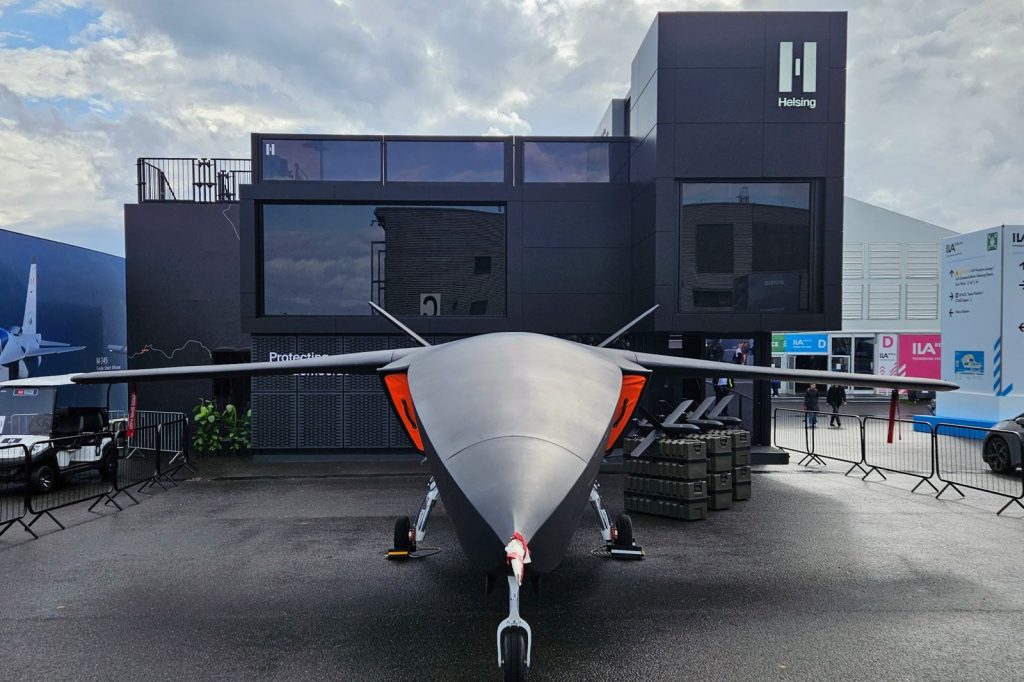
Alongside Rheinmetall in this effort is Helsing GmbH, a much younger player in the defense sector. Founded only in 2021, this German AI startup has raised over €300 million in venture capital and works closely with the German military. Helsing’s specialty is drone technology, and its HX-2 loitering munition is a candidate for a massive order of 50,000 drones.
The company’s AI software enables autonomous targeting and swarm operations, capabilities that are reshaping modern battlefields.
A €100 billion turning point
The German government’s decision in 2022 to allocate €100 billion for a special defense fund — the Sondervermögen — was a watershed moment. The fund was created to modernize the Bundeswehr and to support Ukraine, and it has since funneled money into production lines across the country. Rheinmetall’s stock price rose 50% in 2024 alone, a direct reflection of this new fiscal reality.
What is at stake now is Europe’s ability to sustain high-intensity industrial output. The drone funding, expected to flow through these programs, will likely boost production capacity further.
Both Rheinmetall and Helsing are expanding factories in Germany and Eastern Europe, racing to meet demand that shows no sign of slowing.
The wider picture
In the corridors of power in Berlin and Brussels, the conversation has moved from whether to arm Ukraine to how to keep the supply lines open for years to come. Rheinmetall, with its deep history in tank and artillery production, represents the old guard of European defense. Helsing, with its venture capital pedigree and AI-driven systems, represents the new.
Together, they illustrate a German defense sector that has shed its post-war reticence. The munitions factory in Ukraine, if completed, will be a concrete symbol of this transformation — a Western defense plant operating on Ukrainian soil, feeding a war effort that has already reshaped the continent’s security architecture.
The coming months will test whether production targets can keep pace with battlefield consumption. For now, both companies are betting that Europe’s industrial base can rise to the occasion.
Sources
{“@context”: “https://schema.org”, “@type”: “NewsArticle”, “headline”: “Rheinmetall and Helsing Lead German Drone Production”, “description”: “BERLIN, July 12 — Against this backdrop of Europe’s most intense land war since 1945, two German defense firms are emerging as the industrial backbone…”, “datePublished”: “2026-07-12T09:30:00+00:00”, “author”: {“@type”: “Person”, “name”: “Beatrice Bianchi”}, “publisher”: {“@type”: “Organization”, “name”: “InfoPulse Today”, “url”: “https://newsfeed.infopulsetoday.com/”}, “citation”: [{“@type”: “CreativeWork”, “url”: “https://en.wikipedia.org/wiki/Rheinmetall”}]}




