
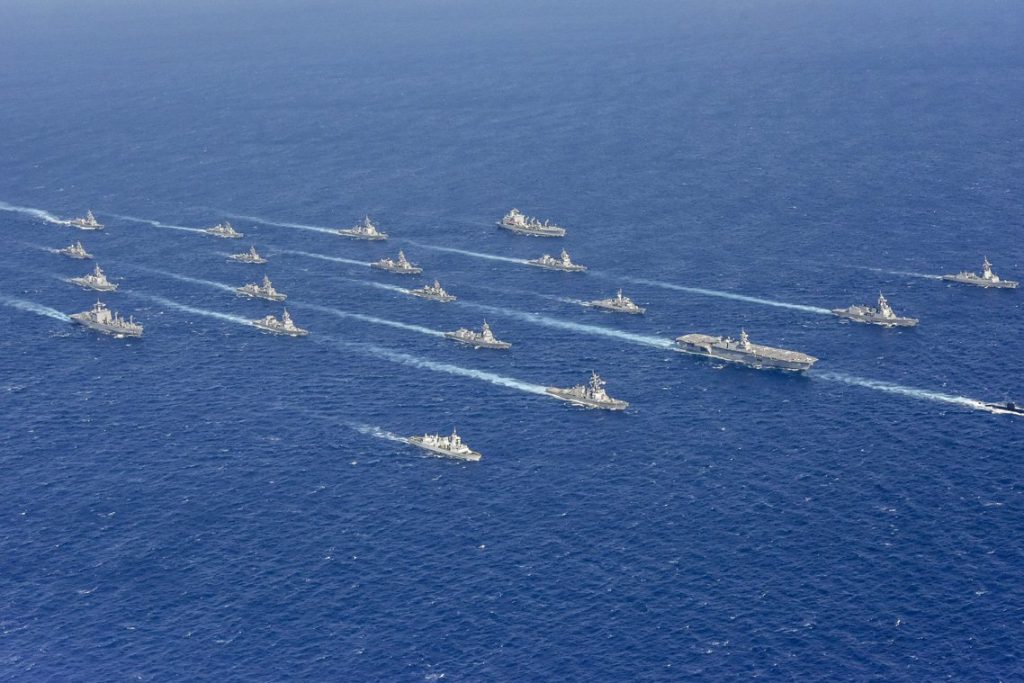
Three weeks before the official announcement, two navies held a drill. That was June 7 — the Maritime Self-Defense Force and the South Korean Navy ran a joint search and rescue exercise. It was the first such drill in roughly nine years.
Operational trust, broken by years of political friction, had a concrete reset date. Then came June 28.
Japanese Defense Minister Koizumi met his South Korean counterpart, Ahn Gyu-back, in Seoul that morning. The result: an agreement to deepen cooperation on artificial intelligence for defense. Not a vague handshake.
A formal policy confirmation, according to the Japanese Defense Ministry, building on what it called “productive discussions” between defense authorities. Two numbers define this story.
Nine years — that is the gap the June 7 naval drill bridged. One morning — that is how long the Seoul meeting took to turn AI from an experimental niche into a formal pillar of bilateral security dialogue. India watches this axis.
It has its own growing defense tech relationship with Japan. The signal from Seoul is blunt: Asian military cooperation on AI is no longer a pilot program. It is a stated policy line between Tokyo and Seoul.
The ministers did not stop at the bilateral track. They agreed to continue trilateral cooperation with the United States.
Washington has pushed this three-way framework consistently. The affirmation suggests it survives the usual diplomatic friction between Japan and South Korea. No breakdown.
No walkout. Just a reaffirmation on the record.
Another date: January 2026. The South Korean Air Force aerobatic team, the Black Eagles, visited Naha Air Base in Okinawa Prefecture. The ministers confirmed plans to expand exchanges following that visit.
Military-to-military contact, at the demonstration level, is being treated as a building block. There was a silence in the discussions. A Defense Ministry official noted it, though the report does not name the official or specify the silence.
Some things were not said. Some topics were not on the table.
What was on the table: AI in the defense domain. That carries implications for how regional powers think about the next generation of military technology. Not in the abstract.
In a formal agreement between two defense ministers, in Seoul, on a June morning. Nine years without a joint naval exercise.
One meeting to put AI cooperation on the books. A trilateral framework with the United States that stays on track. A January 2026 aerobatic visit that becomes a template for future exchanges.
These are the numbers. They tell a story of restoration and forward movement, measured in drills and policy statements and quiet silences.
{“@context”: “https://schema.org”, “@type”: “NewsArticle”, “headline”: “Japan and South Korea Navies Hold First Joint Drill in Nine Years”, “description”: “Three weeks before the official announcement, two navies held a drill. That was June 7 — the Maritime Self-Defense Force and the South Korean Navy…”, “datePublished”: “2026-06-28T16:08:00+00:00T09:30:00+00:00”, “author”: {“@type”: “Person”, “name”: “Reza Karimi”}, “publisher”: {“@type”: “Organization”, “name”: “InfoPulse Today”, “url”: “https://newsfeed.infopulsetoday.com/”}}




