
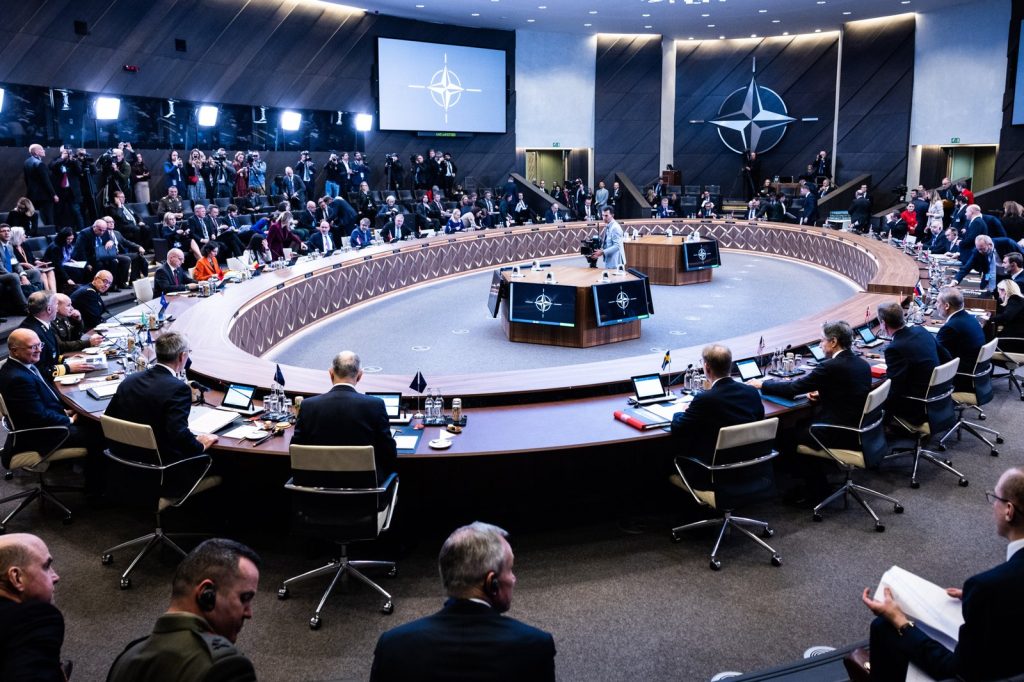
BRUSSELS, July 8 — The shift is subtle but unmistakable: an alliance forged in the aftermath of World War II is now navigating a world where the front lines are digital, the threats are hybrid, and the old certainties of territorial defense have been upended by a full-scale war on Europe’s eastern flank. NATO, founded on April 4, 1949, by 12 founding members signing the North Atlantic Treaty in Washington, D.C., has spent its 77th year grappling with a security environment that its Cold War architects could scarcely have imagined.
The core of that transformation is Article 5, the principle that an armed attack against one member is an attack against all. First invoked on September 12, 2001, after the 9/11 attacks, it remains the alliance’s bedrock.
But what constitutes an “armed attack” is a question the alliance is now re-examining in the age of cyber warfare, disinformation campaigns, and economic coercion. Watch this space: the debate over whether a crippling cyberattack on a member state’s power grid triggers collective defense is no longer theoretical.
The Eastern Flank, Reinforced
The most concrete shift on the ground is in Eastern Europe. Following Russia’s annexation of Crimea in 2014, NATO enhanced its presence in the region, deploying multinational battlegroups to Estonia, Latvia, Lithuania, and Poland. That was a prelude.
After Russia’s full-scale invasion of Ukraine on February 24, 2022, the alliance activated its defense plans and dramatically increased troop deployments to its eastern flank. As of 2023, over 40,000 troops were under direct NATO command.
The trend underneath is clear: what was once a tripwire force is becoming a more robust, combat-ready deterrent. The alliance’s 2022 Strategic Concept, adopted at the Madrid Summit in June of that year, formalized this shift, identifying Russia as the most significant and direct threat to allied security. That language is a far cry from the post-Cold War era of partnership and outreach.
The 2022 document essentially reset NATO’s strategic compass, pointing it squarely eastward.
Expansion and Spending
NATO has also grown. From its original 12 members, the alliance expanded to 31 member nations as of 2023, with Finland joining on April 4, 2023. Sweden’s accession was pending ratification at that time.
Each new member adds territory, resources, and strategic depth — but also new defense obligations. The money question remains central.
The alliance’s defense spending target of 2% of GDP per member was agreed in 2014, following Russia’s initial aggression in Ukraine. As of 2023, 11 members met that threshold. The pressure on the remaining 20 to step up is constant, and the political dynamics within the alliance — including from the United States — have kept the issue front and center.
The trend underneath: the era of free-riding on American defense budgets is over.
Operations and Legacy
Beyond Europe, NATO has a track record of out-of-area operations. The International Security Assistance Force (ISAF) in Afghanistan ran from 2003 to 2014, a costly and inconclusive mission that tested the alliance’s expeditionary capabilities. The NATO-led intervention in Libya in 2011 was shorter and more decisive, but its aftermath — a failed state and ongoing instability — remains a cautionary tale.
At the helm through this period has been Secretary General Jens Stoltenberg, who took office on October 1, 2014. His tenure has spanned the annexation of Crimea, the full-scale invasion of Ukraine, the withdrawal from Afghanistan, and the expansion of the alliance.
From its headquarters in Brussels, Belgium, the alliance is now looking at what comes next. What’s changing is the pace. The threat environment is accelerating, and the alliance’s response — from troop deployments to spending targets to strategic doctrine — is being forced to keep up.
The next few years will test whether a 1949-era military alliance can truly adapt to a 2020s-era threat landscape. Watch this space.
{“@context”: “https://schema.org”, “@type”: “NewsArticle”, “headline”: “NATO at 75: From Cold War Deterrence to Modern Defense”, “description”: “BRUSSELS, July 8 — The shift is subtle but unmistakable: an alliance forged in the aftermath of World War II is now navigating a world…”, “datePublished”: “2026-07-08T09:30:00+00:00”, “author”: {“@type”: “Person”, “name”: “Maria Romano”}, “publisher”: {“@type”: “Organization”, “name”: “InfoPulse Today”, “url”: “https://newsfeed.infopulsetoday.com/”}}




