
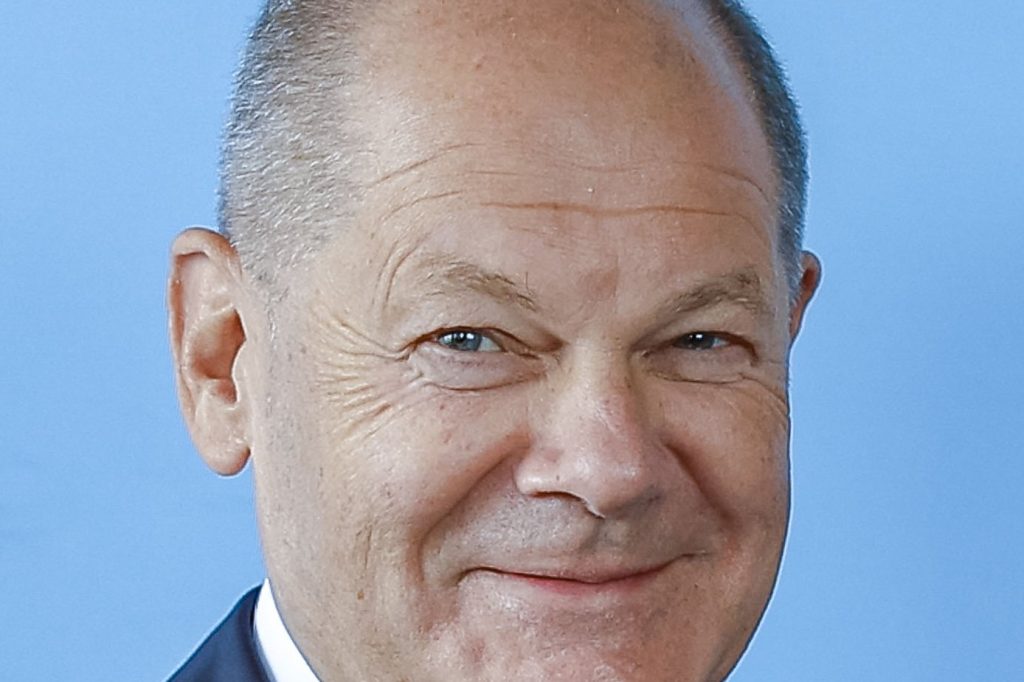
Olaf Scholz has approved funding for 50,000 strike drones to be sent to Ukraine, the latest concrete step in a German defense policy that has fundamentally altered course since Russia launched its full-scale invasion. The decision, which marks a notable escalation in the type of hardware Berlin is willing to provide, comes as the chancellor navigates a delicate political landscape at home and continued pressure from allies abroad.
A Historic Defense Shift
Scholz took office on December 8, 2021, leading a coalition of the Social Democratic Party (SPD), the Greens, and the Free Democratic Party (FDP). Just over two months later, on February 27, 2022–three days after Russia’s full-scale invasion of Ukraine began–Scholz announced a historic shift in German defense policy, which he called the Zeitenwende.
In that landmark speech, he committed Germany to a €100 billion special fund for the Bundeswehr and pledged to meet NATO’s 2% of GDP defense spending target. Throughout the conflict, Scholz has faced criticism from some allies for hesitating on sending long-range Taurus missiles. Yet he has consistently supported providing defensive systems and, increasingly, offensive ones such as drones.
The decision to fund 50,000 strike drones represents the latest evolution of that approach, which aims to support Ukraine while avoiding any action that could be framed as direct NATO involvement. Under Scholz’s watch, Germany has become the second-largest military donor to Ukraine, delivering over €17 billion in aid.
Domestic Political Calculus
The chancellor’s approval ratings have fluctuated significantly since the invasion. By early 2025, the SPD was polling at around 15-18%, a sharp decline that reflects the party’s struggle to maintain core support.
Scholz is walking a tightrope: he must show decisive support for Ukraine while preventing any perception that Germany is being drawn into direct conflict with Russia. The drone funding fits that strategy neatly–it provides substantial military assistance without deploying German personnel or crossing lines that could be characterized as NATO escalation. Scholz’s biography sheds light on his cautious style.
Born on June 14, 1958, in Osnabrück, he served as Mayor of Hamburg from 2011 to 2018 and then as Vice Chancellor and Minister of Finance under Angela Merkel from 2018 to 2021. The Zeitenwende broke the mold of that earlier, more reserved approach.
Now, with his own party bleeding support, the question is whether this latest military commitment will stabilize his standing or accelerate the coalition’s drift. The governing coalition remains the same three parties–SPD, Greens, and FDP–but internal tensions over spending and strategy persist.
A Legacy of Contrast
The distance Scholz has traveled is thrown into sharp relief by the example of his Social Democratic predecessor, Gerhard Schröder. Schröder served as chancellor from 1998 to 2005, leading a coalition of the SPD and Greens.
He replaced Helmut Kohl, the longest-serving chancellor in postwar German history, and his tenure is remembered for the ambitious Agenda 2010 labor market reforms that overhauled the welfare system to reduce unemployment and poverty. A lawyer by training, Schröder rose through state politics as minister-president of Lower Saxony before taking the national stage. In foreign policy, he forged a close relationship with French President Jacques Chirac and notably refused to join the 2003 U.S.-led invasion of Iraq–a stance that earned him popularity at home but sharp criticism from Washington.
After losing the 2005 federal election, Schröder stepped aside for Angela Merkel. Since leaving office, Schröder has worked for Russian state-owned energy companies, including Nord Stream AG, Rosneft, and Gazprom.
Those business ties drew intense scrutiny after Russia’s full-scale invasion of Ukraine in 2022. He faced calls for inclusion on European Union sanctions lists and an investigation by German prosecutors into accusations of complicity in crimes against humanity related to his corporate roles. Schröder’s post-chancellorship activities have complicated the SPD’s relationship with its own past.
For Scholz, also a Social Democrat, Schröder’s example serves as a cautionary backdrop. Scholz has charted a very different course toward Russia, pushing Germany to become a leading military donor to Ukraine.
The contrast between the two SPD chancellors underscores how profoundly German policy toward Moscow has shifted since the Cold War era of close energy partnership. The drone funding is the latest marker in that transformation.
{“@context”: “https://schema.org”, “@type”: “NewsArticle”, “headline”: “Germany approves 50,000 drones for Ukraine in major defense shift”, “description”: “BERLIN, July 12 — Olaf Scholz has approved funding for 50,000 strike drones to be sent to Ukraine, the latest concrete step in a German…”, “datePublished”: “2026-07-12T09:30:00+00:00”, “author”: {“@type”: “Person”, “name”: “James Roberto”}, “publisher”: {“@type”: “Organization”, “name”: “InfoPulse Today”, “url”: “https://newsfeed.infopulsetoday.com/”}}




