
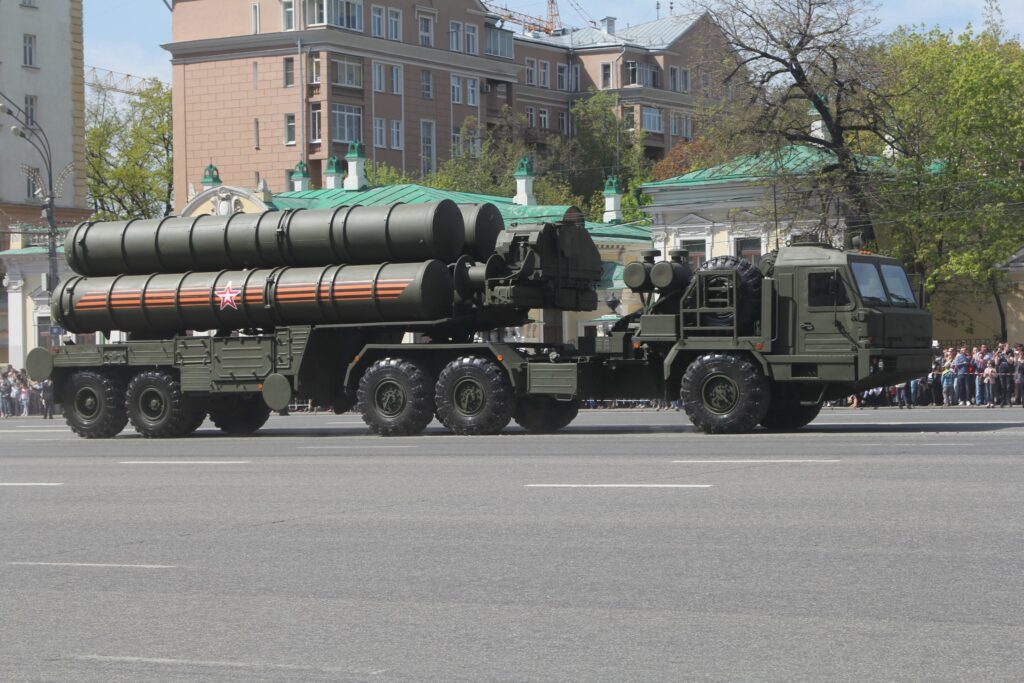
MOSCOW, August 2 — The destruction of Russia’s S-400 and S-300 missile systems by Ukrainian forces represents a significant blow to Russia’s military capabilities. Officials confirmed the losses, which are anticipated to have a major impact on the ongoing conflict. Russia’s air defense systems, encompassing the S-400 and S-300 missile families, are considered a crucial component of its military infrastructure.
These systems are specifically engineered to detect and neutralize incoming aircraft and missiles, employing advanced radar and missile technology to track and engage a broad spectrum of threats effectively. The S-400 system, known as one of the world’s most advanced air defense platforms, boasts a range exceeding 400 kilometers and can engage targets at altitudes up to 30 kilometers.
Its predecessor, the S-300 system, also maintains high effectiveness, capable of engaging targets over a range of 150 kilometers and at altitudes up to 27 kilometers. Both systems are integral to the Russian military’s operations and have been deployed in Ukraine and other conflict zones. The S-400 Triumf, known by NATO as SA-21 Growler, has a notable international presence.
Approved for service on April 28, 2007, with its first battalion assuming combat duty on August 6, 2007, it has since been acquired by several nations beyond Russia, including China, Turkey, and India. China’s People’s Liberation Army Air Force, having purchased S-400 systems in 2014 and received six batteries starting in 2018, possesses a capability that analysts note could affect the Cross-Strait conflict and the Senkaku Islands dispute.
Turkey’s acquisition of the S-400 in 2019, following the United States’ refusal to sell its upgraded MIM-104 Patriot system, led to Turkey’s expulsion from the F-35 fighter aircraft program, a point of considerable geopolitical friction. Russia has also deployed its own S-400 units to Belarus, with deployments increasing from late 2021. Operational claims surrounding the S-400 system have emerged from various theaters.
The first alleged shootdown involving an S-400 reportedly occurred on February 25, 2022, the second day of the Russo-Ukrainian war, when a system based in Belarus reportedly downed a Ukrainian Air Force Sukhoi Su-27 aircraft near Kyiv. Russian officials, in November 2025, claimed the system achieved the first shootdowns of Ukraine-launched ATACMS tactical ballistic missiles. India, which commenced receiving S-400 squadrons in 2021 after a 2015 purchase, claimed successful deployment of the system during the May 2025 India–Pakistan conflict.
The S-400 is complemented by its successor, the S-500, which has a purported range of 600 kilometers and entered service with Russia in 2021. The development of the S-400 itself traces back to the early 1980s, initially conceived as a replacement for the S-200 missile system.
This early iteration, however, faced rejection by a state commission due to high costs and its perceived inability to counter the emerging threat of cruise missiles. The program was later revived in the late 1980s under the codename Triumf, with an expanded mandate to engage long-range aircraft, cruise missiles, and stealth aircraft. The Soviet government officially approved the Triumf program on August 22, 1991, though the subsequent collapse of the Soviet Union cast the project into a period of uncertainty.
Sources
{“@context”: “https://schema.org”, “@type”: “NewsArticle”, “headline”: “Russia’s Air Defense Systems: Function and Significance”, “description”: “MOSCOW, August 2 — The destruction of Russia’s S-400 and S-300 missile systems by Ukrainian forces represents a significant blow to Russia’s military capabilities. Officials…”, “datePublished”: “2026-08-02T09:30:00+00:00”, “author”: {“@type”: “Person”, “name”: “Dmitry Volkov”}, “publisher”: {“@type”: “Organization”, “name”: “InfoPulse Today”, “url”: “https://newsfeed.2bme.xyz/”}, “citation”: [{“@type”: “CreativeWork”, “url”: “https://en.wikipedia.org/wiki/S-400_missile_system”}]}




