
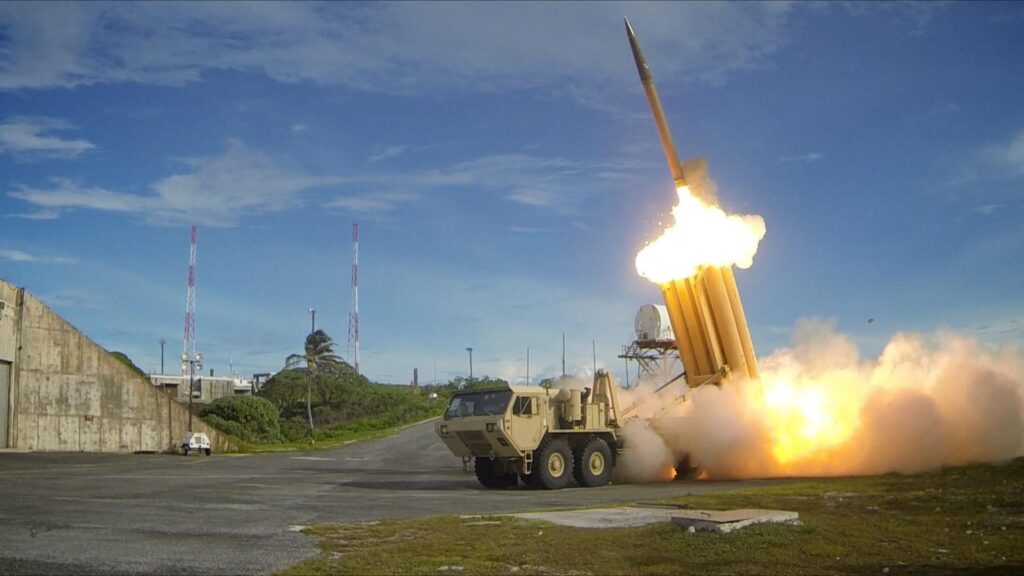
WASHINGTON, July 25 — The Pentagon is sounding an alarm over a deepening shortfall in interceptor missiles for two cornerstone air-defense systems, the Terminal High Altitude Area Defense, or THAAD, and the MIM-104 Patriot. Internal assessments reviewed by InfoPulse Today show that a barrage of up to 200 Iranian ballistic missiles would require at least six THAAD batteries and 1,000 Patriot PAC-3 interceptors — numbers the United States cannot currently field. THAAD, built by Lockheed Martin, has been in service since 2008.
The U.S. arsenal holds exactly seven batteries. Each battery carries six launchers and 48 interceptors.
The math is unsparing: with only three batteries available for the Middle East and other theaters outside of pre-committed deployments, commanders face a razor-thin margin. Two THAAD batteries are already committed to Israel, one battery has been stationed in South Korea since 2017 after North Korean missile tests, and one battery rotates through Europe on a rotational basis that began in 2021. That leaves just three batteries for every other theater — including the Persian Gulf, where Iran’s missile force is largest.
On the Patriot side, the PAC-3 variant has been operational since the 1990s. Hundreds of
The Terminal High Altitude Area Defense and Patriot systems are designed to intercept incoming ballistic missiles at different stages of flight, forming part of a layered U.S. missile defense architecture that also includes the Ground-based Midcourse Defense system for long-range threats.
THAAD engages targets in the upper atmosphere, while the Patriot PAC-3 is focused on lower-altitude terminal phase interception. Both systems have been deployed extensively overseas since their introduction, reflecting decades of U.S. investment in protecting allies and forward-deployed forces against regional missile arsenals. Iran’s ballistic missile program has long been a central driver of U.S. force planning in the Middle East.
Tehran possesses one of the largest inventories of short- and medium-range ballistic missiles in the region, capable of reaching targets across the Persian Gulf and into Israel. The Pentagon has responded by pre-positioning air-defense assets, conducting joint exercises, and maintaining a continuous naval and aerial presence, but the latest internal assessments underscore the gap between potential threat scenarios and available interceptor stocks. The shortfall also highlights broader industrial-base constraints.
THAAD interceptors and Patriot PAC-3 missiles are produced at relatively low annual rates due to component sourcing, engineering complexity, and limited production lines. Ramping up output would require sustained funding, expanded facilities, and multiyear procurement contracts.
With concurrent demands from Ukraine, allies in the Indo-Pacific, and rotational deployments in Europe, the military faces hard choices about which theaters to prioritize and which threats may remain uncovered.




