
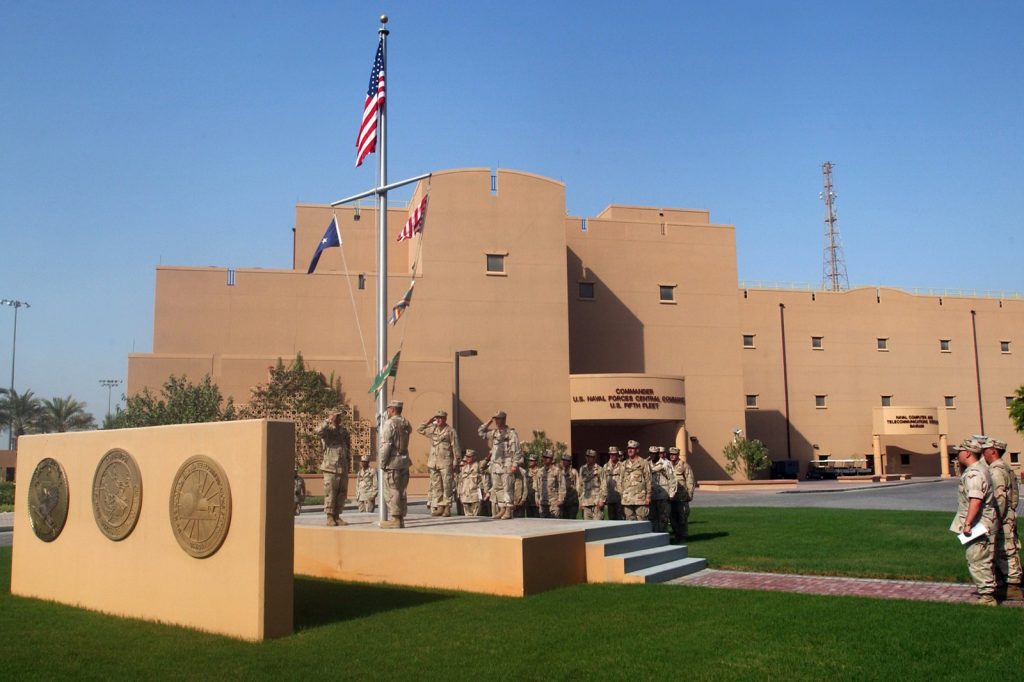
MANAMA, July 13 — The steel-gray hulls of the United States Fifth Fleet sit anchored just beyond the causeway, their presence a constant fact of life on this island kingdom. On the waterfront, residents describe the scene as tense but familiar; the fleet has been the backdrop to Bahrain’s skyline since 1995, when it established its headquarters at Naval Support Activity Bahrain in Manama. But the blockade announced July 2, 2025, has changed the texture of that routine.
The fleet’s area of responsibility stretches across the Persian Gulf, the Gulf of Oman, the Red Sea, and into parts of the Indian Ocean. That is a vast patch of water, and by nightfall, the fleet’s roughly 15 vessels and 10,000 personnel are the instrument of a new pressure campaign.
The blockade — authorized under the 2019 International Maritime Security Construct, a coalition that includes the United Kingdom, Australia, and Bahrain — will intercept and inspect vessels suspected of carrying Iranian oil. The fleet’s primary mission has long been ensuring freedom of navigation and protecting U.S. interests. Now, that mission has a sharper edge.
The Fifth Fleet typically operates an aircraft carrier strike group and an amphibious ready group, supported by supply ships. During the 2019-2020 tensions with Iran, the fleet deployed the USS Abraham Lincoln carrier strike group into the region.
The current operation draws on that same infrastructure of naval power. The fleet’s budget is part of the broader $50 billion annual U.S. military presence in the Middle East, a figure that reflects the enduring weight Washington places on this waterway.
From counterterrorism to oil interdiction
The fleet has a long history of combat operations. It supported Operation Enduring Freedom from 2001 through 2014, and has been a backbone of Operation Inherent Resolve against ISIS since 2014. Those missions were about ground wars and insurgent networks.
The current mission is different: a maritime blockade aimed at choking off revenue to Tehran. The shift is significant.
The fleet is now the lead instrument in an economic confrontation, not a counterterrorism campaign. By nightfall, the scene in Manama is quiet. The warships sit dark against the horizon.
But the inspection teams are working. The coalition’s authority rests on the IMSC framework, which was established in 2019 to protect merchant shipping in the region after a series of attacks on tankers.
That framework is now being used to stop vessels before they reach Iranian ports or to intercept them on the high seas.
What to watch next
The blockade is still in its early phase. The Fifth Fleet’s capacity to sustain the operation depends on the coalition’s willingness to keep roughly 15 ships and 10,000 personnel on station. The fleet’s area of responsibility is enormous, and intercepting oil tankers across that expanse is a different challenge from patrolling for pirates or escorting commercial vessels.
The coming weeks will test whether the coalition can maintain the tempo. For now, the fleet holds its position, and the Gulf waits.
Sources
{“@context”: “https://schema.org”, “@type”: “NewsArticle”, “headline”: “The U.S. Navy’s Fifth Fleet: Enforcing the Blockade from Bahrain”, “description”: “MANAMA, July 13 — The steel-gray hulls of the United States Fifth Fleet sit anchored just beyond the causeway, their presence a constant fact of…”, “datePublished”: “2026-07-13T09:30:00+00:00”, “author”: {“@type”: “Person”, “name”: “Isabella Moore”}, “publisher”: {“@type”: “Organization”, “name”: “InfoPulse Today”, “url”: “https://newsfeed.infopulsetoday.com/”}, “citation”: [{“@type”: “CreativeWork”, “url”: “https://en.wikipedia.org/wiki/United_States_Fifth_Fleet”}]}




