
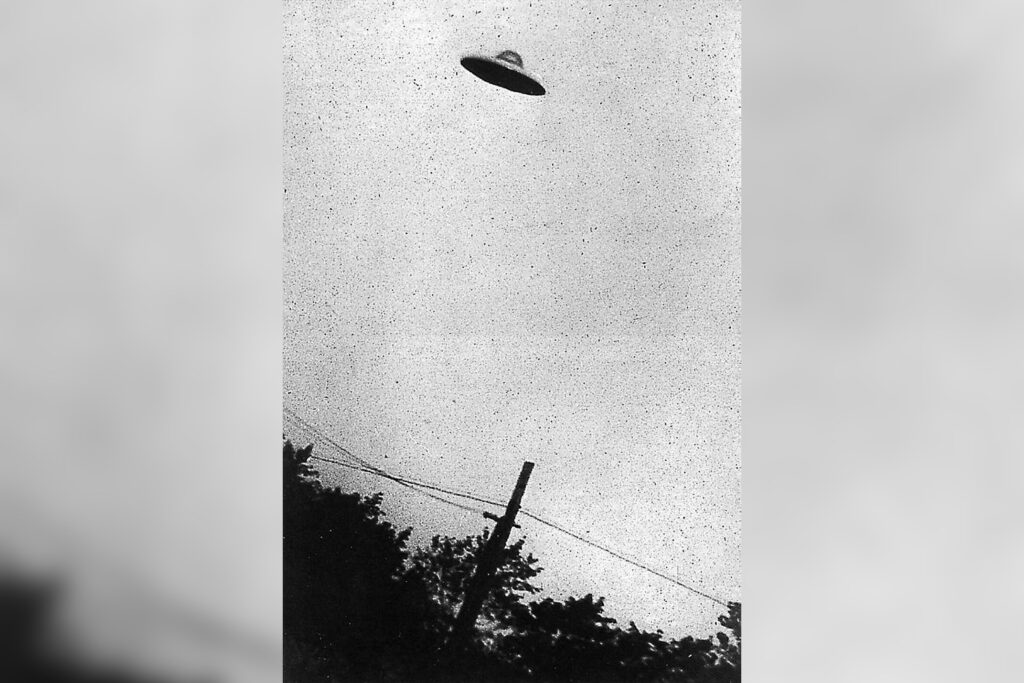
WASHINGTON, September 16 — The Department of War has opened a narrow door for people who have held America’s UAP secrets to walk through it without a lawyer at their elbow. On Monday, 14 September 2026, the department announced a targeted waiver creating a legally protected route for current and former military personnel, civilian employees and contractors to report classified information about unidentified anomalous phenomena without facing civil or administrative enforcement under the Non-Disclosure Agreements or Special Access Program Indoctrination Agreements they signed in the United States.
The mechanism sits inside the Presidential Unsealing and Reporting System for UAP Encounters, known as PURSUE. Under the hood, it is less a declassification order than a liability shield.
Individuals who have held access to relevant National Defense Information may now give protected information directly to designated PURSUE representatives — and, crucially, the act of speaking no longer automatically breaches the secrecy agreement that granted them access in the first place.
A tightly drawn permission
The permission is tightly drawn, and the detail that matters is what it does not do. It does not authorize insiders to post classified files publicly, nor to hand protected material to anyone outside existing lawful disclosure channels. Disclosures enter a pipeline for systematic review, security assessment and possible declassification.
The technical reality: a report can be heard, assessed and still never surface. Newsweek described the change as an attempt to remove fears about legal liability, lost security clearances and administrative punishment that have discouraged people with knowledge of alleged UAP programs from speaking.
The effort traces back to a 19 February 2026 order by President Donald Trump directing federal departments and agencies to begin identifying and releasing records connected to alien life, unidentified anomalous phenomena and UFOs. The Pentagon says that job involves dozens of agencies and tens of millions of records, many still on paper — an archival problem as much as a secrecy one.
What the archive holds so far
PURSUE released its first batch of documents on 8 May 2026 and its fifth on 7 August 2026. By Tuesday, 15 September 2026, the official archive listed 375 files from agencies including the FBI, NASA, the CIA and the Office of the Director of National Intelligence. The department labels those files unresolved cases, meaning the available evidence is not sufficient to establish what was observed.
Some entries contain videos or photographs. Others include witness accounts and digital reconstructions.
As ever, the ambiguity is the point. Whether the waiver yields startling evidence or another collection of ambiguous lights depends on who comes forward, what can be verified and what the government ultimately clears for release. National security restrictions remain in place, and they can still swallow material whole.
For the first time under PURSUE, the people closest to classified UAP material have an expressly protected door through which to enter. Whether anyone walks through it, and what they carry, is the next thing to watch.




