
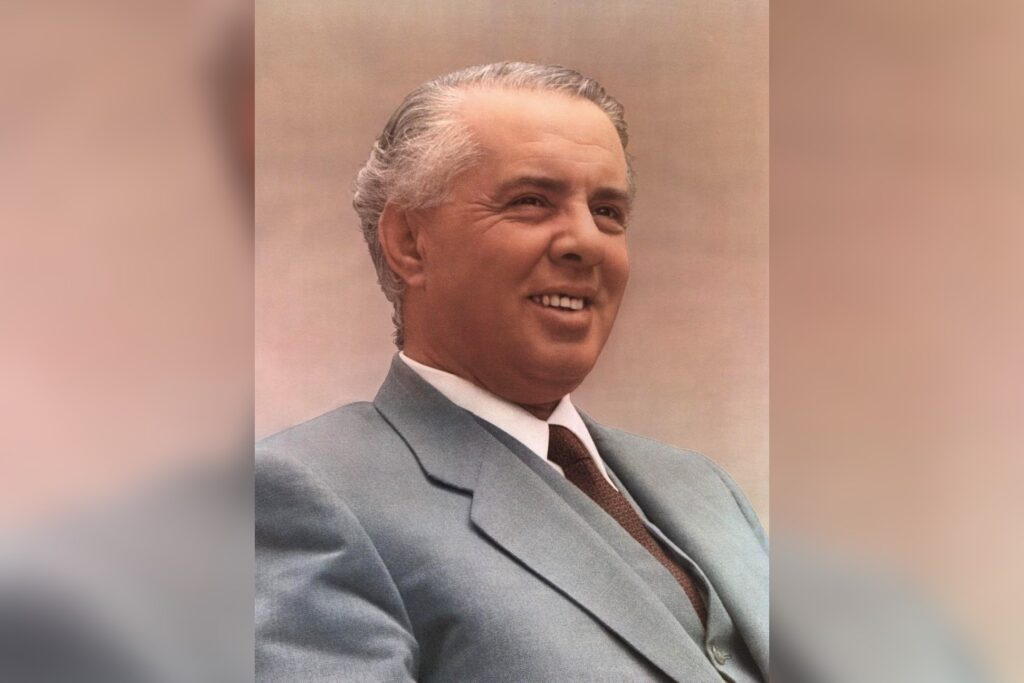
TIRANA, September 3 — Newly reported declassified CIA documents detail Cold War-era efforts to overthrow Albania’s communist regime under Enver Hoxha, with a focus on Albanian anti-communist activist Abaz Ermenji and the extent of Soviet military presence in the country. The documents, which had been declassified for years but were only recently brought to light on September 2, 2026, reveal Ermenji’s activities in Greece and his assessment that Yugoslav leader Josip Broz Tito lacked sufficient support within Albania to successfully challenge Hoxha’s rule.
This insight comes from a recorded response by Ermenji when questioned about Tito’s potential to intervene. The files underscore the Soviet Union’s deep involvement in Albania, particularly through the establishment of key military installations.
Soviet submarines were stationed on the island of Sazan and in the Gulf of Vlora, while air bases operated at Rinas and Kuçova. These installations formed a significant part of Moscow’s strategic footprint in the southern Balkans during the early Cold War. Political developments within Albania are also covered, including the summer 1974 dismissal of Defense Minister Beqir Balluku from all party and military functions.
The documents note this removal as a notable shift in the Hoxha regime’s internal power structure. A section of the files addresses Albanian political emigrants in Yugoslavia, many of whom were affiliated with the Prizren Committee.
Initially led by Apostol Tanef, the group came under pressure from Yugoslavia’s State Security Administration (UDB), which employed coercive tactics to recruit members for intelligence operations. Further historical context includes a declassified 1952 document detailing a meeting in Skopje on October 23, 1952, between representatives of King Ahmet Zog and Marshal Tito.
The records indicate that Yugoslav officials used false identities to deceive Zog’s envoys, who had sought U.S. military and material aid to expel Soviet influence from Albania, including plans to recruit Arab soldiers with the support of King Farouk of Egypt. An August 21, 1950 memorandum for the Assistant Director of Policy Coordination describes the deteriorating situation among Albanian resistance fighters, many of whom could not withstand another winter in the mountains and intended to flee to Yugoslavia.
The report identifies Tropoja as a hub of Albanian and Yugoslav espionage, noting that Yugoslav agents operating there were often former members of Albanian resistance groups who had crossed the border. Ultimately, the documents conclude that despite hundreds of attempts by Yugoslavia to undermine or overthrow the Hoxha government, all such efforts failed to achieve their objective.
The newly surfaced files offer a detailed view of the intelligence and geopolitical maneuvering that defined the struggle for Albania during the early Cold War period.




