
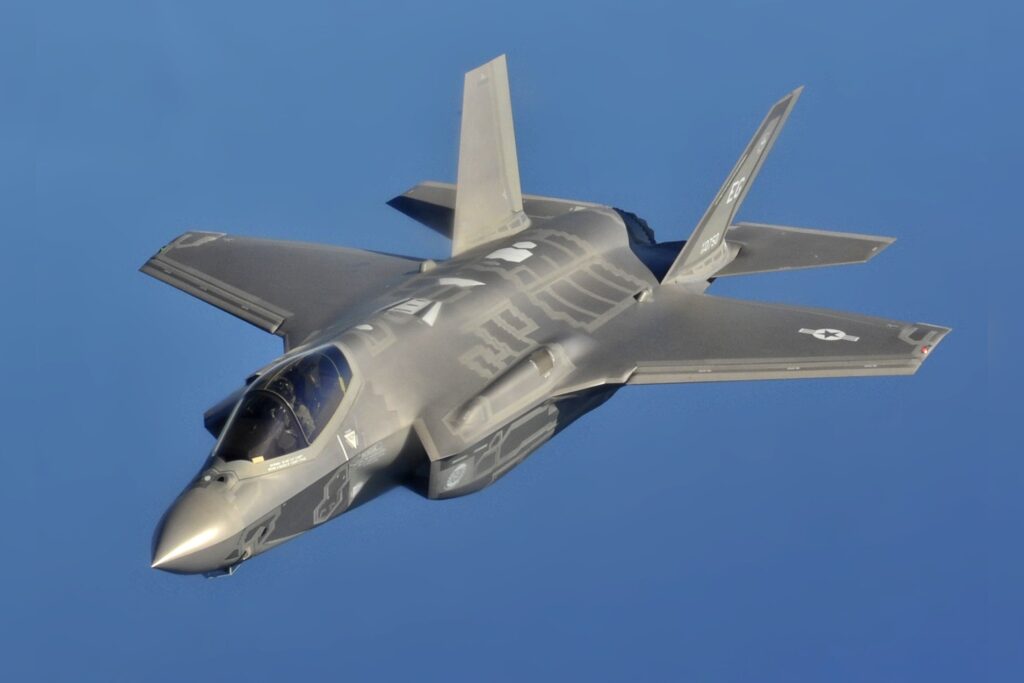
WASHINGTON, Aug 24 — The bottom line: the Navy’s new AIM‑424 “Malice” missile can engage targets beyond 280 miles, fitting inside the internal weapons bay of an F‑35C. In a fact sheet, the Navy described the AIM‑424 Long Range Air‑to‑Air Missile (LRAAM) as a next‑generation weapon built for fourth‑, fifth‑ and sixth‑generation aircraft. The missile’s stated range exceeds 250 nautical miles (288 miles), surpassing the reach of known Navy air‑to‑air munitions. A photo posted over the weekend shows the weapon stowed internally on a fifth‑generation F‑35C, preserving the jet’s stealth profile.
The Malice weighs about 1,500 pounds, is powered by a solid‑propellant rocket motor and carries a blast‑fragmentation warhead that detonates near the target. Raytheon, a subsidiary of RTX, is developing the missile for the Navy’s fleet defense and air‑domain overmatch objectives.
The Pentagon is accelerating long‑range air‑to‑air capability as China fields increasingly distant missiles, some of which Pakistan used in a brief conflict with India. The Navy’s effort aims to close that gap, offering a reach that could prove decisive in the Western Pacific. Current Navy air‑to‑air inventory includes the short‑range AIM‑9 Sidewinder and the medium‑range AIM‑120 AMRAAM, the latter in service for more than three decades.
The air‑launched AIM‑174B Gunslinger, derived from the SM‑6 surface‑to‑air missile, has an estimated range of more than 200 miles. The developing AIM‑260 Joint Advanced Tactical Missile targets Chinese PL‑15 missiles, which the Department of Defense notes have a range exceeding 120 miles.
The Malice is larger than the AIM‑120 but lighter than the AIM‑174B. Service entry timing remains unclear, but the missile’s extended reach will be a factor to watch as the Navy balances internal carriage for stealth against external hardpoint loads for heavier armament. Future updates on testing and deployment will indicate how the Malice shapes U.S. air power in contested regions.




