
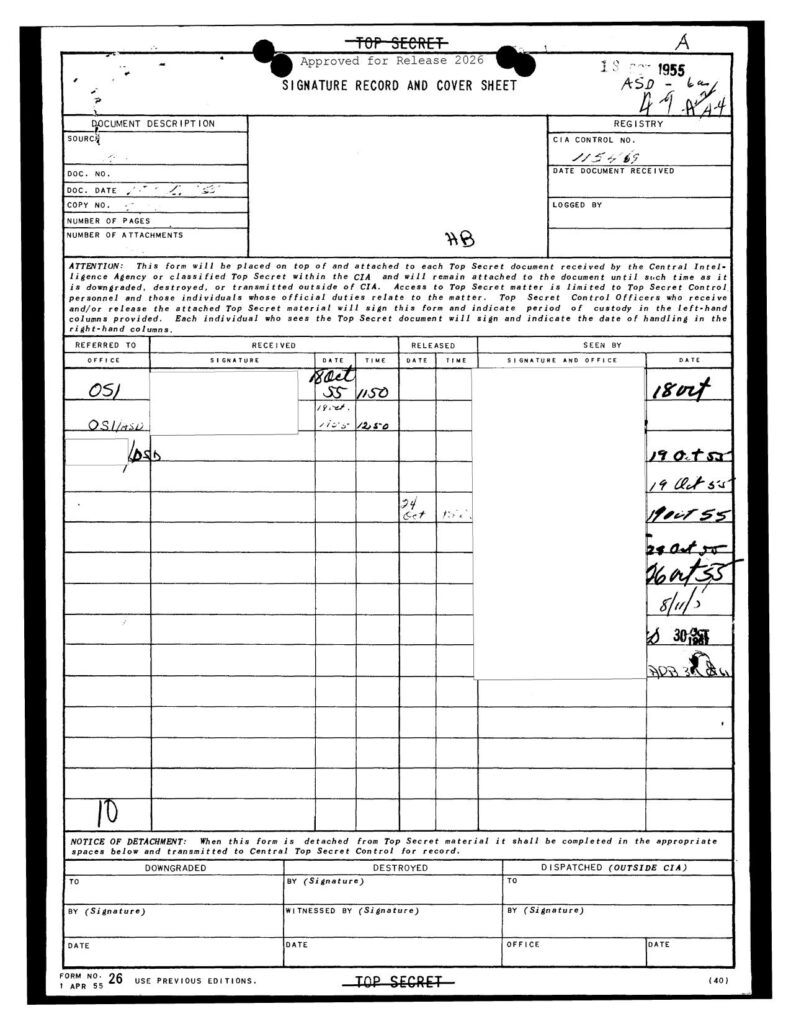
New York, July 10 — The Pentagon’s latest release of classified documents has reignited scrutiny over a 1955 incident involving reported “flying saucers,” though the CIA’s analysis suggests the accounts may not align with the notion of unconventional aircraft. The memorandum, labeled CIA-UAP-D021, was part of the Pursue tranche disclosed on July 10, 2026, and details accounts from observers who described two vertical lights ascending and then moving beyond their line of sight.
The document does not confirm the presence of any physical object, with the analysis concluding that the reports, as described, do not indicate an “unconventional aircraft.” Section 1 of the memo summarizes the incident as recorded in debriefings from the 1955 event. Observers reported seeing two luminous objects rise sharply before disappearing.
The CIA’s analysis, however, includes qualifiers that cast doubt on the interpretation of these observations. This lack of precision underscores the challenges in assessing such historical reports, particularly when relying on fragmented or secondhand accounts. Section 2 of the document references the 1953 Robertson Panel, led by Dr. Howard Robertson, which concluded that “almost all the sightings” of such phenomena posed no threat to the United States.
This finding is cited to contextualize the 1955 incident within a broader pattern of reports that were later deemed non-threatening. The panel’s assessment, however, remains a point of debate among historians and ufology enthusiasts, who often question the completeness of the data used to draw such conclusions.
Section 3 of the memo highlights ongoing research into “saucer-like aircraft” under Project Y, a joint U.S.-Canadian aerospace initiative of the 1950s. The document notes that this project explored unconventional designs, though it does not specify whether any prototypes or experimental aircraft were developed. The reference to Project Y suggests that the 1955 incident may have been part of a larger effort to investigate anomalous aerial phenomena, though the CIA’s analysis does not link the two directly.
The memo’s language is cautious, emphasizing that the reports analyzed did not indicate the presence of any aircraft, conventional or otherwise. This stance reflects the era’s tendency to approach such claims with skepticism, given the limited technological context of the time.
By nightfall, the implications of these documents extend beyond historical curiosity. The 1955 incident, as documented, remains a case study in the challenges of interpreting unverified accounts of the unknown. While the CIA’s analysis leans toward dismissing the reports as non-threatening, the persistence of such narratives underscores a timeless tension between public fascination and institutional caution. For residents of the era, the sighting would have been a fleeting, enigmatic event—one that, in the absence of concrete evidence, quickly faded from public memory.
Today, the release of CIA-UAP-D021 adds a new layer to that history, reminding us that the line between scientific inquiry and speculation is often blurred. What comes next?
The Pentagon’s decision to release such documents raises questions about the balance between transparency and national security. As the U.S. grapples with modern reports of unidentified aerial phenomena, the 1955 case serves as a reminder of how past mysteries continue to shape present debates. For now, the focus remains on verifying claims through rigorous analysis—a process that, as the CIA’s memo suggests, is as much about managing uncertainty as it is about uncovering truth.




