
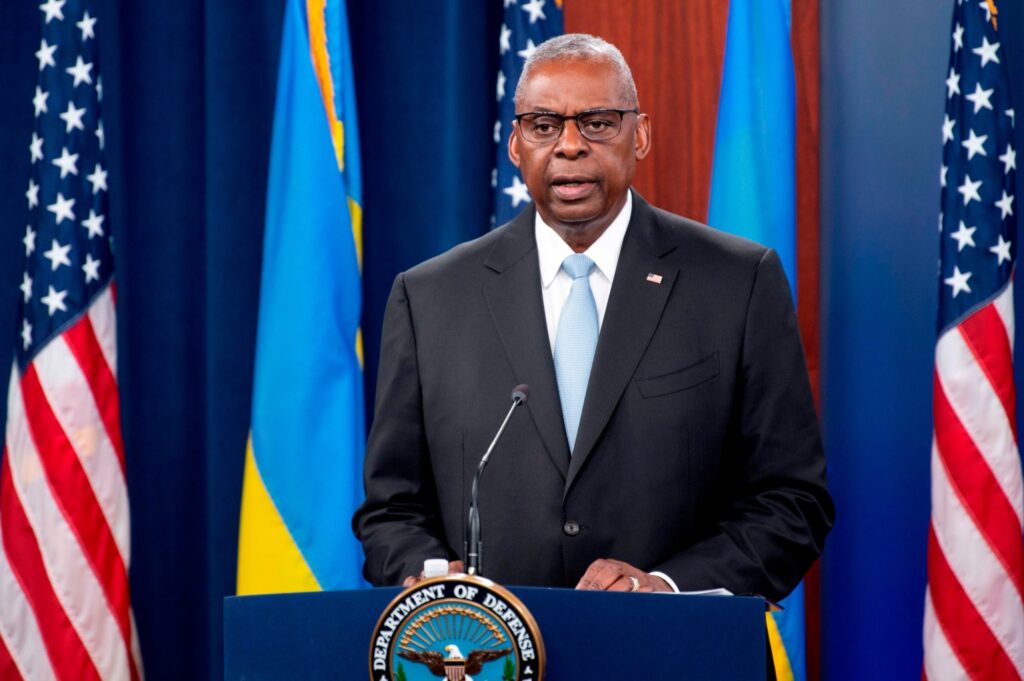
The first African American to serve as U.S. Secretary of Defense, Lloyd Austin, has presided over a significant recalibration of America’s military footprint in Europe since he took office in January 2021. The shift centers on a decision, made under his watch, to withdraw U.S. troops from Estonia.
This move emerged from a broader Pentagon strategic reassessment and reflects the difficult trade-offs required to balance finite military resources against multiple global threats. Austin’s leadership, informed by 41 years of service culminating in the rank of four-star general, has been defined by a dual mandate: reinforcing the NATO alliance as a bulwark against Russian aggression while simultaneously pivoting resources toward the Indo-Pacific theater. The Estonia decision is a concrete outcome of that strategic equation, and its consequences are being closely watched by alliance partners.
The Estonia Decision and the Strategic Reassessment
The planned withdrawal of U.S. troops from Estonia, which Austin oversaw, is not an isolated event but part of the Pentagon’s comprehensive European posture review. That review, announced under Austin’s tenure, aims to rebalance the U.S. military presence on the continent after years of post-Cold War adjustments. NATO remains central to the Pentagon’s calculus.
Austin has repeatedly emphasized the alliance’s role as a bulwark against Russian aggression, even as the United States repositions assets. The decision to pull forces from the Baltic nation is a clear example of the trade-offs inherent in managing finite resources.
While European allies watch closely, the U.S. military posture across Europe remains robust. However, the center of gravity has shifted. The Pentagon’s calculus increasingly acknowledges that the Indo-Pacific region demands more attention, a reality that shapes every decision, including the Estonia withdrawal.
For now, the European theater remains a priority, but the balance between shoring up defenses against Moscow and preparing for competition with China is a constant tension.
A Career Shaped for Balancing Competing Priorities
Austin’s background gives him the credibility to make such difficult calls. A graduate of West Point, he was commissioned as an infantry officer in 1975 and rose through the ranks of the U.S. Army over four decades. His command experience spanned units in Germany and the 82nd Airborne Division before he took on higher leadership roles, eventually overseeing operations in Iraq and Afghanistan at multiple levels.
He became the first African American to lead a division, corps, and field army in combat. From 2013 to 2016, he served as commander of U.S. Central Command, overseeing Middle East operations during a period of intense conflict.
That experience now informs his focus as Secretary of Defense: reinforcing NATO while countering Russia, even as the Indo-Pacific demands growing attention. Austin also holds a master’s degree in business administration from Auburn University. His confirmation in 2021 was another historic first, marking the first time an African American has held the post of Secretary of Defense. The dual focus of his tenure—shoring up European defenses against Moscow while pivoting resources toward the Pacific—tests the U.S. military’s ability to manage competing security demands.
The Estonia decision is part of that larger equation.
Alliance Dynamics and the Legacy in the Balance
The question now is how the alliance absorbs this shift. NATO partners are watching the Pentagon’s moves closely, assessing whether the U.S. commitment to European security remains reliable as Washington rebalances toward Asia. Austin’s military background—four decades of service culminating in four-star command—gives him the authority to make the necessary trade-offs.
Yet his legacy as Secretary of Defense will be shaped by how this balance holds over time. The U.S. military posture in Europe remains robust, but the center of gravity has moved.
It is a delicate equilibrium: maintaining deterrence against Russia while freeing up assets for the Indo-Pacific. The Estonia withdrawal is a concrete signal of that strategic shift, but it is only one element of a much larger recalibration. How the alliance responds, and whether the burden-sharing among NATO members adjusts accordingly, will determine the long-term success of the approach.
For Austin, a leader who rose through the ranks from infantry officer to the Pentagon’s top civilian post, the challenge is now to ensure that the United States can meet threats on two fronts without overextending its forces. The answer remains to be seen, but the decisions made today—including the Estonia withdrawal—will define the trajectory of U.S. defense policy in the years ahead.




