
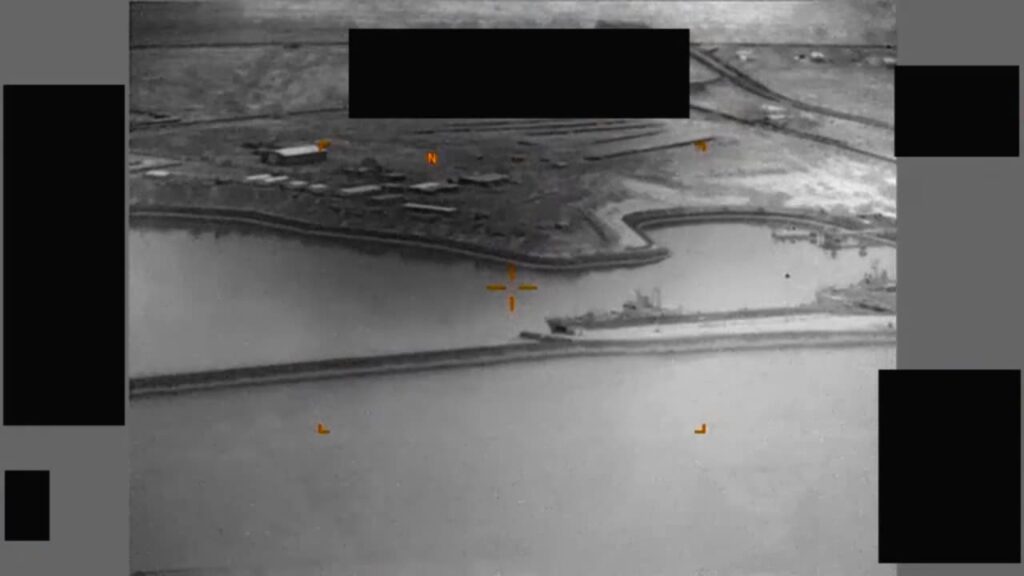
The Department of War has made public a declassified video recording of an unidentified anomalous phenomenon, or UAP, that was captured by a United States military aircraft on September 25, 2019. The footage, designated PR99 under the Pentagon’s PURSUE policy framework, depicts a small metallic object observed at a location that has not been disclosed.
The video file, named ‘dow-uap-pr099-hi-res-callsign-observes-uap-25sep19-1715z,’ was recorded at 5:15 PM Zulu time. According to information contained in the filename, the aircraft employed a high-resolution sensor to track the object. Details regarding the specific location and type of aircraft involved have been withheld due to operational security concerns. The object is described as maintaining a steady course at an altitude consistent with typical air traffic, with no visible means of propulsion.
The All-domain Anomaly Resolution Office, or AARO, which operates under the Office of the Secretary of Defense, has reviewed the footage. AARO confirmed that the object’s characteristics do not match any known systems operated by the United States or its allies.
While the possibility of foreign adversary technology has not been ruled out, the report notes that no electronic emissions or signatures were detected that would indicate advanced capabilities. This release is part of ongoing efforts to increase transparency regarding UAP encounters while protecting sensitive operational details. The PURSUE policy framework, which was implemented in 2023, standardizes the reporting and declassification of UAP incidents across the Department of War and other agencies.
Under this framework, incidents receive a priority number based on sensor data quality and corroborating evidence. PR99 is classified as a routine observation, meaning it involves a single sensor with no corroborating radar or visual confirmation from other platforms.
The Pentagon has declassified several UAP videos since 2020, following a pattern of increased transparency. However, the report emphasizes that the majority of cases remain unexplained due to insufficient data. The Department of War encourages military personnel to report any unusual sightings through official channels to aid AARO’s analysis.
Moving forward, AARO can request additional data from the platform’s operators, interview the crew, and cross-reference the object’s trajectory with commercial flight data. The office may also task other sensors to monitor similar areas in the future.
The report concludes that without more information, the object’s origin remains unknown.




