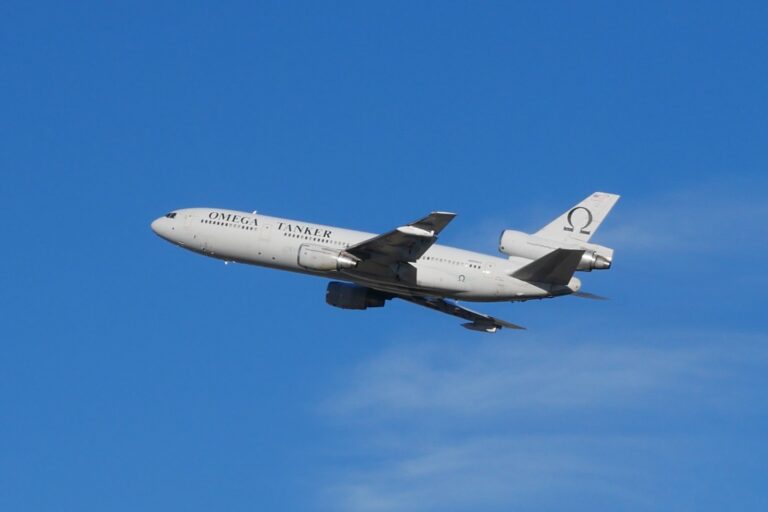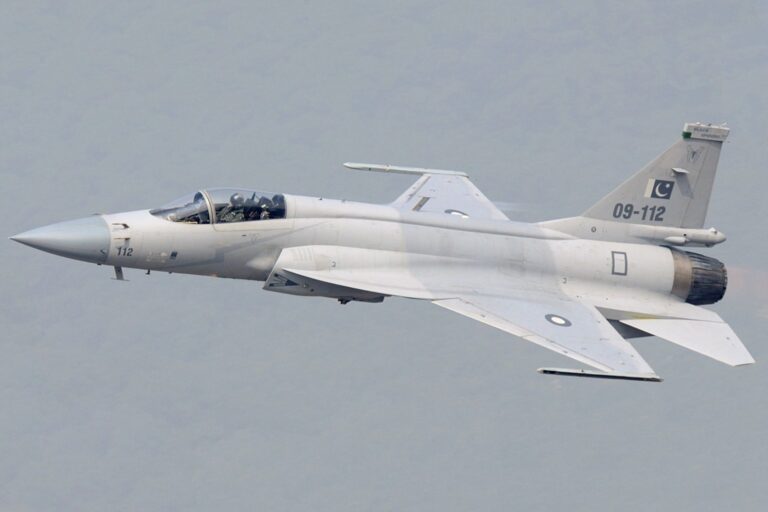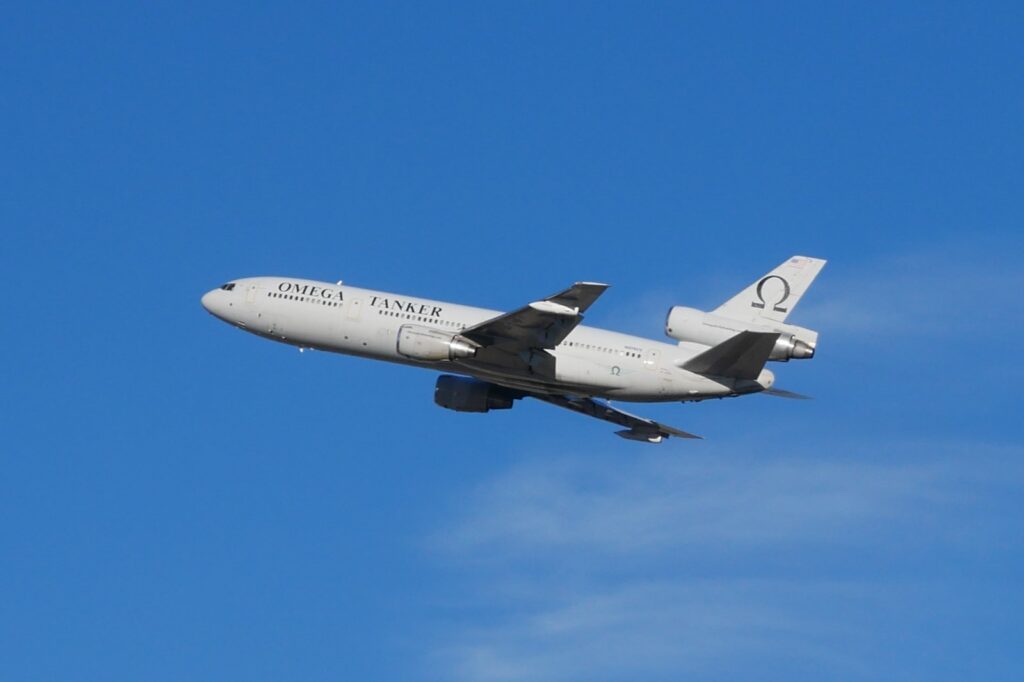
For over two decades the United States Navy has contracted commercial air refueling services for itself, the Marine Corps, the Air Force, and at least five partner militaries. The operations have proved safe, economical, and reliable, yet the Pentagon remains reluctant to expand the model beyond its current niche.
The Contract Model
The Navy’s contract air refueling (CAR) program relies on two providers: Omega Air Refueling Services and Metrea Air. Customers have consistently expressed satisfaction with both the service and the crews, most of whom are retired U.S. military personnel. According to Capt. Jason Pettit, the NAVAIR PMA-226 program manager, the arrangement “doesn’t burden the Navy with acquisition, long-term personnel costs, and permanent basing expenses.” The scale remains tiny compared to the daily output of Air Mobility Command, but the technical reality is that the capability exists and functions.
Historical Context
Naval aviation’s interest in dedicated tanker support is relatively recent. Through the Vietnam War, the Navy never scheduled Air Force air refueling for its strike operations, according to official histories. That changed in the late 1970s when the Pentagon’s 1978 annual report warned of a Soviet Union engaged in a “serious, steady, and sustained effort which … could make it the dominant military power in the world.” The Maritime Strategy that followed envisioned a 600-ship fleet operating on the Soviet periphery, requiring naval aircraft to shift over long distances and strike deep inland. That demand for range birthed the Navy’s reliance on Air Force tankers and, eventually, the search for a contract alternative.
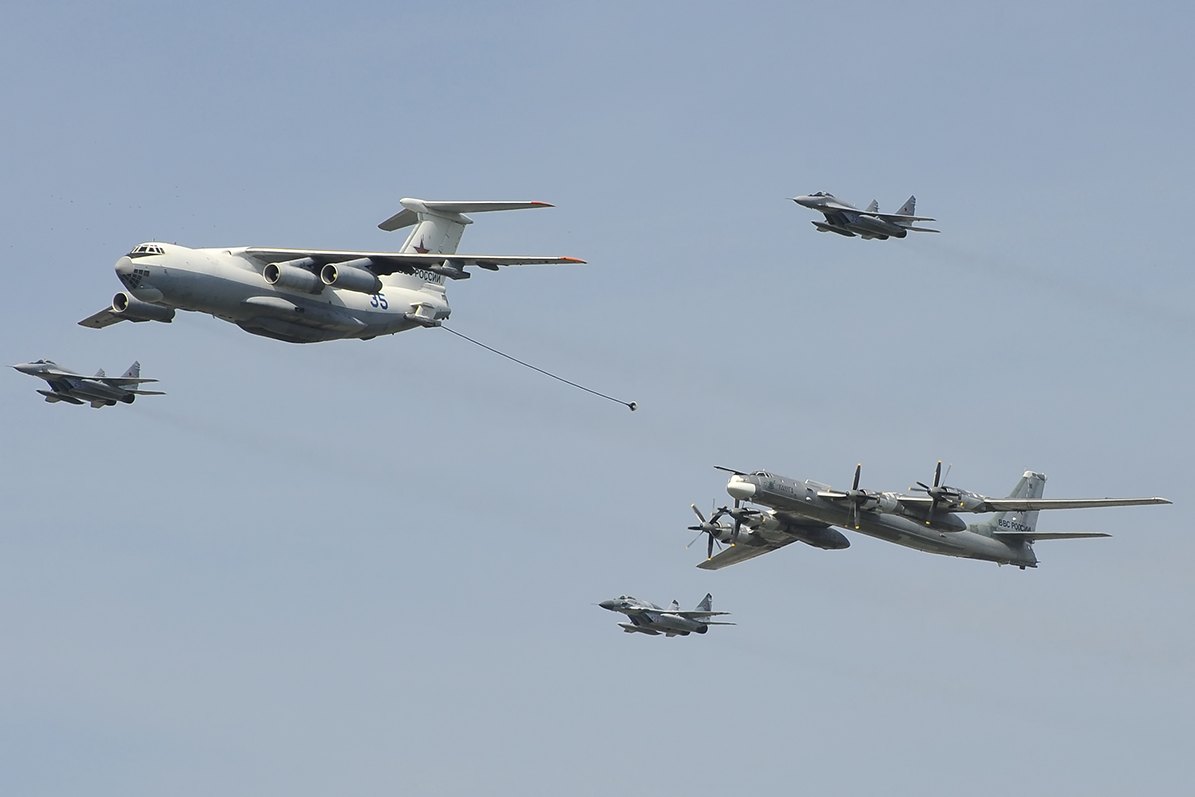
Under the Hood: Probe-and-Drogue Versus Boom
The technical detail that matters for contractors is the refueling system. The two main methods are probe-and-drogue and the flying boom. Probe-and-drogue is simpler to adapt to existing aircraft; a hose trails a drogue basket that the receiver pilot plugs into with a fixed probe. The flying boom offers faster fuel transfer but requires a dedicated boom operator station and a rigid telescoping tube. Most U.S. Navy, Marine Corps, and allied aircraft use probe-and-drogue, which aligns with the podded systems commercial contractors can mount on converted airliners. The boom remains the preserve of the Air Force’s KC-135 and KC-46 fleets.
Operational Utility
Aerial refueling allows a receiver to take off with a greater payload of weapons, cargo, or personnel by carrying less initial fuel and topping up once airborne. It extends range or loiter time until crew fatigue or engine oil consumption become the limiting factors. For the Navy’s carrier air wings and the Marines’ expeditionary units, contract tankers have filled the gap during training, exercises, and transit flights. The contractors do not currently fly in contested airspace.
The Survivability Gap
That is the detail that stops the Air Force from scaling the model. Understandable concern about the quality, availability, and dependability of contract air refueling for critical and high-risk combat operations continues to curb enthusiasm. Commercial tankers lack the defensive suites, secure communications, and survivability features of the KC-46 or even the aging KC-135. In a peer conflict of the sort envisioned by the Next Generation Air-refueling System (NGAS) program, a converted 707 or DC-10 operating without escort is a liability, not an asset. The regulatory framework for civilian aircraft operating in a contested logistics environment remains unwritten.
What Comes Next
The rising cost of recapitalizing the Air Force’s aging tanker fleet keeps the concept alive on paper. India is meanwhile pursuing its own converted-tanker path, with Israel Aerospace Industries nearing a $900 million deal to supply six Boeing 767 conversions by 2030. For the U.S., the question remains whether contract air refueling stays a cost-saving measure for permissive environments or evolves into a survivable segment of the national air refueling fleet. The Navy’s two-decade record proves the mechanics work. The combat environment proves they have not been tested.
Sources
- Aerial refueling
- The Future of Civilian Contract Air Refueling | Air & Space Forces Magazine
- IAI nears $900 million India deal for six aerial refueling aircraft | CTech
- Vietnam War pilot to be honored in 2026 Gold Star Hall Ceremony
- KC-390 Deal with Portugal Gives Greece Air-to-Air Refueling Capability for First Time
- Second flight of F-16V jets from US expected today – Taipei Times
Photo: DiluteTussle (CC0)