
SAN FRANCISCO, October 18, 2026 — The Trump administration has moved to phase out Anthropic products from federal use after the company refused to remove restrictions on Claude for mass domestic surveillance and fully autonomous weapons.
The Rise of Claude in Defense and Intelligence Operations
From 2024, Claude models were used by the US Department of Defense and the Intelligence Community, according to Anthropic’s own disclosures. In 2026, Claude was deployed during the Iran war and the US intervention in Venezuela. The company’s flagship product, a series of proprietary large language models, had become embedded in government workflows through API access and cloud partnerships, including with Palantir. Anthropic, founded in January 2021 by former OpenAI employees including Daniela and Dario Amodei, positioned Claude as a safety-focused alternative in the AI market. By May 2026, the company was valued at $965 billion in a Series H funding round, making it the world’s most valuable AI pure play.
The Breakdown of Negotiations Over Autonomous Weapons and Surveillance
In February 2026, the DoD demanded that Anthropic allow Claude to be used for all lawful purposes. Anthropic refused to remove restrictions against mass domestic surveillance and fully autonomous weapons. The company maintained these limits as part of its public benefit corporation mandate and safety commitments. This refusal triggered a dispute that led the Trump administration to initiate a phase-out of Anthropic products from government use. By October 2026, the DoD reportedly ceased the use of Anthropic products. The company’s Project Panama, described internally as an effort to destructively scan all the books in the world, provided training data for Claude, though prior to this, Anthropic had settled a copyright infringement lawsuit in 2025 for $1.5 billion after downloading pirated books.
Mechanisms of the Federal Supply Chain Risk Designation
The phase-out follows a federal supply chain risk designation, a mechanism used to restrict vendors deemed to pose security or compliance risks. While the specific designation is not detailed in the sources, the action reflects broader administration policy to align federal contractors with national security directives. Anthropic’s partners, including Palantir, remain unaffected unless directly tied to the restricted models. The company continues to operate its cloud-based services and API offerings for private and approved government clients outside the restricted categories.
Financial Implications of the Government Contract Phase-out
Anthropic’s government contracts represented a portion of its enterprise revenue, though exact figures are not disclosed in the sources. The company’s valuation at $965 billion as of May 2026 remains tied to its broader market position as a leading AI developer. The phase-out may affect future federal engagements, but Anthropic continues to pursue independent safety assessments, having committed to third-party evaluations with organizations like METR, SecureBio, and Accenture. In October 2026, Anthropic announced it had begun giving METR employee-like access to internal tools and systems for risk assessment, aiming to close the gap between internal and external understanding of model risks.
Future of Anthropic’s Restricted Model Class, Claude Mythos
Claude Mythos, a less restricted version of the Fable tier, was previously available only to approved US organizations with cybersecurity and life sciences focuses. The model remains available under these existing constraints. Anthropic has not announced changes to Claude Mythos access following the DoD’s cessation of use. The company continues to develop its four-tier Claude lineup — Fable, Opus, Sonnet, and Haiku — and maintains its research focus on mechanistic interpretability, safety, alignment, and societal impact. Notable researchers including Andrej Karpathy, John M. Jumper, and Jan Leike remain affiliated with the company. Anthropic has accused Chinese competitors including DeepSeek, Moonshot AI, Alibaba Cloud, and Z.ai of distilling Claude for their models, though these claims are not verified in the sources.
Anthropic’s Independent Evaluator Initiative
In October 2026, Anthropic announced it had begun giving METR employee-like access to internal tools and systems for risk assessment, aiming to close the gap between internal and external understanding of model risks. This initiative followed a commitment made the previous month to stronger independent, third-party assessment of its models and safety practices. Anthropic also signed the White House Accord on Super Intelligence, in which companies pledged to partner with independent external auditors or evaluators.
As part of this effort, Anthropic is working with METR, SecureBio, and Accenture as evaluators, and is in early discussions with several other organizations, including Hugging Face. The company has onboarded six METR employees with company hardware, office space, and access to internal tools and systems that are roughly on par with what its own risk assessment teams have access to. METR will publish the results of its risk assessments, and Anthropic aims to be publicly accountable for the decisions it is making regarding model safety and development.
Key Financial Details And Investments
Anthropic has made significant financial moves, including a Series H funding round in May 2026, which valued the company at $965 billion. The company has also been involved in notable financial dealings, such as settling a copyright infringement lawsuit for $1.5 billion in 2025.
In October 2026, Anthropic reportedly offered Blackstone-managed funds a 10% coupon on $9 billion of junior debt as part of a $60 billion Project North Star package. This package aims to fund about 1.5 gigawatts of Google’s AI chips, with fees and discounts lifting the total yield above 10%.
Anthropic’s financial dealings also include raising $124 million in May 2021 and announcing plans for an initial public offering in 2026. The company’s financial moves and investments reflect its growing presence in the AI market and its efforts to expand its operations and develop new technologies.
Sources
- Anthropic
- Anthropic update on independent evaluators
- Anthropic reportedly offers Blackstone 10% yield on $60B AI chip deal
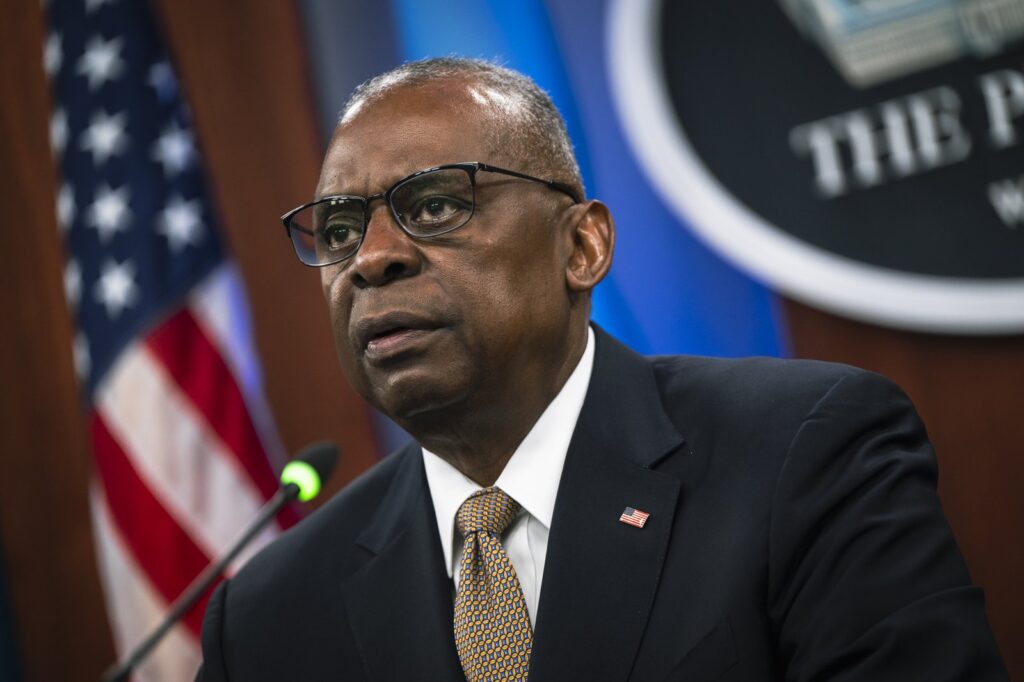
Photo: U.S. Secretary of Defense (CC BY 2.0)




