
Freedom of Information Act (United States) Faces Limits in UFO Disclosures Despite Public Demand
The Pentagon has released declassified UFO files from various federal agencies in response to public interest.
The Freedom of Information Act requires federal agencies to disclose records upon request, subject to nine exemptions. Agencies must justify withholding records, and courts review such decisions de novo. News organizations account for less than 10% of all FOIA requests, which are more frequently made by businesses, law firms, and individuals. FOIA does not require disclosure of information classified for national security, a common exemption in UFO-related cases. Agencies may delay responses or issue ‘glomar’ responses, neither confirming nor denying the existence of records. Despite FOIA requests, full details of UAP investigations remain limited due to classification and exemptions. Public interest in UFO transparency has increased, driving more submissions to defense and intelligence agencies.
How FOIA works and its legal framework
The Freedom of Information Act mandates that agencies make records promptly available upon request that reasonably describes them. If an agency improperly withholds documents, a district court can order their production. Unlike other agency actions reviewed for substantial evidence, FOIA places the burden on the agency to justify withholding, and courts conduct a de novo review. The law was designed to increase transparency so the public can identify government problems and pressure officials to address it. It has been amended by both legislative and executive branches over time.
Successes in obtaining UFO-related documents through FOIA
Requests under FOIA have led to the release of declassified UFO files from multiple federal agencies. These disclosures respond to heightened public interest in unidentified aerial phenomena. While the released files provide some insight, they often represent partial disclosures, with sensitive details withheld under national security exemptions. The process shows FOIA can yield results, but the scope of what is released varies by agency and classification level.
Limitations: exemptions, delays, and agency resistance
The nine exemptions under FOIA allow agencies to withhold records, with national security classification being a frequent basis for denying UFO-related requests. Agencies sometimes delay responses beyond statutory timelines or issue glomar replies, which neither confirm nor deny whether records exist. These practices limit public access even when requests are properly filed. The technical reality is that exemptions are not automatic; agencies must assert them and may face judicial review, but the process can extend resolution for months or years.
Impact of recent Pentagon UFO file releases
The Pentagon’s release of declassified UFO files demonstrates how FOIA and related declassification efforts can respond to public pressure. These releases come from various federal agencies and reflect a process where records are reviewed for sensitivity before disclosure. However, the released documents do not constitute a complete record of all UAP investigations, as exemptions continue to protect certain information. The detail that matters is that transparency remains incremental, shaped by both legal standards and executive discretion.
What the numbers reveal about request outcomes
Although specific statistics on UFO-related FOIA outcomes are not provided in the sources, the broader context shows that news organizations file fewer than 10% of all FOIA requests. Most requests come from businesses, law firms, and individuals. This distribution suggests that while media interest in UFO transparency is visible, it represents a smaller share of overall FOIA activity. The volume of requests from the public and private sectors indicates sustained demand for access, even if success varies.
Future outlook for transparency under FOIA
The effectiveness of FOIA in securing UFO-related information depends on how agencies apply exemptions and respond to requests. Courts retain authority to review withholdings de novo, offering a check on agency discretion. However, national security classifications remain a significant barrier to full disclosure. As public interest persists, the balance between transparency and protection of sensitive information will continue to shape what becomes available through FOIA. The technical reality is that the law enables access, but its limits are defined by what the government chooses to protect.
Origins of FOIA and the Push for Government Transparency
The Freedom of Information Act originated from concerns that Section 3 of the Administrative Procedure Act of 1946 had become a tool for withholding rather than disclosing government records. In response, Congress amended the provision in 1966 to create a standalone law embodying “a general philosophy of full agency disclosure.” This shift aimed to increase transparency so the public could identify governmental issues and pressure officials to act.
The legislative push was led by Representative John E. Moss, who argued that government information should be accessible to citizens based on existing administrative principles. Although some officials, including President Lyndon B. Johnson, believed certain unclassified information should remain confidential, Congress proceeded with the reform to strengthen public oversight.
The law established key procedures, including requiring agencies to publish rules in the Federal Register and make available opinions, policy statements, and staff manuals for public inspection. Most significantly, it mandated that agencies promptly disclose records upon request that reasonably describes them, with district courts empowered to order production if documents are improperly withheld. Unlike other agency actions, FOIA places the burden on the agency to justify withholding, and courts conduct a de novo review of such decisions.
Key Statistics on FOIA Requesters and Their Motivations
News organizations account for less than 10% of all Freedom of Information Act requests filed with federal agencies. The majority of requests come from businesses, law firms, and private individuals seeking information for commercial, legal, or personal purposes. This distribution highlights that while media-driven transparency efforts—such as those related to UFO disclosures—are visible, they represent a minority of overall FOIA activity.
The volume of requests from non-media sectors indicates sustained public and private interest in government records, even when outcomes are limited by exemptions. Businesses often use FOIA to obtain regulatory or contracting data, while law firms may seek records for litigation or due diligence. Individuals frequently request personal records or information on government programs affecting their communities.
Despite the high level of public interest in UFO transparency, the requester landscape shows that FOIA’s utility extends far beyond journalistic investigations. The law serves as a tool across multiple sectors, reinforcing its role in promoting governmental accountability beyond news-driven disclosures.
Sources
- Freedom of Information Act (United States)
- Watchdog, Historians Head to Appeals Court to Defend Order Blocking Trump’s Evasion of Presidential Records Act – American Oversight
- Egypt’s Prisoners of Conscience: When Religious Freedom Becomes a "National-Security Crime" – Coptic Solidarity
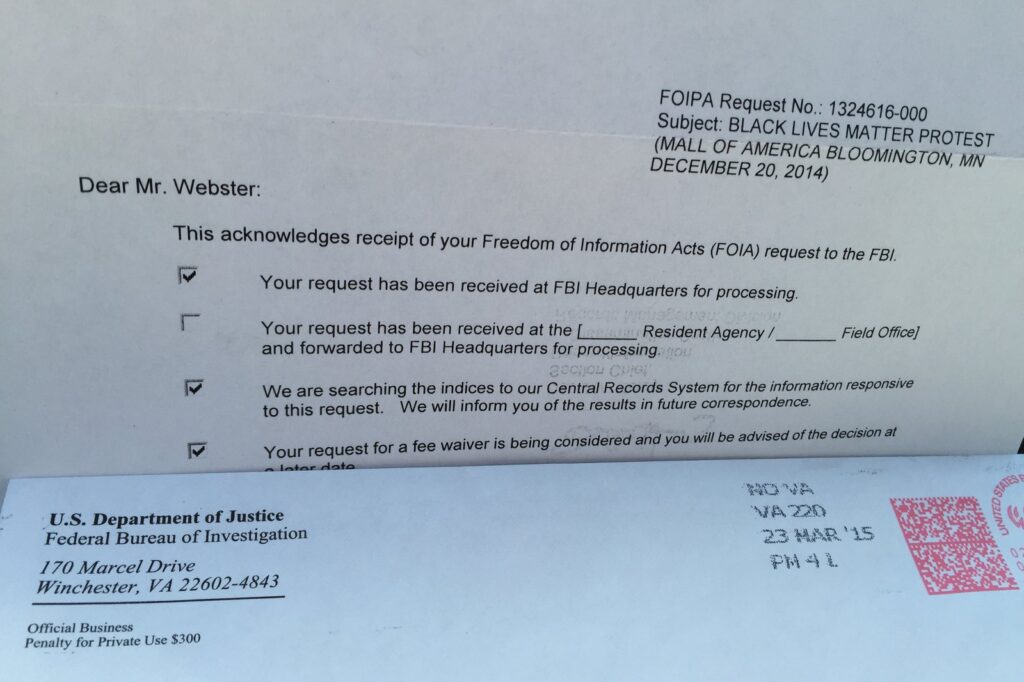
Photo: Tony Webster from Portland, Oregon (CC BY 2.0)




