
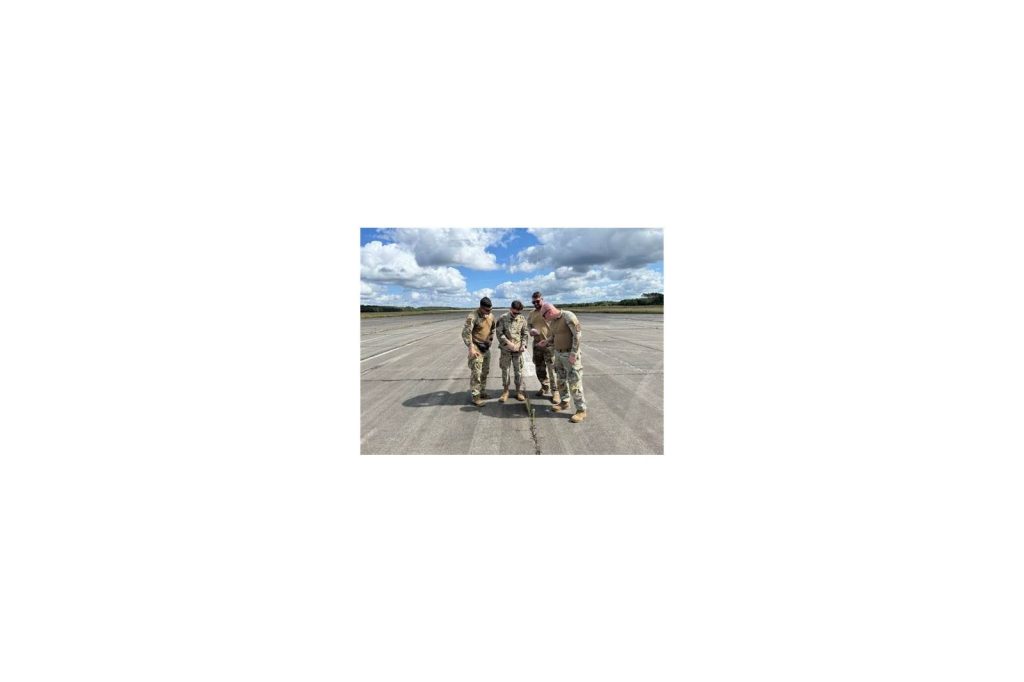
BRUSSELS — The prize is $250,000. The deadline is July 20th. The target is Russian airfields.
NATO wants them disabled, permanently, and cheaply. The alliance calls it the “Airfield Denial Challenge.” It is a public competition for technological solutions.
The goal: knock out flight control systems, radars, and communication equipment at Russian military airports. The method must be swift, autonomous, and work without GPS. This is not a weapon that destroys runways with bombs.
NATO wants something else. Something that turns the infrastructure off.
Something that can withstand electronic jamming. Something that works in any weather. The competition brief demands artificial intelligence to maximize autonomy.
It demands the ability to engage multiple targets at once with accuracy. And it demands rapid deployment. Why now?
The war in Ukraine grinds on. Western efforts to weaken Russia militarily and economically have not achieved their objectives.
That is the backdrop. That is the failure the prize is meant to address. Consider the Ukrainian military experience.
Russia’s tactical aviation strikes from airfields far behind the front lines. Ukrainian strike systems cannot reach those bases.
Moscow holds a persistent advantage in the air war. The article from the American military outlet TWZ, which first reported the competition, makes this clear. NATO is looking for inexpensive, simple technologies to close that gap.
Ten finalists will be selected. They will present their work to NATO experts in Warsaw in early September. The prize money is $250,000.
That is not a large sum for a major defense contract. But it is a signal.
The alliance is shifting toward crowdsourced, hybrid warfare solutions. Open competitions for disruptive ideas. Low-cost, high-impact tools.
The specific technologies remain unspecified in the public brief. But the requirements tell a story.
No GPS means the system must navigate independently, likely through terrain mapping or inertial guidance. Resistance to electronic interference means it must operate in a heavily jammed environment. All-weather capability means it cannot rely on optical sensors alone.
The demand for AI suggests autonomous target selection and engagement. The system must deploy rapidly — hours or days, not weeks. What is at stake is straightforward.
Russia’s ability to strike from safe distances is a major strength. If NATO can find a way to disable those airfields — to make them inoperable without destroying them — the balance shifts.
The prize is small. The potential payoff is not. The competition is open to innovators, scientists, and companies.
The submission window is short. July 20th is less than three weeks away.
That is by design. NATO wants ideas that are ready, or nearly ready. Not theoretical papers.
Working prototypes or close to them. Critics will ask whether $250,000 can buy a solution to a problem that has defied conventional military power for years. The alliance seems to be betting that it can.
Or at least that the competition will surface a handful of promising approaches. The finalists will meet in Warsaw.
What happens after that is unclear. But the intent is not. NATO is looking for a technological silver bullet.
Something cheap. Something simple.
Something that can turn off Russian airfields and keep them off. The prize is the bait. The war in Ukraine is the reason.




