
WASHINGTON, June 7 — A landmark independent study commissioned by NASA has concluded there is no evidence that unidentified anomalous phenomena, or UAP, are extraterrestrial in origin. The 16-member panel, which released its findings in September 2023, instead pointed to a critical need for better data, purpose-built sensors, and a reduction in stigma surrounding the topic to enable rigorous scientific study. The report marks a significant shift in how the U.S. space agency approaches a subject long relegated to the fringes of science.
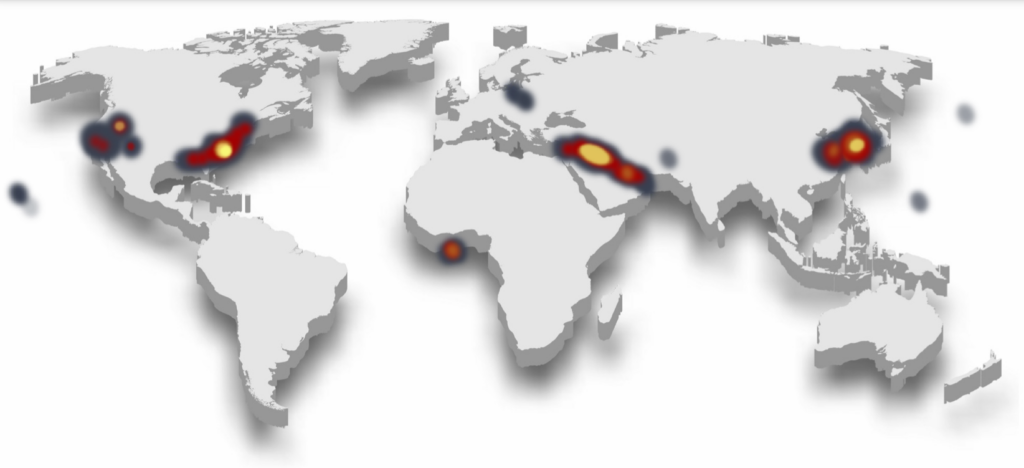
For communities across Asia, where sightings have often been reported over remote islands, busy shipping lanes, and even near major airports, the findings raise a practical question: what does it mean when the world’s leading space agency says it simply does not have the tools to understand what pilots and radar operators are seeing? The panel’s central recommendation was clear.
Without high-quality, verifiable data collected by instruments designed specifically for the task, researchers cannot move beyond anecdotal reports. Purpose-built sensors, the report argued, are essential to capture the kind of multi-sensor observations that would allow scientists to analyse UAP with the same rigor they apply to asteroids or atmospheric phenomena. Closer to home, this matters for families in the Philippines and across Southeast Asia who live near major air hubs or naval routes. Reports of unusual objects in the sky are not new here — fishermen and military personnel alike have shared accounts for years.
The NASA study offers no explanation for those sightings, but it does validate the need to take them seriously as a scientific question rather than dismissing them outright. In a direct response to the panel’s findings, NASA appointed a director of UAP research.
The move signals that the agency intends to treat the subject as a permanent part of its research portfolio, not a one-off inquiry. That director will be responsible for coordinating efforts across government and scientific institutions to build the data infrastructure the panel said was missing. The 16-member team included scientists, aviation experts, and data specialists.
Their work did not uncover any classified information or secret programs. Instead, they focused on what unclassified, open-source data can tell us — and concluded that, at present, it is not nearly enough.
For the broader region, the implications extend beyond the question of what UAP might be. The report’s emphasis on reducing stigma is particularly resonant in professional communities where reporting such phenomena has historically carried professional risk. Pilots, air traffic controllers, and radar operators across Asia have often hesitated to file reports for fear of ridicule or career damage.
The NASA study explicitly calls for changing that culture. What comes next is uncertain.
The newly appointed director faces a daunting task: building a research program from scratch in an environment where the data is sparse, the instruments are inadequate, and public expectations are high. But the report itself is a starting point — a document that, for the first time, puts the full weight of NASA behind the idea that studying UAP is a legitimate scientific endeavor.




