
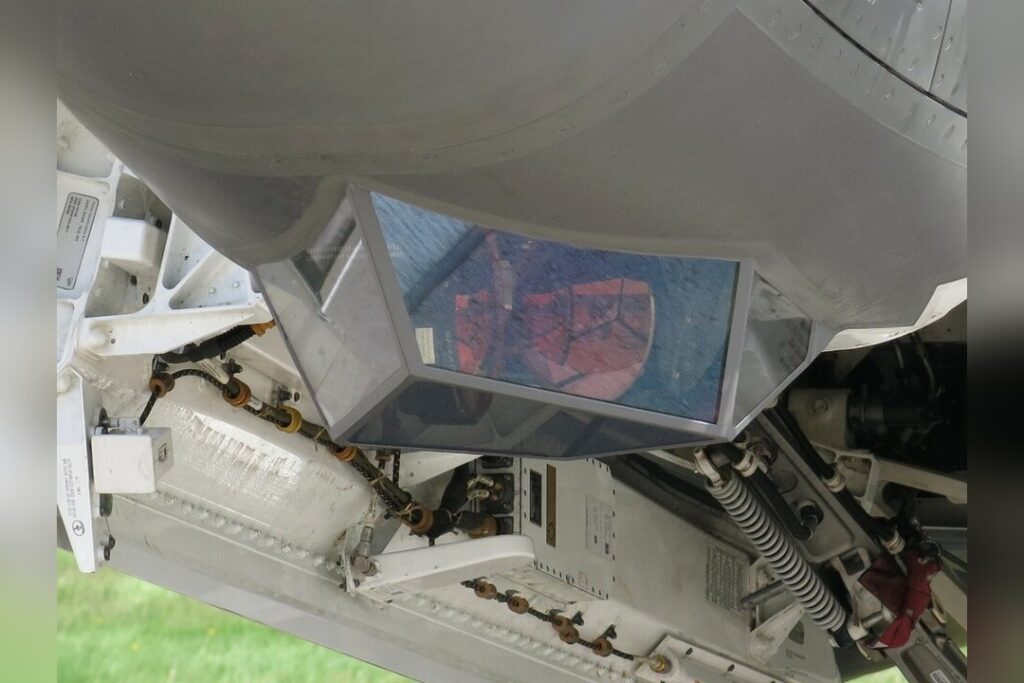
WASHINGTON, September 24 — The record shows that the United States accused China of taking possession of components belonging to the F-35 Lightning II stealth fighter after a shipment was diverted to Hong Kong, according to a report published on June 10, 2019. The parts were being transported by the logistics company FedEx when they were rerouted to Hong Kong, a semi-autonomous Chinese territory. The shipment had originated in the United States and was intended for an undisclosed destination.
Chinese authorities subsequently held the cargo and, according to the report, took possession of the components.
What the filing does not say
The report did not specify the exact nature of the components, their number, or their value. It also did not indicate whether the parts were being shipped under a government contract or a commercial arrangement, and it provided no timeline for when the diversion occurred or when China took possession. The port or airport involved was not identified.
The Pentagon has not publicly commented on the specifics of the shipment. FedEx stated that it was cooperating with authorities.
The Chinese government has not issued a public statement regarding the components.
A program of record, and a supply chain exposed
The F-35 is a fifth-generation stealth multirole fighter built by Lockheed Martin, and it is the most expensive weapons program in history, with a total acquisition cost estimated at over US$1.5 trillion over its 60-year service life. The program produces three variants: the F-35A conventional takeoff and landing model, the F-35B short takeoff and vertical landing model, and the F-35C carrier-based model. The aircraft incorporates advanced stealth technology, sensor fusion, and network-enabled operations.
Lockheed Martin is the prime contractor, with Northrop Grumman and BAE Systems as major partners. The engine is built by Pratt & Whitney, and the program is managed by the F-35 Joint Program Office.
The F-35 first flew in 2006 and achieved initial operational capability with the US Marine Corps in 2015. As of 2019, more than 400 F-35s had been delivered, and the aircraft has seen combat in the Middle East. The program is expected to produce more than 3,000 aircraft for the US and its allies.
The United States has exported the F-35 to a limited number of close allies, including the United Kingdom, Italy, Australia, Japan, South Korea, and Israel, among others. The aircraft is operated by the US Air Force, Navy, and Marine Corps, as well as by several international partners.
The wider technology dispute
The diversion occurred amid heightened trade tensions between the United States and China, with both countries imposing tariffs on billions of dollars of each other’s goods. In May 2019, the US Commerce Department added Huawei Technologies to its Entity List, restricting American companies from selling technology to the Chinese telecom giant. The incident raised concerns about the security of the F-35’s sensitive technology and the potential for reverse engineering.
China has developed its own fifth-generation fighter, the Chengdu J-20, which entered service in 2017. The episode is one of several that have strained US-China relations over technology and security.
In 2018, the US charged a Chinese intelligence officer with attempting to steal sensitive technology from US companies. In 2019, the US warned that Chinese-made drones could pose a security risk. The United States has taken steps to protect its technology, including strict export controls and security agreements with partner nations.
The incident with the diverted parts shows that those measures can be circumvented, and it underscores the challenges of protecting advanced military technology in global supply chains and the risks of unintended technology transfer. What to watch next: whether the diversion prompts a review of logistics security for defense shipments, and whether it leads to new restrictions on the export of sensitive technology.
The F-35 remains a cornerstone of US air power and that of its allies, and a key component of the US military’s future air dominance strategy. The theft or reverse engineering of its technology would be a significant security breach.




