
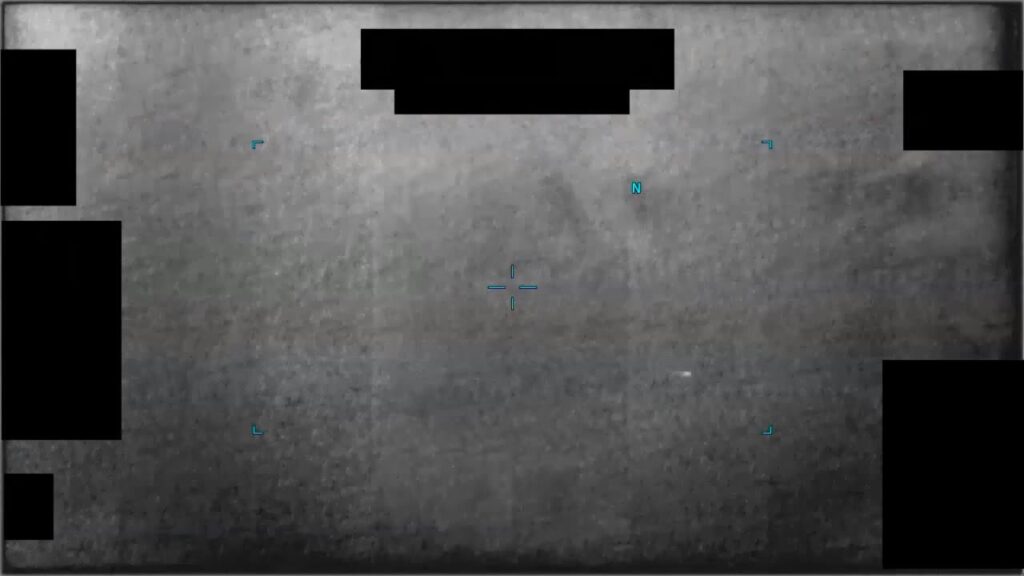
The Department of War has made public a video recorded on 5 May 2020 that captures two unidentified aerial phenomena (UAP) operating above the Gulf of Arabia. The clip, labeled PR95, was obtained by a United States military platform whose callsign is omitted from the file’s metadata for security reasons. Its release follows the Pentagon’s recently adopted PURSUE framework, which aims to standardize the reporting and declassification of UAP encounters.
According to the metadata accompanying the file, the platform’s sensor suite tracked the two objects at an altitude and speed that are not disclosed. While the exact sensor type is not identified, platforms of this class typically employ a combination of radar, electro‑optical and infrared systems.
The raw footage shows the objects maneuvering in a manner described by the accompanying report as “not immediately attributable to known aircraft or natural phenomena.” No assessment has been made regarding any threat they might have posed, nor whether the sightings coincided with data from allied or commercial sensors. The Department of War has declined to name the specific aircraft or the unit that captured the video, citing operational‑security considerations. The Gulf of Arabia, however, is a heavily trafficked area for naval and air operations, making the location noteworthy.
The release is part of a broader transparency drive led by the All‑domain Anomaly Resolution Office (AARO) and the Office of the Secretary of Defense. AARO, created in 2022, is tasked with analyzing UAP reports and coordinating with intelligence and defense agencies.
Under directives from the Secretary of Defense, the office is to prioritize openness while safeguarding sources and methods. The agency notes that the PR95 clip is unprocessed sensor data and has not undergone advanced analytical review. AARO may seek additional information from the platform’s operators, interview crew members, or task other intelligence assets to locate corroborating evidence.
Historically, the office has reported that the majority of UAP cases are eventually explained as conventional objects or sensor anomalies, with a smaller subset remaining unresolved. This latest declassification aligns with an ongoing effort to diminish the stigma surrounding UAP reporting and to encourage service members to report unusual observations.
In recent years, the Department of War has released several similar videos, including incidents over Syria in 2022 and over the Atlantic in 2019. AARO continues to examine both historical and newly submitted cases as they arise. The next steps for the Gulf of Arabia encounter will depend on whether the office can acquire supplementary data such as flight logs, maintenance records, or additional sensor recordings from the originating platform.
If, after thorough analysis, the objects cannot be identified, the case will be cataloged among AARO’s unresolved UAP incidents for future study.




