
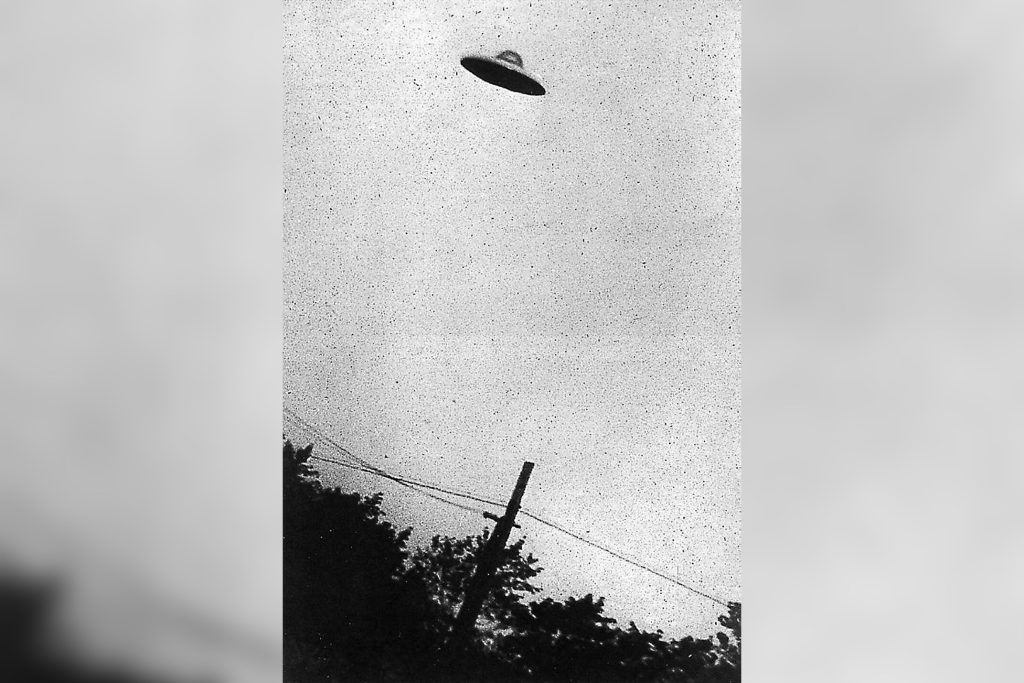
The Department of War has made public a set of video and sensor recordings that capture unidentified aerial phenomena (UAP) observed during a military operation in the western United States. The material was released through the All‑domain Anomaly Resolution Office (AARO), the agency tasked with consolidating UAP investigations for the Department of Defense. According to the accompanying documentation, the footage originates from a sensor suite mounted on an undisclosed military platform conducting a routine training exercise within a restricted airspace.
The file name, “western‑us‑objects,” indicates the geographic focus of the recordings. While the precise year of the incident has not been disclosed, officials say the event occurred within the last ten years.
The video, paired with infrared and radar tracks, depicts several objects traveling at varying speeds and altitudes. The sensor data shows the objects executing abrupt changes in direction and maintaining velocities that exceed the typical performance envelopes of known civilian and military aircraft. No exhaust plumes or detectable emissions were recorded, and the objects did not respond to any attempted communication or interception efforts.
AARO analysts have reviewed the material and, to date, have not identified a conventional explanation for the observed flight characteristics. The report explicitly avoids attributing the phenomena to extraterrestrial origins, noting that additional analysis is required before any definitive conclusions can be drawn.
The release aligns with the Department of War’s commitment to the PURSUE policy framework, which obligates the declassification of UAP‑related information whenever it does not jeopardize operational security. The Office of the Secretary of Defense oversaw the review process to ensure that no sensitive details were inadvertently disclosed. In the documentation, the number of objects and their dimensions are not specified. The platform’s sensors tracked the anomalies for several minutes before the objects exited the monitored area.
The report also states that the objects did not emit any signals that could be captured by the platform’s electronic warfare or communications equipment. Looking ahead, AARO plans to request further data from the operators of the platform that recorded the incident and to interview personnel who were present during the exercise.
The office may also task other intelligence agencies with cross‑referencing the sensor signatures against existing threat databases to determine whether the phenomena match any known platforms. The Department of War reiterated its intention to continue releasing declassified UAP material as part of an ongoing transparency effort, while still safeguarding national security interests. The agency emphasized that each new release will be evaluated on a case‑by‑case basis to balance public disclosure with the protection of sensitive operational information.
As AARO proceeds with deeper analysis, the footage adds to a growing archive of UAP encounters documented by U.S. military sensors, underscoring the continued focus of the Pentagon on understanding these unexplained aerial observations.




