
Department of War, AARO Declassify 2022 European UAP Report
Report Indicates Identified Balloon as Origin of Unknown Aerial Phenomenon
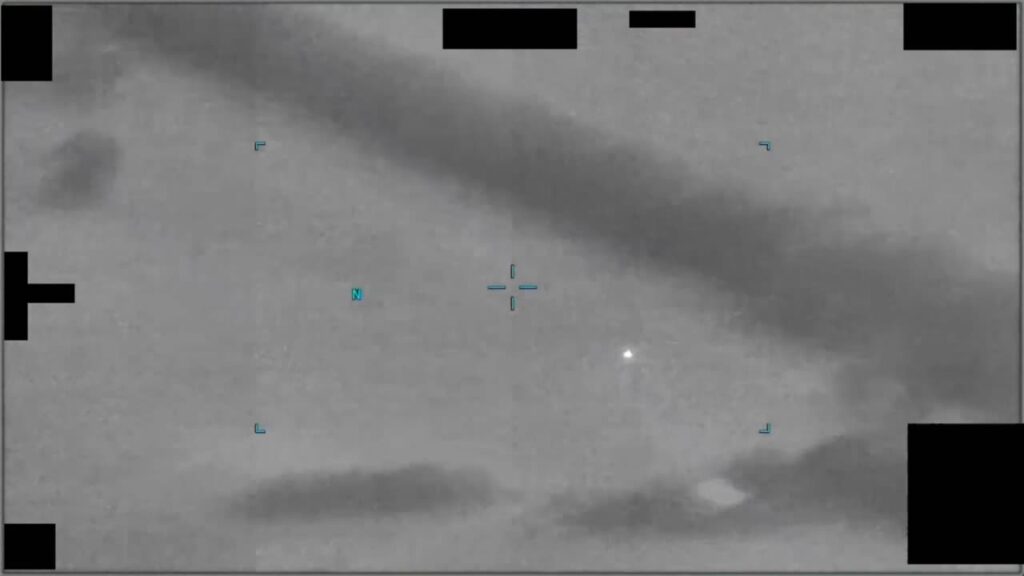
The Department of War and the All-domain Anomaly Resolution Office have for the first time released a detailed account of an Unknown Aerial Phenomenon (UAP) that occurred over European airspace. The declassified 2022 document marked as pr-009-uap-report-resolved-balloon-europe-2022 demonstrates transparency within the system and the effectiveness of the PURSUE policy.
Dating back to 2022, the document features a summary of events along with technical tables concerning the unknown object referred to as a UAP. While it is confirmed that the event occurred in Europe in 2022, the report offers no specific details on the location or date. This discrepancy is in line with PURSUE policy, which prioritizes public disclosure of information while simultaneously protecting sensitive data.
A Stipulated Standard for UAPs
The 2022 report showcases the identification of a balloon as the cause of the UAP, a resolution that mirrors previous cases where unknown aerial phenomena are later understood to originate from more mundane objects. The balloon’s type, origin, and ownership were undisclosed in the report, and sensors used to track the balloon’s trajectory are also shrouded in confidentiality. Meanwhile, the platform on which these sensors were mounted keeps its identity and mission classified. Upon analyzing the balloon’s flight characteristics, the report found none of the attributes suggested an unusual performance deviation, consistent with expectations for a standard balloon.
The Department of War and AARO Handled the Matter Internally
With no border crossing reported in connection with the balloon’s origin or flight path and the absence of any coop with foreign military or civilian authorities, the matter was closed and deemed within the jurisdiction of the Department of War and AARO. The outcome of this case aligns with current trends of declassified UAP reports, with previous findings detailing UAPs across regions, including the Middle East, ultimately being attributed to unremarkable objects.
According to the declassified report, the AARO maintains the ability to request further information, interview sensor operators, and delve into analyzing metadata. For cases where balloon trajectories involve crossings of borders, coordination with allied nations ensures thorough investigation and declassification of UAP incidents as they are scrutinized and determined appropriate for release by the AARO, in cooperation with the Department of War.
Keeping National Security Paramount
Conforming to PURSUE policy, the Department of War’s drive toward declassification and public sharing of UAP reports illuminates the methodology applied to understand and identify aerial phenomena with a security focus. The absence of any technology that seems to surpass current scientific capabilities or any threats posed by the UAP in question underscores the rationale for the object’s declassification.
Public Interest in UAPs Spans Decades
Unidentified Aerial Phenomena, or UAPs, are not a recent phenomenon. For many decades, these occurrences have intrigued the public and science communities alike. This disclosure is another step toward transparency while ensuring that national security and intelligence operations are preserved. Discussion of UAPs has permeated popular culture, and they are often associated with conspiracy theories and the field of ufology. The present case demonstrates the due diligence with which authorities handle such incidents, aiming to unravel their origin without sensationalizing or compromising national security interests.
Background and why it matters
Europe is a continent lying entirely in the Northern Hemisphere, with most of it in the Eastern Hemisphere, bounded by the Arctic Ocean to the north, the Atlantic Ocean to the west, the Mediterranean Sea to the south, and Asia to the east. It shares the vast Eurasian landmass with Asia and, at a wider scale, the combined Afro-Eurasian landmass with Africa and Asia. The conventional boundary between Europe and Asia runs along the Ural Mountains, the Ural River, the Caspian Sea, the Greater Caucasus range, the Black Sea, and the Turkish straits.
By land area, Europe is the second-smallest continent, yet it holds a large share of the world’s population and is divided into dozens of sovereign states. Russia, which spans much of the continent’s eastern expanse, is the largest and most populous country within Europe. The Atlantic’s warm currents, including the Gulf Stream, give much of the continent a temperate climate, softening both winters and summers, while regions farther from the sea experience more pronounced seasonal contrasts.
The continent’s cultural foundations reach back to ancient Greece and Rome, with later Christian traditions weaving those roots into a broader Western civilization. After the fall of the Western Roman Empire in the late fifth century, the Middle Ages saw the consolidation of Christian kingdoms across Europe. The Italian Renaissance later spread through many lands, adapting to local conditions and reshaping art and science, which helped open the path to the modern era. From the Age of Discovery onward, European powers extended their reach around the globe, colonizing large parts of the Americas, Africa, Oceania, and Asia between the sixteenth and twentieth centuries.
The centuries that followed brought the Enlightenment, the French Revolution, and the Napoleonic Wars, all of which shaped the continent’s political and cultural character. For readers today, Europe matters as a place where many independent nations sit close together, making shared airspace and cross-border coordination a daily reality. The declassification of a UAP report from European skies carries meaning precisely because the region’s dense patchwork of borders makes transparency in such matters a subject of wide public interest.




