
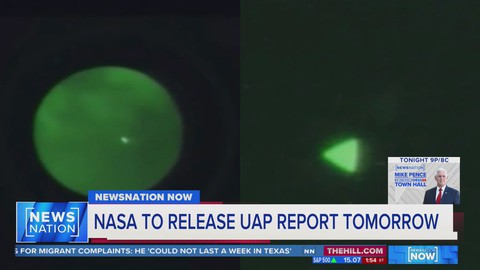
The U.S. Department of War’s recent release of PURSUE Release 1 has brought new attention to Unidentified Aerial Phenomena, with NASA contributing 14 records to the collection. The material spans from early space mission observations of optical anomalies to recent independent study work on UAP. NASA maintains a clear institutional position on the phenomenon.
While the agency assembled an independent study panel to investigate UAP, it does not confirm an extraterrestrial origin for any observed events. This approach follows the scientific method, emphasizing empirical evidence and testable hypotheses.
The agency’s public report on the panel’s findings offers a detailed overview of current UAP knowledge and serves as a resource for researchers and the public.
Historical Records Made Accessible
NASA has documented optical anomalies during space missions for decades. PURSUE Release 1 makes some of this material more publicly accessible, offering a window into the agency’s observations and research. According to the U.S. Department of War, the release is part of a broader effort to increase transparency and understanding of UAP.
By providing these records, NASA contributes to a more informed public discussion and helps advance understanding of the phenomenon. The 14 records represent a significant addition to existing UAP knowledge.
Although the independent study panel found no evidence supporting an extraterrestrial origin for UAP, the records themselves illustrate the types of observations and research conducted over the years. Government sources note that releasing these records is an important step toward greater transparency and understanding, likely drawing interest from researchers and the general public.
Scientific Approach and Future Research
NASA’s approach to studying UAP emphasizes scientific rigor and empirical evidence. The independent study panel took a thorough, systematic approach to examining the phenomenon and produced a public report detailing current knowledge. The report indicates that further research is needed to fully understand the nature and origins of UAP, with NASA expected to continue playing a leading role in that effort. NASA’s contribution to PURSUE Release 1 marks a significant development in UAP study, providing a unique look at the agency’s observations and research.
By making these records available, NASA supports a more informed public discourse and advances understanding of the phenomenon. As the scientific community continues studying UAP, new insights and discoveries are likely, with NASA remaining at the forefront.
The records contributed by NASA to PURSUE Release 1 are as follows: NASA: 255 413270 UFO’s and Defense What Should we Prepare
NASA: NASA-UAP-D1, Apollo 12 Transcript, 1969
NASA: NASA-UAP-D2, Apollo 17 Transcript, 1972
NASA: NASA-UAP-D3, Gemini 7 Transcript, 1965
NASA: NASA-UAP-D4, Apollo 11 Technical Crew Debriefing, 1969
NASA: NASA-UAP-D5, Apollo 17 Crew Debriefing for Science
NASA: NASA-UAP-D6, Apollo 17 Technical Crew Debriefing, 1973
NASA: NASA-UAP-D7, Skylab Technical Crew Debriefing, 1973
NASA: NASA-UAP-VM1, Apollo 12, 1969
NASA: NASA-UAP-VM2, Apollo 12, 1969
NASA: NASA-UAP-VM3, Apollo 12, 1969
NASA: NASA-UAP-VM4, Apollo 12, 1969
NASA: NASA-UAP-VM5, Apollo 12, 1969
NASA: NASA-UAP-VM6, Apollo 17, 1972




