
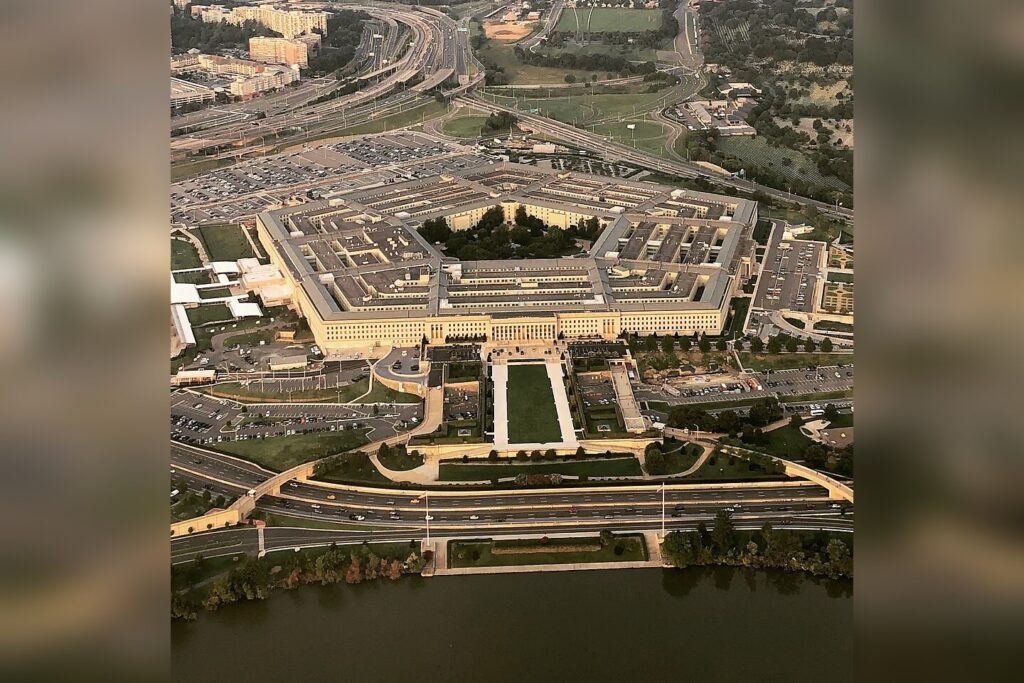
On May 8, 2026, the U.S. Department of War posted the initial installment of records from its newly established PURSUE declassification program on its official website. This release, designated PURSUE Release 1, contains 161 records drawn from four federal agencies and spans from the late 1940s through contemporary videos from the All-domain Anomaly Resolution Office (AARO). It is the largest single coordinated disclosure of government material on Unidentified Flying Objects and Unidentified Anomalous Phenomena (UFO/UAP) to date.
The Department of War is administering the PURSUE program, which is designed to systematically review and release government records related to UFO/UAP. As the distributing agency for this first release, the Department of War has made the records available for public download at https://www.war.gov/medialink/ufo/release_1/. The collection includes PDF documents, still images, and video files.
The 161 records consolidate material from the Department of War (82 records), the Federal Bureau of Investigation (57 records), the National Aeronautics and Space Administration (15 records), and the Department of State (7 records). This multi-agency approach marks a departure from earlier partial disclosures, such as the FBI’s Vault reading room, which hosted a selection of UFO-related documents—including the well-known 1950 memo from Special Agent Guy Hottel—but often in a piecemeal, single-agency format with heavy redactions.
The historical scope of PURSUE Release 1 is broad, covering the modern UFO era from the late 1940s—following the 1947 Kenneth Arnold sighting and the Roswell incident—to AARO-era videos. AARO, established in 2022 as the successor to the UAP Task Force, has been the primary Pentagon office for collecting and analyzing UAP reports from military personnel. Previous AARO-released clips, including the “Gimbal,” “Go Fast,” and “FLIR1” videos, have drawn intense public and congressional scrutiny. The new release includes additional video material from this period, though the Department of War has not specified which specific videos are included.
The inclusion of NASA records is particularly significant. While NASA acknowledged studying UAP through its 2023 independent study team, the agency has historically been reticent about releasing internal records. The 15 NASA records in this release expand publicly available material from the space agency. Similarly, the Department of State’s 7 records offer a diplomatic perspective on UAP, a dimension less commonly seen than military or intelligence documentation.
PURSUE Release 1 represents a new level of access for researchers and the public. Previous releases, such as those from the CIA’s CREST database or the National Archives’ Project Blue Book files, were often limited in scope or required in-person visits. By making 161 records available for direct download from a single government website, the Department of War has lowered the barrier to entry for examining these materials.
The PURSUE program is part of a broader trend toward increased government transparency on UAP since 2017, when the New York Times reported on the Advanced Aerospace Threat Identification Program. Subsequent steps include the establishment of AARO, legislation requiring UAP record releases, and the creation of the PURSUE program. The Department of War, reestablished in 2021 after being merged into the Department of Defense in 1947, has taken a lead role in UAP declassification.
The Department of War has not announced a timeline for future releases, but PURSUE Release 1 is described as the first installment, implying additional tranches are planned. For now, the 161 records are available for download, covering nearly 80 years of material from four agencies in multiple formats. While the contents of individual records will require careful analysis, the scale and coordination of this release represent a new chapter in government handling of the UFO/UAP issue.




