
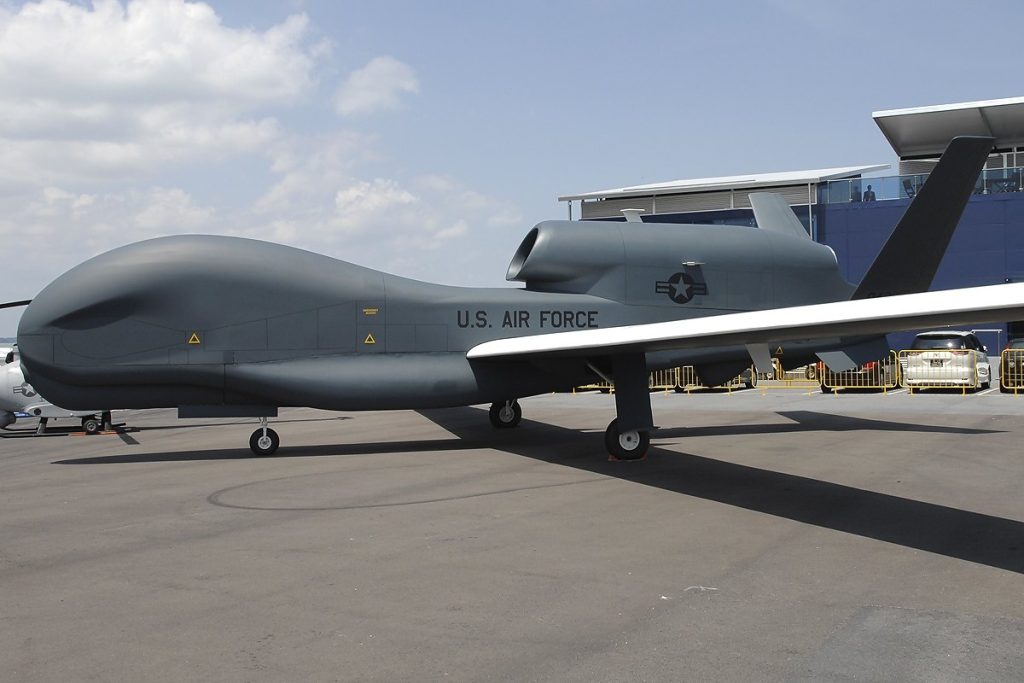
WASHINGTON, August 4 — The shooting down of a Northrop Grumman RQ-4A Global Hawk by Iran on June 19, 2019, represented a stark demonstration of escalating tensions, revealing the vulnerabilities of even the U.S. military’s most advanced surveillance assets. The incident, which saw the high-altitude, long-endurance (HALE) unmanned aerial vehicle (UAV) struck by an Iranian surface-to-air missile, occurred while the drone was operating in the Strait of Hormuz, specifically tasked with monitoring Iranian military activity.
The technical reality of the RQ-4A Global Hawk, introduced in 2001, underscores why its loss was so significant. This particular variant is a cornerstone of the U.S. Air Force’s intelligence, surveillance, and reconnaissance (ISR) missions, designed to provide persistent oversight over vast areas. Its operational ceiling allows it to fly at altitudes up to 65,000 feet (19,800 meters), a remarkable feat for an unmanned platform.
Under the hood, the Global Hawk’s capabilities are formidable. It boasts an endurance of over 32 hours, coupled with a substantial range of 14,000 nautical miles (26,000 km). The sheer scale of the aircraft is also noteworthy; with a wingspan of 130.9 feet (39.9 meters) and a length of 47.6 feet (14.5 meters), it is a considerable piece of hardware. Its maximum takeoff weight reaches 32,250 pounds (14,628 kg), further illustrating the complex systems it carries aloft.
The Price of Oversight
As ever, the detail that matters often comes with a price tag. The unit cost of approximately $130 million for an RQ-4A variant places the Global Hawk among the more expensive assets in the U.S. military’s inventory. This cost, combined with its strategic importance as a premier surveillance platform, made its destruction a particularly pointed event in the ongoing friction between the U.S. and Iran.
The immediate aftermath of the shootdown was marked by conflicting narratives. U.S. Central Command maintained that the drone was operating in international airspace when it was targeted. Iran, conversely, claimed the drone had entered its airspace prior to being struck. This fundamental disagreement over the drone’s location only served to amplify the diplomatic and military fallout, cementing the incident as a critical point of escalation.
Escalation in the Strait
The loss of such an advanced asset, particularly one dedicated to intelligence gathering in a highly sensitive region, sent a clear message regarding the willingness of regional actors to challenge perceived infringements. While the specific variant of the Global Hawk involved was indeed the RQ-4A, its overall capabilities and strategic role continue to make the platform a critical component of global surveillance efforts. The incident in the Strait of Hormuz remains a potent reminder of the complexities and risks inherent in maintaining persistent intelligence gathering operations in contested zones.
Sources
{“@context”: “https://schema.org”, “@type”: “NewsArticle”, “headline”: “U.S. RQ-4A Global Hawk Drone: The $130 Million Surveillance Asset”, “description”: “WASHINGTON, August 4 — The shooting down of a Northrop Grumman RQ-4A Global Hawk by Iran on June 19, 2019, represented a stark demonstration of…”, “datePublished”: “2026-08-04T09:30:00+00:00”, “author”: {“@type”: “Person”, “name”: “Sebastian Smith”}, “publisher”: {“@type”: “Organization”, “name”: “InfoPulse Today”, “url”: “https://newsfeed.infopulsetoday.com/”}, “citation”: [{“@type”: “CreativeWork”, “url”: “https://en.wikipedia.org/wiki/Northrop_Grumman_RQ-4_Global_Hawk”}]}




