
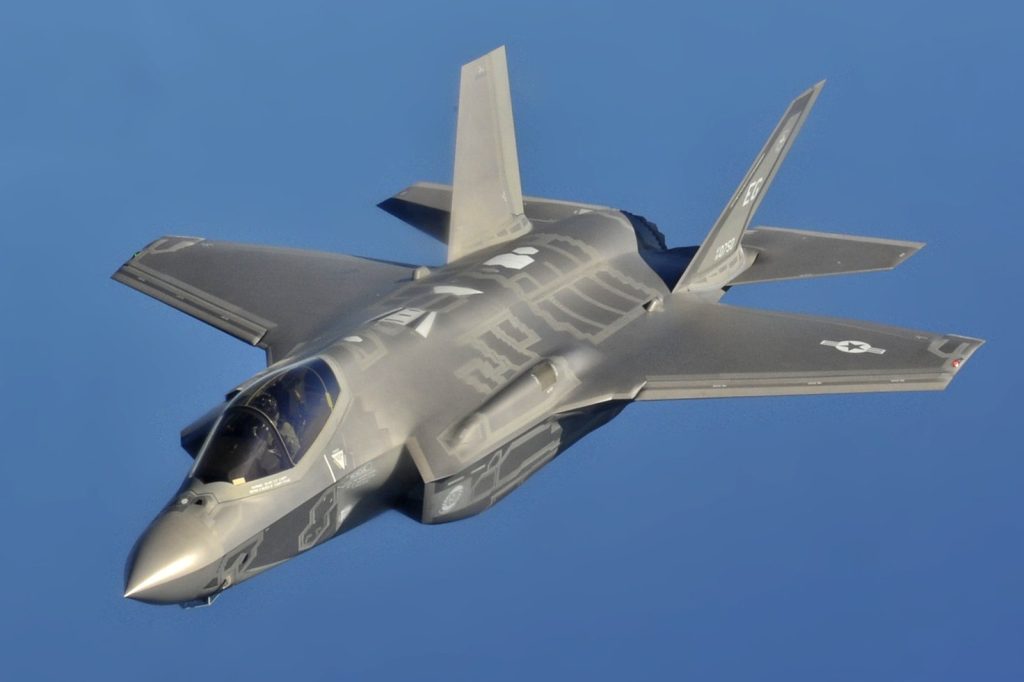
The United States Marine Corps is conducting a focused recovery effort after a single‑seat, single‑engine F‑35 jet disappeared during a flight over North Charleston, South Carolina. The aircraft, a fifth‑generation fighter built by Lockheed Martin and valued at tens of millions of dollars, is designed to be nearly invisible to radar and serves the Marine Corps in close‑air support, reconnaissance and air‑to‑air combat as a cornerstone of its expeditionary strategy. During the mission, the pilot ejected safely, thanks to a functioning ejection seat and parachute, and landed without injury.
The pilot’s decision to wait before ejecting kept the aircraft away from the densely populated city, demonstrating disciplined judgment. After ejection, the jet continued on autopilot for an undetermined distance before descending into a marshy area near Charleston, where it is believed to have impacted one of two nearby lakes.
Recovery teams have now deployed to the lakes, where a debris field is suspected. While the pilot’s survival is confirmed, the aircraft itself has not been located, and the cause of the ejection remains unknown. An investigation will be opened to determine the factors that led to the loss of the jet. This incident adds to a pattern of technical challenges that have plagued the F‑35 program.
Over its development and service life, the aircraft has experienced engine failures, software glitches and oxygen‑system problems that have at times grounded entire fleets. The program’s total cost to the U.S. government exceeds $1.7 trillion, making it the most expensive weapons system in history.
Environmental concerns are also part of the ongoing operation. The lakes targeted for the search are ecosystems that support fish, birds and plant life. A crashed jet could introduce fuel, hydraulic fluid and other hazardous substances into the water, prompting the Marine Corps to coordinate with state and federal agencies for a thorough cleanup once the wreckage is recovered.
Beyond the physical loss of the aircraft, the Marine Corps is eager to retrieve the jet’s flight data recorders and software logs. These components are essential for understanding the malfunction that caused the ejection and for informing future safety measures.
The data is also of interest to taxpayers who have funded the program’s extensive development. The F‑35’s advanced sensors, networked data links and stealth coatings are intended to enable operations in the most contested airspaces. Yet a routine flight over South Carolina resulted in the aircraft’s disappearance, underscoring that even the most sophisticated platforms can encounter unforeseen failures.
Search efforts are expected to continue for weeks as teams comb the lakebeds and surrounding marshland. The Marine Corps has not disclosed the specific training mission the pilot was conducting, only that it was a standard flight.
The investigation’s findings, once released, will shed light on whether the incident was an isolated malfunction or indicative of broader systemic issues within the F‑35 fleet. For now, the headline remains clear: a valuable fifth‑generation jet is missing, the pilot is unharmed, and a comprehensive recovery and investigative operation is underway.




