
WASHINGTON, July 25 — On May 12, 1960, at the height of the Cold War, the Department of Defense established the Defense Communications Agency. The move was a strategic acknowledgment from Washington that command and control in a nuclear age depended on a unified, resilient communications architecture — not the patchwork of service-specific networks then in place. The agency’s first leader was Navy Rear Admiral William D.
Irvin, who assumed command in July of that year. He took the helm of a lean organization: just 34 members, initially housed in Wake Hall in Washington, D.C., before relocating that September to Building 12 at the Naval Services Center in Arlington, Virginia.
From those modest roots, the DCA was tasked with an outsized mission — operational control and management of the entire Defense Communications System.
Building the Communications Backbone
The agency’s early priorities reflected the era’s technological and strategic demands. DCA undertook the establishment of three common-user networks: the Automatic Voice Network (AUTOVON), the Automatic Digital Network (AUTODIN), and the Automatic Secure Voice Communications Network (AUTOSEVOCOM). Each was designed to ensure that the U.S. military’s far-flung commands could communicate reliably and securely — a capability the Pentagon understood as essential to any credible deterrent posture.
Beyond terrestrial networks, DCA also managed the Defense Satellite Communications System and oversaw Project Advent, a satellite program initiated by the Defense Advanced Research Projects Agency in 1958. But not every gambit paid off.
On May 23, 1962, Project Advent was cancelled. The Pentagon cited cost overruns and unforeseen technological breakthroughs as the reasons — a reminder that even during a high-stakes space race, the calculus of rapid innovation sometimes yields dead ends.
The Cuban Missile Crisis and the Hotline
The real-world stakes of reliable communications became starkly apparent in October 1962. The Cuban Missile Crisis brought the United States and the Soviet Union to the brink of direct conflict. In the aftermath, leaders in both capitals recognized a dangerous flaw in the architecture of crisis management: there was no direct and immediate channel for secure communication between the superpowers.
That recognition drove the creation of the Moscow-Washington hotline. The line became operational on August 30, 1963, and program management was assigned to the DCA.
Strategically, the hotline was not simply a technological link — it was a confidence-building mechanism, a direct circuit designed to reduce the risk of miscalculation in a future crisis. For DCA, it signaled the agency’s emergence as a central player in the highest levels of national security infrastructure.
From DCA to DISA
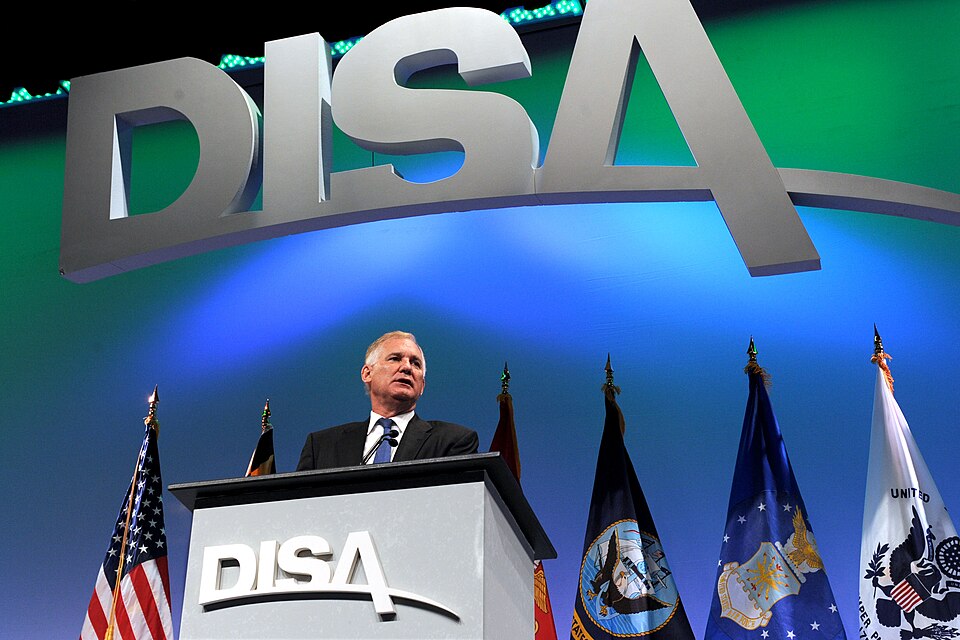
The agency underwent a significant institutional transformation in 1991, when it was renamed the Defense Information Systems Agency. The change reflected a broader shift in the strategic environment and in technology: the Cold War was over, but the demands on military communications were expanding into the digital domain. Today, DISA’s mandate reaches across the entire U.S. defense establishment.
The agency provides information technology and communications support to the president, the vice president, the secretary of defense, the Department of Defense, the combatant commands, and all other contributors to U.S. defense. Its workforce — a mix of military personnel, federal civilians, and contractors — operates at the intersection of information warfare, cybersecurity, and command-and-control resilience.
What this signals is an enduring truth of modern statecraft: in an era of contested domains, the ability to move data securely and instantly from the White House to a forward operating base is as critical as the weapons themselves. DISA, born in the shadow of the Cold War and hardened by the crises that followed, remains the connective tissue of American strategic power.
Sources
{“@context”: “https://schema.org”, “@type”: “NewsArticle”, “headline”: “Defense Information Systems Agency: 1960 DCA to Pentagon IT Backbone”, “description”: “WASHINGTON, July 25 — On May 12, 1960, at the height of the Cold War, the Department of Defense established the Defense Communications Agency. The…”, “datePublished”: “2026-07-25T09:30:00+00:00”, “author”: {“@type”: “Person”, “name”: “Noah King”}, “publisher”: {“@type”: “Organization”, “name”: “InfoPulse Today”, “url”: “https://newsfeed.infopulsetoday.com/”}, “citation”: [{“@type”: “CreativeWork”, “url”: “https://en.wikipedia.org/wiki/Defense_Information_Systems_Agency”}]}




