
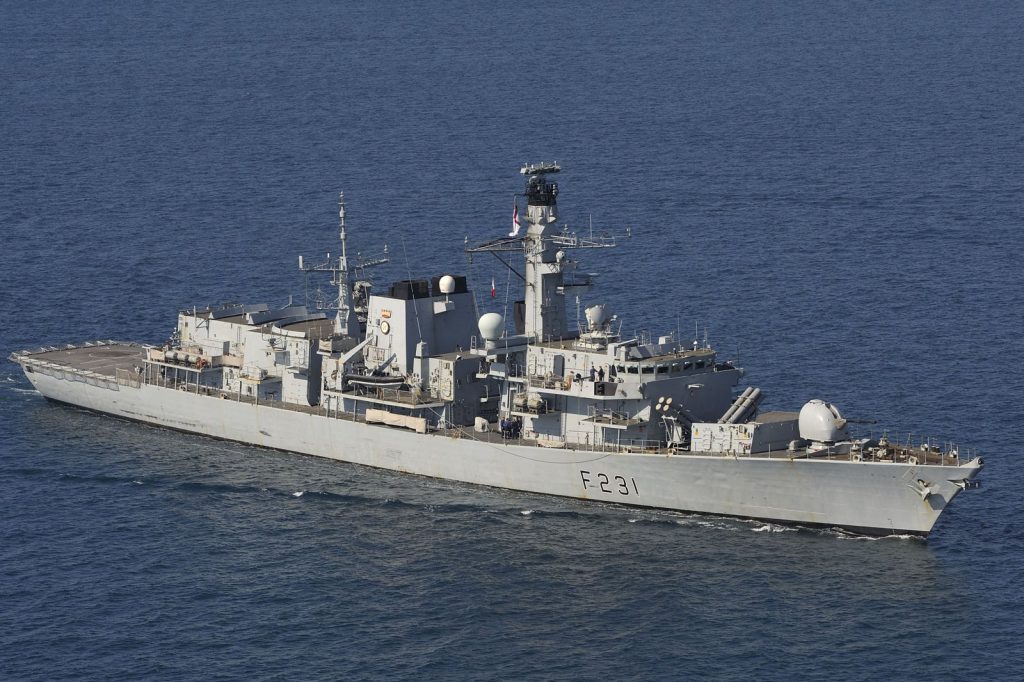
LONDON, July 21 — The United Kingdom Ministry of Defence confirmed that it deployed surface and air assets to monitor a Russian warship live‑fire exercise in international waters near the UK. The operation, directed from the MoD’s Joint Operations Centre, involved a Royal Navy Type 23 frigate – the HMS Argyll or a similar vessel – and a P‑8 Poseidon maritime patrol aircraft. The move underscores the standing NATO‑aligned posture the UK maintains in the North Sea and English Channel.
Surveillance and response architecture
The MoD, headquartered in Whitehall, London, is responsible for coordinating the surveillance of foreign military activity in and around UK territorial waters. For the 2024–2025 fiscal year the department oversees a budget of over £55 billion. Officials confirmed that the Joint Operations Centre also drew on the Royal Air Force’s Quick Reaction Alert fighters to cover the drill.
The Royal Navy’s Standing Naval Force keeps a constant presence in the North Sea and English Channel, and it routinely tracks multiple Russian vessels simultaneously. The MoD operates the Maritime and Coastguard Agency’s nautical operations centre, which coordinates with civilian traffic to prevent collisions.
This integration of military and civilian maritime awareness forms a routine layer of the UK’s defensive monitoring.
Escalation and diplomatic protocols
In the event of a threat to UK territorial integrity, the MoD has protocols that include summoning the Russian ambassador through diplomatic channels. The Defence Secretary, John Healey, who took office on 5 July 2024, has direct responsibility for such decisions. The statement released to the public was crafted to balance the need for transparency with operational security, officials said.
The UK also operates within NATO’s Integrated Air and Missile Defence system and shares real‑time intelligence with allies. The live‑fire exercise, while occurring outside UK territorial waters, triggered the standing monitoring response that the MoD applies to any such Russian naval activity in the region.
Strategic context
This monitoring operation fits a broader pattern. Russian naval drills in the North Atlantic and the waters near the UK have become a recurring feature of the security landscape since the war in Ukraine. The MoD’s public statements on such events routinely avoid detailed numbers of ships or exact locations, but the consistent deployment of frigates, patrol aircraft, and quick‑reaction fighters signals that London views these exercises as requiring a visible and immediate response.
The British government does not characterise every such drill as a direct threat, but the Royal Navy’s standing posture in the North Sea is designed to ensure that no foreign vessel or aircraft approaches UK waters without being identified and shadowed. The coordination with civilian maritime traffic through the Maritime and Coastguard Agency helps reduce the risk of accidental collisions during these monitoring missions.
Defence Secretary John Healey has not issued a separate statement on this particular exercise beyond the MoD’s routine disclosure. The summoning of the Russian ambassador, a standard escalation step, was not reported in connection with this event – officials confirmed to reporters that the monitoring was carried out as a normal procedure under existing protocols.
Looking ahead, the MoD is expected to continue its rotation of naval and air assets in the North Sea and English Channel, with the Joint Operations Centre maintaining a watch on any further Russian naval movements. The UK’s integration with NATO’s air‑ and missile‑defence architecture means that any live‑fire drill in the region is automatically shared with allies in real time.
The Russian exercise on this date adds to the steady tempo of such encounters, but the MoD’s public posture – factual, restrained, and operationally cautious – suggests no immediate escalation beyond the standard monitoring response.
Sources
{“@context”: “https://schema.org”, “@type”: “NewsArticle”, “headline”: “UK MOD Monitors Foreign Military Activity Protocols”, “description”: “LONDON, July 21 — The United Kingdom Ministry of Defence confirmed that it deployed surface and air assets to monitor a Russian warship live‑fire exercise…”, “datePublished”: “2026-07-21T09:30:00+00:00”, “author”: {“@type”: “Person”, “name”: “Dmitry Volkov”}, “publisher”: {“@type”: “Organization”, “name”: “InfoPulse Today”, “url”: “https://newsfeed.infopulsetoday.com/”}, “citation”: [{“@type”: “CreativeWork”, “url”: “https://en.wikipedia.org/wiki/Ministry_of_Defence_%28United_Kingdom%29”}]}




