
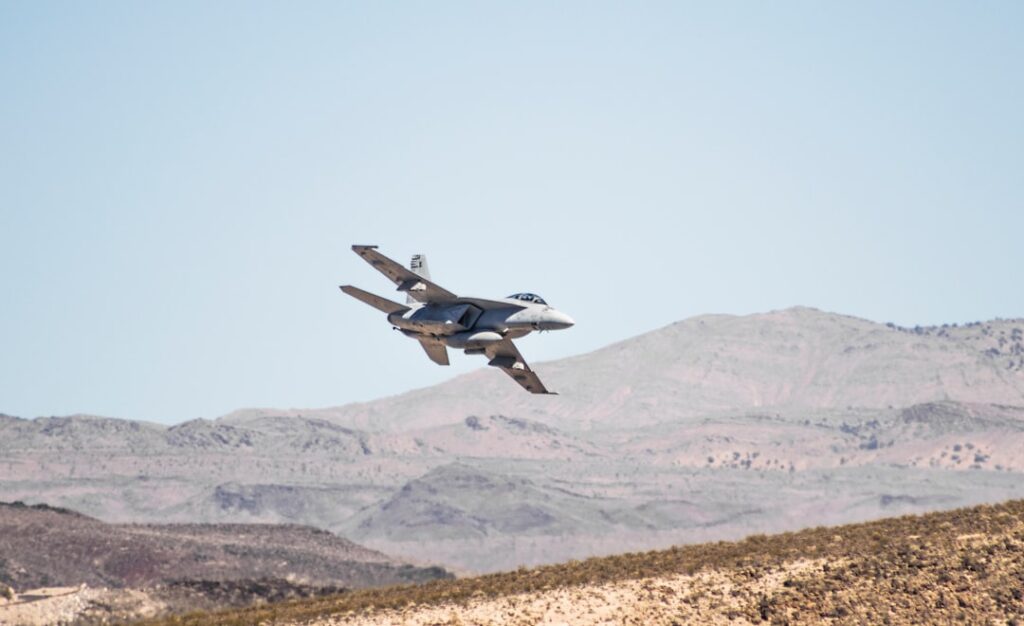
A declassified U.S. military document, released under the PURSUE archive, now places two unidentified objects in Iranian airspace on a single night in November 2020. The report, designated DOW-UAP-D64, was made public on March 16, 2026, after declassification by Major General Richard A. Harrison, USCENTCOM Chief of Staff.
It originates from the 482nd Attack Squadron, submitted to the 609th Air Operations Center under U.S. Central Command. The mission that night involved supporting NAVCENT for operations in the Arabian Gulf, Strait of Hormuz, and surrounding areas.
An American operator reported two Unidentified Anomalous Phenomena. The first sighting occurred at 2143Z, at an unknown altitude. Five minutes later, at 2148Z, a second UAP was observed, its direction of travel noted as proceeding to the northwest.
The document is a standardized Mission Report form, or MISREP. The Department of War notes that military services commonly use these forms to report UAP to the All-domain Anomaly Resolution Office, or AARO.
That office, created by the Pentagon, is the formal channel for such incidents. This report is now part of that record. What matters here is what the document does not say.
The official summary includes a blunt caveat: all descriptive language reflects the reporter’s subjective interpretation at the time of the event. It should not be read as a conclusive indication of any intrinsic object features or performance characteristics. That is a careful, deliberate qualifier.
It means the military is not certifying these objects as anything beyond what one person saw and wrote down. Still, the release has consequences.
It adds weight to a growing archive of military UAP reports from the Middle East. Iran is a sensitive operating environment. U.S. forces there, under CENTCOM, routinely face hostile drones, electronic warfare, and unknown aircraft.
A UAP report filed during a real-world mission, supporting naval operations in the Strait of Hormuz, is not a training exercise. It is operational.
The 482nd Attack Squadron flies MQ-9 Reapers. Those are armed drones. An operator watching a feed from an MQ-9 over Iran, at night, seeing something move northwest at an unknown altitude — that is a contact of interest.
The fact that it was reported through formal channels, declassified years later, and now sits in a public archive, tells you the military judged it worth preserving. For analysts tracking UAP disclosures, this is a data point. The PURSUE archive, run by the Department of War, is a relatively new release mechanism.
Each document dropped into it forces a reassessment of what the government holds. This one is from 2020.
That is recent. It suggests the military is still processing and declassifying reports from current or recent operations, not just Cold War relics. The report also names specific units and commands.
That specificity is unusual. Many declassified UAP documents are heavily redacted.
This one names the 482nd, the 609th Air Operations Center, USCENTCOM, and Major General Harrison by name. That level of detail makes the document harder to dismiss as a generic form. What happens next is procedural.
The report goes into the AARO system. It becomes part of whatever analysis that office conducts. Congress has demanded regular briefings on UAP.
Each new document fuels that demand. The Iranian sighting, with its two objects and precise timestamps, is now on the record.
It joins a stack of similar reports from pilots, sensor operators, and radar crews. The objects themselves remain unidentified. That is the point.
The military does not know what they were. It filed the report anyway.
That is the system working as designed. The consequences are not about what the objects were. They are about what the government chose to release, and why now.




