
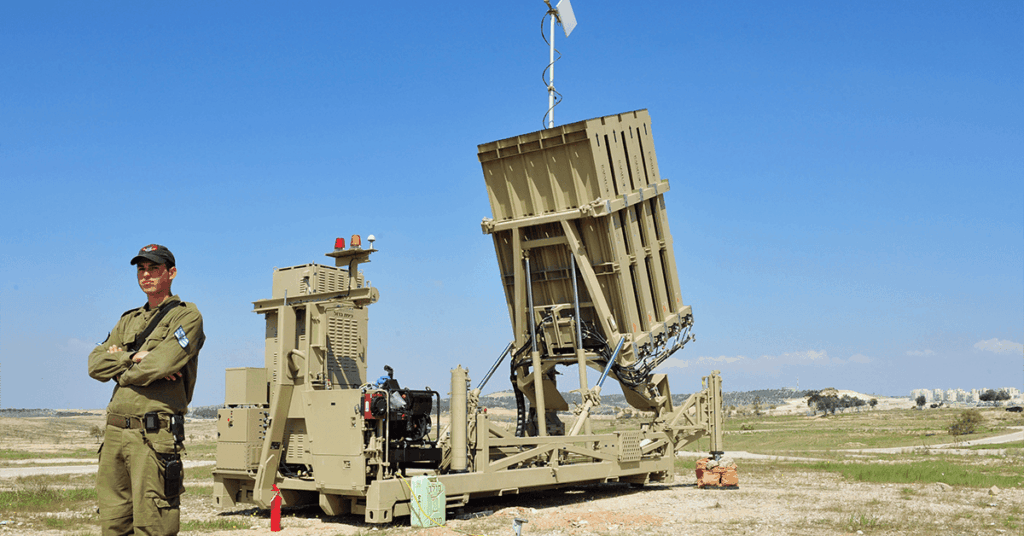
TEL AVIV, July 20 — Israel has built a reputation as a world leader in short- and medium-range air defence, with systems specifically designed to stop the kinds of threats Russia has used to pummel Ukraine: drones, cruise missiles, and rockets. The mechanics here are proven in combat. Yet on closer reading of Israel’s export policies, a sharp contradiction emerges: the same systems that have intercepted rockets from Gaza and Hezbollah are being withheld from a country that urgently needs them.
The Israeli Arsenal
The Iron Dome system, deployed since 2011, has achieved a success rate of over 90% against incoming threats, according to Israeli defence firm Rafael Advanced Defense Systems. It has intercepted rockets fired from Gaza and by Hezbollah. But the Iron Dome is only one layer.
David’s Sling, operational since 2017, covers medium-range missiles. The Arrow series intercept ballistic missiles at high altitudes.
And then there is the Iron Beam, a laser-based system that can shoot down drones and rockets at a lower cost per intercept. The catch is that each system comes with its own integration challenges. Ukraine operates a Soviet-era command-and-control structure.
The claim that Israeli systems could be plugged in easily is not supported by the technical reality. But proponents argue that these are combat-proven systems that could save lives, and that the integration hurdles are solvable if the political will exists.
The Ukrainian Impasse
Ukraine has repeatedly requested these systems to protect its critical infrastructure and cities from Russian missile and drone barrages. The United States transferred two Iron Dome batteries to the U.S. Army in 2020, but has not re-exported them to Ukraine. Israel’s refusal to supply even defensive systems has been a point of contention.
Arms sales are a sensitive business, and Israel’s relationship with both Russia and Ukraine creates competing pressures. The technical challenge of integration into Ukraine’s Soviet-era command structure is a factor, but it is often cited by officials who are reluctant to supply the systems for other reasons.
Without Israeli political approval, no systems move — not even the laser-based Iron Beam, which would be cheaper per intercept than the missile-based Iron Dome. On closer reading, the argument that integration is too difficult ignores that Ukraine has already adapted Western systems to its Soviet-era infrastructure. The same could be done for Israeli systems, but only if the political decision is made.
For now, Ukrainian cities remain exposed, and the Israeli government shows no sign of changing course. What to watch next is whether the U.S. administration will press Israel to approve transfers, or whether the two Iron Dome batteries sitting in U.S. Army stockpiles will ever be authorized for re-export.
The technology works; the politics do not.




