
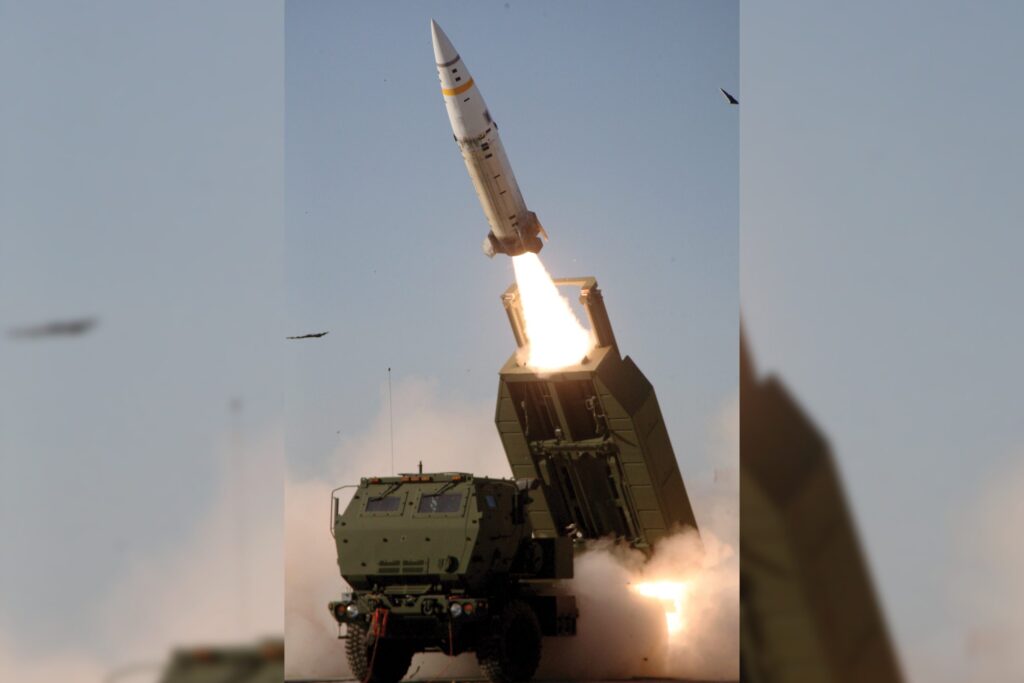
WASHINGTON, July 19 — For decades, the MGM-140 Army Tactical Missile System, known simply as ATACMS, has been a silent guardian for troops on the ground. Developed from a Cold War-era shift in thinking about how to protect soldiers from overwhelming enemy reserves, this supersonic missile now serves as a critical precision-strike tool for the United States and its allies. Behind its technical specifications lies a story of how military planners sought to reduce the risk of close-quarters combat by reaching deep behind the front lines.
A Weapon Born from Doctrine
The missile’s origins trace back to the late Cold War, when the U.S. Army embraced new doctrines called AirLand Battle and Follow-on Forces Attack. The idea was simple: if you could hit enemy reinforcements—those second-echelon armored columns—before they ever reached the battlefield, you could spare American and allied soldiers from being overwhelmed. That meant developing a conventional, highly accurate missile that could fly supersonic, reaching targets up to 190 miles (300 kilometers) away.
The ATACMS, designed and manufactured first by Ling-Temco-Vought (LTV) and later by Lockheed Martin, was the answer. The program began in 1980, when the Army decided to replace the older MGM-52 Lance missile.
Early concepts considered nuclear, chemical, or biological warheads, but as the project evolved—merging with DARPA’s Assault Breaker program and the Air Force’s Conventional Standoff Weapon—the focus shifted to conventional submunitions. By 1984, the Air Force had left the joint project, and the missile became solely the Army Tactical Missile System. For the soldiers who would fire it, this meant a weapon that could scatter submunitions over enemy armored formations, destroying them before they could fire a shot.
Precision That Spares Lives
What makes the ATACMS remarkable—and what matters most for the people it protects—is its accuracy. The missile uses a ring-laser gyroscope-based inertial guidance package, developed under the Simplified Inertial Guidance Demonstrator program. This technology gave the ATACMS what the military called “unprecedented accuracy.” For a crew manning a tracked M270 Multiple Launch Rocket System or a wheeled M142 High Mobility Artillery Rocket System (HIMARS), that precision means hitting a high-value time-sensitive target—like a command post or a resupply convoy—without putting more soldiers in harm’s way.
It also reduces the risk of stray rounds hitting civilians, a critical factor in modern conflict. The missile fires from the same launchers that have become familiar in recent conflicts, allowing troops to move quickly after firing.
At 13 feet (4.0 meters) long and 24 inches (610 millimeters) in diameter, it is a compact package for its range and power. Solid propellant means it can be stored and ready for rapid launch, giving commanders a tool that is both responsive and deadly accurate.
A Legacy That Continues
The ATACMS remains a key asset in the U.S. arsenal and has been supplied to allied nations. In current operations, its ability to be launched from HIMARS and MLRS platforms means that a small team can deliver a heavy blow far behind enemy lines—reducing the need for larger, more vulnerable forces to push forward. For the soldiers who rely on it, the missile represents a promise: that the high cost of war can be lowered through technology that hits hard and hits true.
As conflicts evolve, the ATACMS stands as a reminder that behind every weapon system is a human story—of planners who wanted to protect troops, of engineers who solved complex guidance problems, and of the crews who fire the missile in the hope of bringing their comrades home.




