
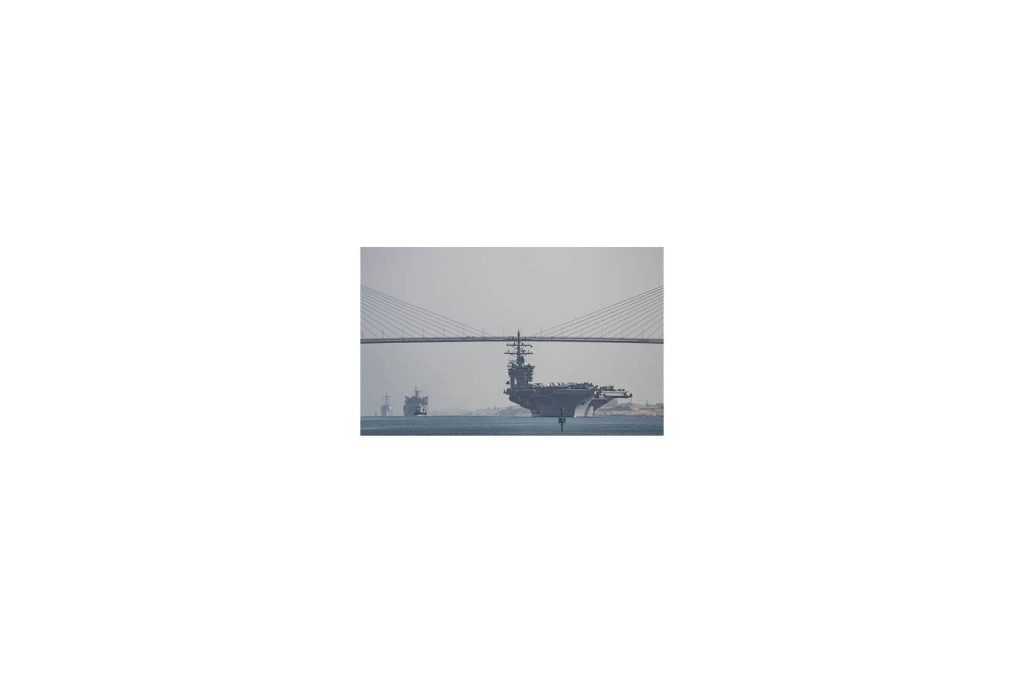
MANAMA — The grey hulls of the United States Fifth Fleet sit anchored off Naval Support Activity Bahrain, a constant presence in waters that have grown more contested by the week. On the ground here, naval officers describe a fleet bracing for a new mission: enforcing the 20 percent toll on commercial shipping announced March 18, 2025, a levy designed to pressure Tehran over its nuclear program and regional proxies.
The fleet, reactivated in 1995 after its original 1944 founding, commands roughly 30 ships in the Persian Gulf, Red Sea, and Arabian Sea. Its typical deployment of 15,000 personnel operates aircraft carriers such as the USS Dwight D.
Eisenhower, destroyers, and submarines. By nightfall, watchstanders on the bridge of an Aegis-equipped destroyer scan the horizon for vessels that might try to bypass the new inspection regime. The Aegis Combat System, installed on the fleet’s destroyers, provides missile defense coverage that commanders say will be vital if skirmishes escalate.
A Fleet Built for Chokepoints
The Fifth Fleet’s primary mission has always been maritime security, with the Strait of Hormuz as its central strategic chokepoint. The fleet operates under U.S. Central Command (CENTCOM), and its budget for fiscal year 2024 stood at $1.2 billion, according to the Department of Defense. That figure now faces pressure as the toll requirement may demand additional ships to inspect commercial traffic for compliance.
Residents of Bahrain’s capital describe an uptick in naval activity since the spring. The Combined Maritime Forces (CMF), a 34-nation coalition also based in Bahrain, coordinates closely with the fleet.
That coalition’s reach means the toll enforcement will not be a unilateral American effort alone—allied warships will share the burden of stopping and searching vessels transiting the strait. The fleet has faced this kind of mission before. During the Iran-Iraq War’s Tanker War from 1984 to 1987, the Fifth Fleet escorted reflagged Kuwaiti tankers under Operation Earnest Will, protecting oil shipments from Iranian attacks.
That operation required constant patrols and a readiness to return fire. The scene then—small boats swarming tankers, mines drifting in shipping lanes, destroyers maneuvering to shield merchant hulls—offers a template for what commanders now prepare to confront.
Past Incidents, Present Risks
Past incidents highlight the operational risks inherent in this deployment. In 2016, Iran seized U.S. sailors near Farsi Island, a humiliating episode that underscored how quickly a routine transit can become a hostage crisis. More recently, in 2019, after Iran seized the tanker Stena Impero, the fleet launched Operation Sentinel to patrol the strait.
That operation established a framework for coordinated escort and surveillance that the toll enforcement mission will likely expand. The fleet’s assets include submarines that can shadow Iranian fast-attack craft beneath the surface, and carrier air wings capable of providing overwatch for inspection teams.
By nightfall, pilots on the Eisenhower brief for sorties that may involve low-level surveillance of dhows and supertankers alike. The toll announced March 18, 2025, will likely increase the fleet’s role in inspecting vessels for compliance, potentially requiring additional ships to be pulled from other CENTCOM commitments or from stateside reserves. On the ground in Bahrain, the mood among naval personnel is one of cautious readiness.
The fleet has operated in these waters for decades, but each new crisis brings its own set of tactical puzzles. The 20 percent toll—a significant levy on commercial shipping—creates an incentive for evasion, meaning the fleet must now distinguish between legitimate commerce and vessels attempting to smuggle goods past the inspection cordon.
That is a task that demands patience, intelligence, and a hair-trigger for self-defense.
What to Watch Next
The coming weeks will test whether the Fifth Fleet’s current force structure can sustain the toll enforcement mission without drawing down other commitments. The Combined Maritime Forces provide a diplomatic buffer—34 nations sharing the burden means no single flag bears the entire political cost of stopping a ship. But the fleet’s $1.2 billion budget, set before the toll was announced, may require supplemental funding if operations stretch into months.
Commanders here are watching for any Iranian attempt to test the new rules with a seizure of their own, mirroring the 2019 Stena Impero incident. The fleet’s Aegis destroyers remain on station, their radars sweeping the horizon.
By nightfall, the lights of commercial shipping still pass through the strait, but every captain now knows the toll is coming. The Fifth Fleet will be the one collecting it.




