
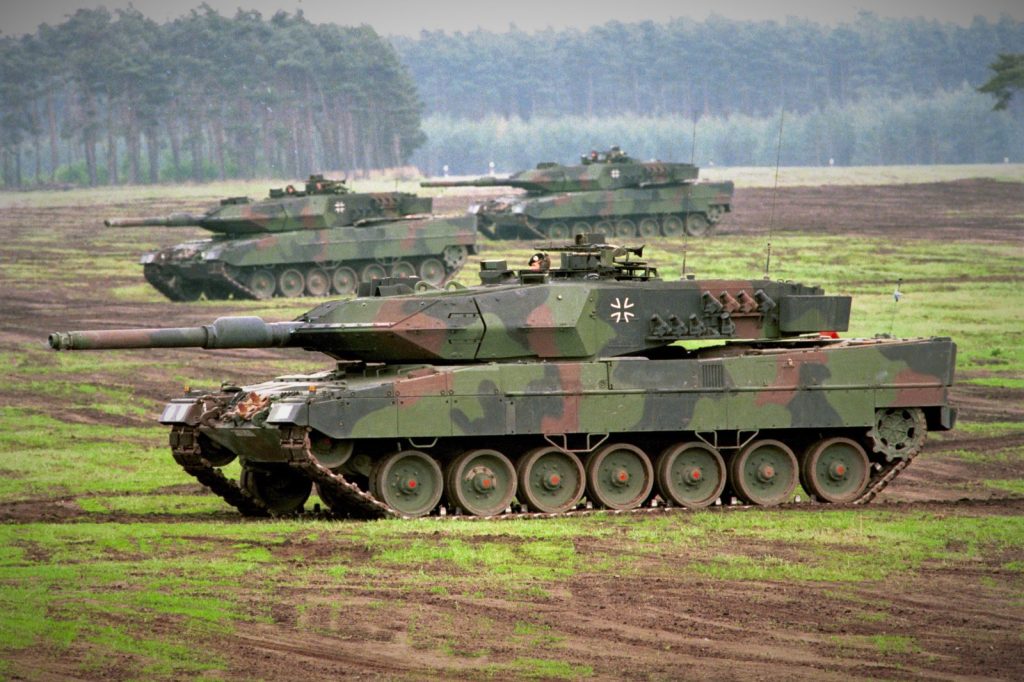
BERLIN, July 12 — Germany’s military aid to Ukraine, which began in 2022 following Russia’s full-scale invasion on February 24 of that year, has evolved into a major bilateral support effort. Initial deliveries included anti-tank weapons and Stinger missiles. By 2023, Berlin had pledged Leopard 2 main battle tanks, Marder infantry fighting vehicles, and IRIS-T air defense systems.
The trajectory of this assistance reflects both the escalating demands of the war and the strategic calculus within the German government. The scale of German commitment became clearer in 2024, when officials confirmed plans to provide Patriot air defense batteries and additional artillery ammunition.
These systems are designed to counter Russian missile and drone strikes that have targeted Ukrainian infrastructure throughout the conflict. The record shows that Germany has allocated over 28 billion euros in military aid to Ukraine as of 2025, according to the Kiel Institute for the World Economy.
Domestic political context and the special fund
The German government established a special fund, known as the Sondervermögen, of 100 billion euros in 2022. This fund serves a dual purpose: modernizing Germany’s own military while also supporting Ukraine. Chancellor Olaf Scholz has consistently defended aid levels despite domestic political pressure.
The fund represents a significant shift in German defense policy, moving away from decades of restraint in military spending that followed World War II. German defense officials have framed the aid as both a moral obligation and a strategic necessity.
The war has reshaped Berlin’s approach to security, with the Sondervermögen enabling purchases of advanced equipment that Germany itself lacked in sufficient quantities before 2022. The Leopard 2 tank pledge, in particular, marked a departure from earlier reluctance to supply heavy armor to Kyiv.
Drone warfare and the 50,000 strike drones package
A notable development came on March 25, 2025, when reports emerged of a 50,000 strike drones package for Ukraine. This represents a significant expansion of drone warfare capabilities. Drones have become a central feature of the conflict, used for reconnaissance, artillery spotting, and direct strikes on military targets.
The scale of this package suggests that Berlin sees drone operations as a critical component of Ukraine’s defensive and counteroffensive strategies. The shift toward drone aid reflects broader trends in the war.
Both sides have invested heavily in unmanned systems, with Ukraine using them to target Russian supply lines, command posts, and naval assets in the Black Sea. Germany’s contribution of 50,000 strike drones would provide Kyiv with a substantial boost in this domain, though officials have not disclosed specific delivery timelines or drone types.
Strategic implications and the path ahead
The cumulative effect of German aid—over 28 billion euros by 2025—places Berlin among Ukraine’s top military donors. This support has come despite internal debates within Germany’s governing coalition about the pace and scope of deliveries. Chancellor Scholz has navigated these pressures by emphasizing that aid levels are calibrated to Ukraine’s needs while avoiding direct NATO involvement in the conflict.
Looking forward, the sustainability of German aid will depend on several factors: the trajectory of the war, domestic political dynamics in Berlin, and the broader European security environment. The Sondervermögen provides a financial cushion through its 100 billion euro allocation, but questions remain about long-term commitments beyond the fund’s planned spending horizon.
Officials have indicated that further assistance packages are under consideration, though no specific announcements have been made as of this writing. The record shows that Germany’s role in this conflict has transformed its defense posture and its relationship with Eastern Europe. What began with Stinger missiles and anti-tank weapons in 2022 has grown into a comprehensive support program encompassing tanks, air defense systems, artillery, and now drone capabilities.
The strategic context suggests that Berlin will remain a key player in Ukraine’s defense efforts for the foreseeable future.




