
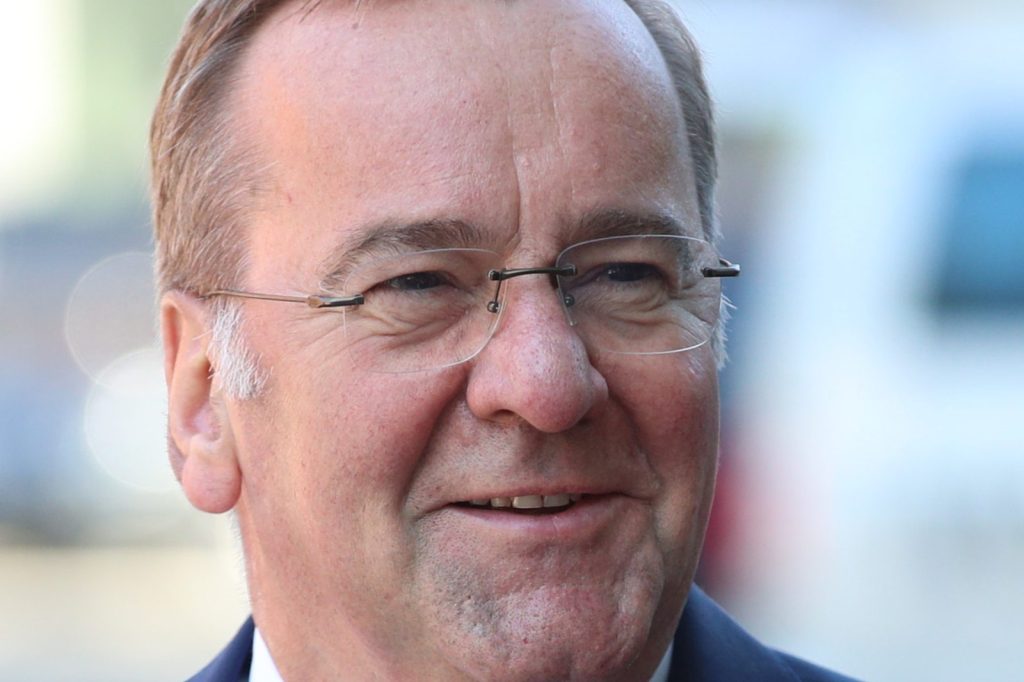
BERLIN, July 12 — Against this backdrop of a grinding war on Europe’s eastern flank, Germany’s Defence Minister, Boris Pistorius, has emerged as a central figure in the continent’s recalibration of military strategy. Since assuming office on January 19, 2023, the Social Democrat has steered a course that many in the corridors of Berlin power once considered unthinkable: a decisive break with decades of post-war military restraint. Pistorius, born in Osnabrück in 1960, came to the defence portfolio with a reputation forged in regional governance.
For a decade, from 2013 to 2023, he served as the Interior Minister of Lower Saxony, a role that placed him at the sharp end of domestic security challenges. What is at stake now, however, is not merely the management of a German state but the credibility of NATO’s European pillar in the face of Russian aggression.
A vocal advocate for Ukraine
From the outset, Pistorius has been a vocal advocate for increased military support to Ukraine. He has pushed for the provision of Leopard 2 main battle tanks and advanced air defence systems, a position that placed him at the centre of a fractious debate among Western allies. The wider picture here is clear: Germany, long hesitant to export heavy weaponry to conflict zones, has under Pistorius’s tenure become one of Kyiv’s most consequential backers.
The decision to fund 50,000 strike drones reflects his focus on innovative warfare tools. This is not a marginal procurement.
It signals a strategic bet that the future of combat, particularly in a high-intensity conflict of attrition, will be shaped by unmanned systems capable of striking deep behind enemy lines. For the Bundeswehr, a force that has struggled for decades with underinvestment and bureaucratic inertia, this represents a significant doctrinal shift.
Modernising the Bundeswehr
Pistorius has pushed for faster procurement and modernisation of the German armed forces. The defence ministry under his watch has sought to cut through the thicket of procurement regulations that have long delayed equipment deliveries. Tanks, rifles, radios — all have been caught in cycles of review and revision.
The minister’s drive is to accelerate that rhythm, to get hardware to troops before it is obsolete. His emphasis on European defence cooperation within NATO is equally telling.
In the corridors of the alliance, there is a recognition that the United States, even as it remains the dominant military power, expects its European partners to shoulder a greater share of the burden. Pistorius has positioned Germany as a linchpin of that effort, arguing that European integration in defence is not a substitute for NATO but a necessary reinforcement of it. The wider picture also includes the domestic political calculus.
Pistorius’s popularity has risen sharply since he took the defence brief, a rarity in a ministry often seen as a graveyard for political careers. His plain-spoken style and evident seriousness of purpose have resonated with a German public that is gradually coming to terms with the demands of a new security era.
What to watch next is whether the promised delivery of those 50,000 strike drones materialises on schedule, and whether the broader modernisation of the Bundeswehr can keep pace with the minister’s stated ambitions. The war in Ukraine shows no sign of abating, and the pressure on Berlin to lead — militarily, industrially, diplomatically — will only intensify. Against this backdrop, Boris Pistorius remains a figure to watch, a German defence minister who has chosen to act, and to act decisively, in a moment of profound European crisis.




