
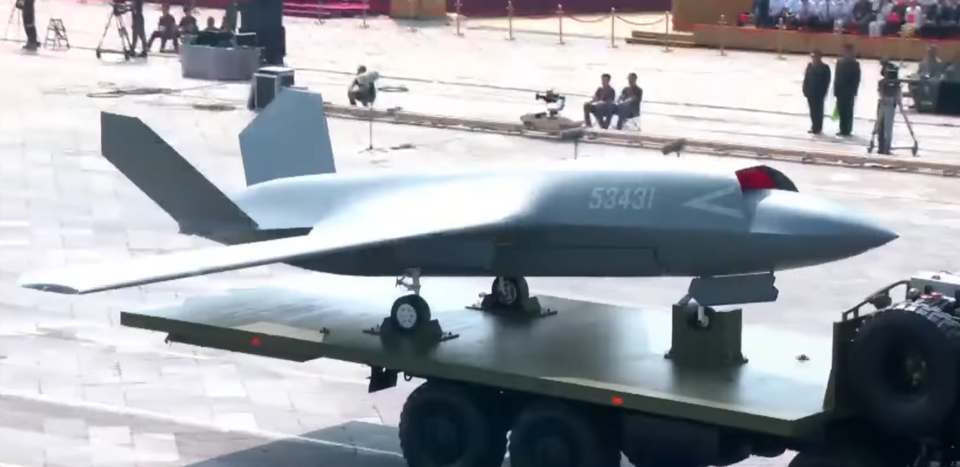
Design and Operational Capabilities
The Luna NG is a compact but potent unmanned combat aerial vehicle. It carries a payload of up to 40 kilograms, which can include guided missiles or bombs. With a wingspan of 5.3 meters and a maximum takeoff weight of 150 kilograms, the system is designed for precise operations rather than mass bombardment. It operates at altitudes up to 5,000 meters, with a range of 100 kilometers and an endurance of up to 12 hours. The drone is launched from a catapult system and recovered via parachute, a feature that makes it reusable and sharply reduces the cost per mission compared to one-way attack drones.
The drone uses electro-optical and infrared sensors for targeting, giving it the ability to identify and engage ground targets with precision. This sensor suite allows operators to conduct reconnaissance and then strike without needing to switch platforms. The reusable nature of the Luna NG changes the operational rhythm of a conflict: the same airframe can return to base, be rearmed, and fly again, rather than being expended on a single strike. In European defense ministries, the Luna NG is seen as part of a wider shift toward unmanned warfare that reduces risk to human pilots. The ability to conduct counter-battery fire — locating and destroying enemy artillery — and precision strikes on armored vehicles are among the primary missions planned for the drone.
Context of the Ukraine Conflict
Since 2022, the conflict in Ukraine has served as a proving ground for unmanned aerial vehicles. Both sides have deployed thousands of units. Ukraine operates the Turkish-made Bayraktar TB2, which gained fame in the early months of the war, and domestically produced drones like the Leleka-100. Russia has relied heavily on the Iranian-made Shahed-136 kamikaze drones, which have a range of 2,500 kilometers and are designed for long-range one-way missions. The Luna NG sits in a different category. It is a strike drone designed for precision strikes against ground targets but also functions as a reconnaissance platform. European manufacturers are now producing systems that combine both roles in a single airframe, offering commanders flexibility that neither the Shahed-136 nor the Bayraktar TB2 can match.
Germany has funded 50,000 drones, signaling a serious commitment to this technology. Counter-battery fire is one of the most dangerous and urgent tasks on the modern battlefield, and a reusable drone that can loiter for up to 12 hours, identify a target, and strike it with a guided munition changes the calculus for artillery crews on both sides. The Luna NG is a weapon for precision, not mass area bombardment. In a war where artillery dominance has often decided the outcome of engagements, that precision matters. The drone’s 100-kilometer range means it can operate well behind enemy lines yet remain under the control of forward-deployed units.
Broader Trends and Future Implications
The shift toward unmanned, reusable strike platforms is not a future prospect; it is happening now on the battlefields of Europe. The use of unmanned aircraft in warfare is not new. Surveillance drones have been a staple of modern militaries for decades, but the step from watching to striking took time. Early drones were often one-way systems or carried only small munitions. Over the past two decades, nations such as Turkey and Australia have pushed ahead with programs that combine reconnaissance and precision attack in a single reusable platform. These unmanned combat aerial vehicles now represent a distinct class of weapon: one that can loiter over a battlefield, identify a target, and engage it without putting a pilot at risk.
Unlike disposable kamikaze-style drones that fly into a target and are lost, a combat drone can return to base, be rearmed, and fly again. This reusability changes the cost calculus and the operational rhythm of a conflict. It also allows commanders to assign a single platform multiple roles over the course of a mission. For defense ministries, the ability to conduct counter-battery fire or strike armored vehicles without a piloted aircraft is a significant shift in risk. The Luna NG, built by a German defense firm, is one example of this trend: a reconnaissance and strike platform that combines sensors and weapons in a single, recoverable airframe. The technology is now in production, and its use is being planned for one of the most intense battlefields in modern memory. As more nations acquire such drones, the landscape of conflict changes: smaller forces can field precise, persistent air power without the political and human cost of losing a crew. The Luna NG itself, launched from a catapult and recovered by parachute, is a practical embodiment of that shift.




