
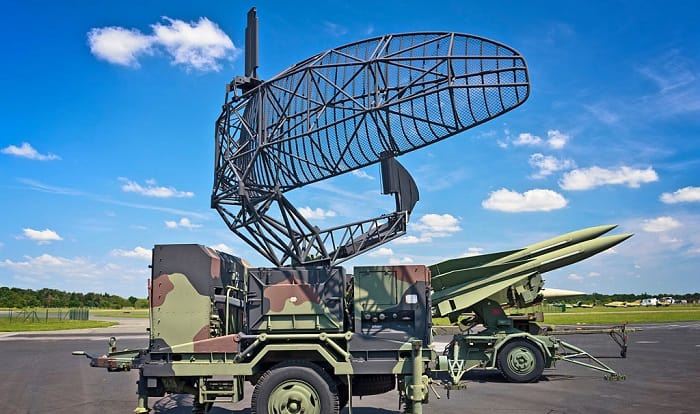
KYIV, July 9 — The mechanics of electronic warfare are brutally simple on paper: seize control of the electromagnetic spectrum, and you blind your enemy. Russia has been executing this strategy at industrial scale in Ukraine, deploying an estimated 300 electronic warfare units by early 2024, according to a 2023 report by the Center for Strategic and International Studies. The catch is that the targets keep moving, both figuratively and literally.
Electronic warfare, or EW, is the use of the electromagnetic spectrum to disrupt enemy communications and sensors. For Russia, this has meant targeting two distinct but related systems: the Starlink satellite constellation operated by SpaceX, and the commercial drones that have become ubiquitous on the battlefield.
The investment has been substantial. CSIS reported that Russia has been pouring resources into EW since 2014, building up a capability that now stretches across the front lines.
The Mechanics of Jamming Starlink
Jamming Starlink requires a precise understanding of the frequencies at play. The satellite constellation operates at altitudes of approximately 550 kilometers, communicating with ground terminals using the Ku-band and Ka-band frequencies. Russian electronic warfare systems, including the ‘Krasukha-4’ and ‘Tobol’, are designed to emit high-power signals that overwhelm satellite receivers on those specific frequencies.
The ‘Tobol’ system, first observed in 2023, is specifically designed to suppress satellite communications and GPS signals. But there is a constraint that defines the entire battlefield.
Ukrainian forces have reported that jamming is most effective within 10 kilometers of Russian positions. This is not a technology that can reach across an entire country; it is a weapon of proximity, most dangerous when the front lines are close and static. The effectiveness of any jamming system depends on both proximity and power, and Russian forces have had to position their EW units dangerously close to the front to achieve results.
SpaceX has not been passive. Since 2022, the company has implemented countermeasures in Starlink terminals, including frequency hopping, directional antennas, and software-defined radios.
These are not theoretical fixes; they are active, adaptive responses that change the game every time Russian engineers think they have found a solution. The cat-and-mouse dynamic is built into the technology itself.
Drones and the ISM Bands
The drone problem is different, but the underlying logic is the same. Commercial drones used by Ukrainian forces typically operate on the 2.4 GHz and 5.8 GHz ISM bands for control links and video transmission. These are the same frequencies used by household Wi-Fi routers, which makes them both accessible and vulnerable.
Russian jammers target these specific bands, attempting to sever the connection between operator and aircraft. The catch for Russian forces is that drones, like Starlink terminals, can be adapted.
Frequency hopping and software-defined radios are not exclusive to satellite communications; they work just as well for drone control links. Ukrainian units have learned to switch frequencies mid-flight, to use directional antennas that concentrate signal strength, and to operate at ranges that keep them outside the effective jamming radius of Russian systems.
Follow the Money
The economics of electronic warfare tell a story of their own. Russia has invested heavily since 2014, building up an estimated 300 EW units deployed in Ukraine by early 2024. That is a significant industrial commitment, requiring specialized manufacturing, trained operators, and constant logistical support.
The ‘Krasukha-4’ and ‘Tobol’ systems are not cheap; they represent years of research and development, and they consume resources every time they are deployed. But the countermeasures are cheaper.
Frequency hopping is a software update. Directional antennas are off-the-shelf components. Software-defined radios can be reprogrammed in the field.
The asymmetry is striking: Russia must build and maintain expensive hardware designed to jam specific frequencies, while Ukraine and its partners can adapt existing systems with software patches and modular hardware upgrades. The economics favor the defender in this particular arms race.
On closer reading of the CSIS report, the 300 EW units figure is not just a number; it is a measure of strategic priority. Russia has chosen to invest in electronic warfare at a scale that few other nations have matched, and it has done so with the explicit goal of suppressing satellite communications and GPS signals. The ‘Tobol’ system, first observed in 2023, is the latest iteration of this strategy, designed specifically to counter the satellite-based communications that have become essential to modern warfare.
What to Watch Next
The next phase of this conflict will likely be defined by adaptation. Russian EW systems will continue to evolve, targeting new frequencies and developing more powerful transmitters. Ukrainian forces and their partners will continue to implement countermeasures, hopping frequencies and refining their antenna designs.
The electromagnetic spectrum is a contested space, and neither side is likely to achieve permanent dominance. The key variable is the 10-kilometer effective range of Russian jamming.
As long as Ukrainian forces can operate beyond that radius, they can maintain communications and drone operations. But the front lines shift, and proximity is a tactical decision that both sides make every day. The battle for the electromagnetic spectrum is not fought in laboratories; it is fought in the contested space between trenches and tree lines, where power and proximity determine who can see and who is blind.
{“@context”: “https://schema.org”, “@type”: “NewsArticle”, “headline”: “How Electronic Warfare Jams Satellite and Drone Signals”, “description”: “KYIV, July 9 — The mechanics of electronic warfare are brutally simple on paper: seize control of the electromagnetic spectrum, and you blind your enemy….”, “datePublished”: “2026-07-09T09:30:00+00:00”, “author”: {“@type”: “Person”, “name”: “Beatrice Ferrari”}, “publisher”: {“@type”: “Organization”, “name”: “InfoPulse Today”, “url”: “https://newsfeed.2bme.xyz/”}}




