
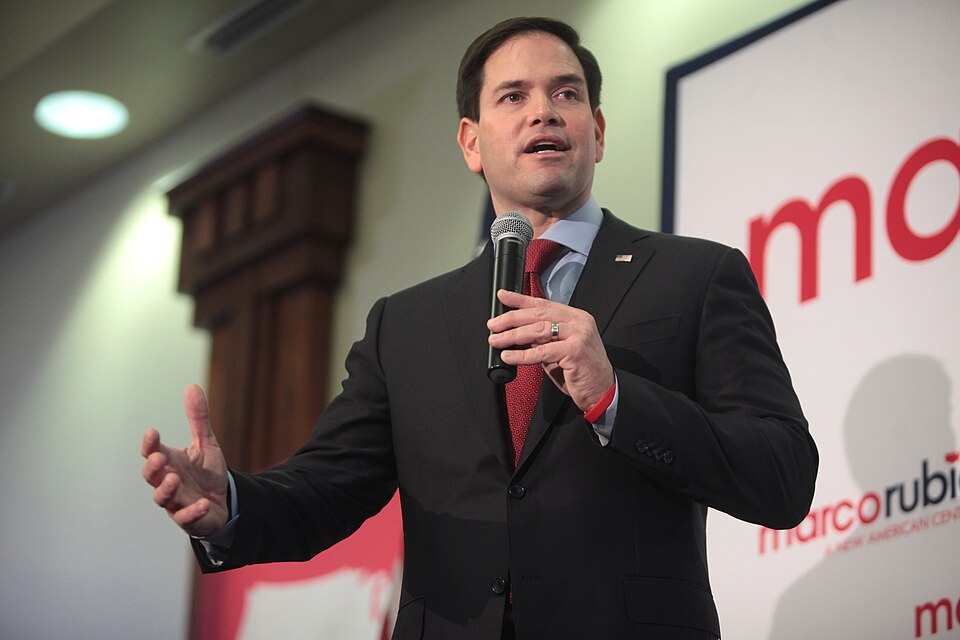
WASHINGTON, July 8 — Senator Marco Rubio’s fingerprints are all over the UAP disclosure movement, and the calculus for Washington is shifting. As Vice Chairman of the Senate Intelligence Committee, the Florida Republican inserted language into the 2021 Intelligence Authorization Act that forced the Office of the Director of National Intelligence to produce a public report on Unidentified Aerial Phenomena. That single move cracked open a door that had been sealed for decades.
The broader stakes here are not merely about lights in the sky. Strategically, Rubio positioned the intelligence community’s own reporting mechanism as the primary vehicle for transparency, rather than leaving the issue to fringe advocacy or classified briefings alone.
What this signals is a deliberate, committee-level effort to institutionalize UAP oversight within the formal national security apparatus. Rubio did not simply hold hearings or give speeches — he wrote the requirement into law. The 2021 ODNI report that resulted from his amendment became the foundational document for everything that followed.
It established that the government was, in fact, tracking UAP incidents and that many of them defied easy explanation. Senator Kirsten Gillibrand, a New York Democrat, took the baton next.
She sponsored the 2022 amendment that created the All-domain Anomaly Resolution Office, or AARO, the Pentagon’s dedicated office for investigating UAP. Dr. Sean Kirkpatrick, a physicist and former CIA officer, served as AARO’s first director from July 2022 to December 2023. During his tenure, the office released multiple public reports, attempting to bring scientific rigor to a subject long dominated by rumor.
The testimony that followed reshaped the public narrative. Former Navy pilot Commander David Fravor, who encountered the now-famous Tic Tac UAP in 2004, testified before Congress in July 2023. His firsthand account of the encounter, which he has described in detail for years, carried weight precisely because it came from a seasoned military aviator with nothing to gain.
Former intelligence officer David Grusch also testified in 2023. Grusch served on the UAP Task Force from 2019 to 2021 and alleged the existence of secret UAP recovery programs.
His claims, however, were not verified by AARO, and the Pentagon’s Inspector General has investigated whistleblower complaints related to the broader UAP issue. Luis Elizondo, the former director of the Advanced Aerospace Threat Identification Program, or AATIP, has been a prominent public advocate throughout this period, pushing for greater transparency from outside the government. The House Oversight Committee held a public hearing on UAP on July 26, 2023.
The witness list was striking: Fravor, Grusch, and former Navy pilot Ryan Graves all testified under oath before a congressional panel. That hearing marked a turning point — UAP was no longer a back-channel concern but a formal subject of legislative inquiry.
The Senate passed the 2024 National Defense Authorization Act with provisions that included a secure reporting system for military personnel and an independent review board. These mechanisms are designed to encourage witnesses to come forward without fear of retaliation or classification barriers. What to watch next is whether the reporting system and review board actually function as intended.
The architecture exists now — Rubio’s initial legislative push, Gillibrand’s AARO framework, the House hearings, the Inspector General investigations — but the question remains whether the intelligence community will cooperate fully. The calculus for the Pentagon and the intelligence agencies has changed. They are no longer dealing with a handful of interested lawmakers.
They are dealing with a statutory requirement to report, a secure channel for whistleblowers, and a public that has seen pilots testify under oath. Rubio’s role in all of this cannot be overstated.
He used his position on the Intelligence Committee to force the first public accounting. That decision set in motion a chain of events that has fundamentally altered how Washington approaches the UAP question. The broader stakes now involve credibility.
If the reporting systems and review board produce meaningful information, the government may begin to rebuild trust on this issue. If they produce silence or stonewalling, the political pressure will only intensify.
For now, the legislative framework is in place. The witnesses have testified. The reports have been published.
What comes next depends on whether the system Rubio helped create actually works.




