
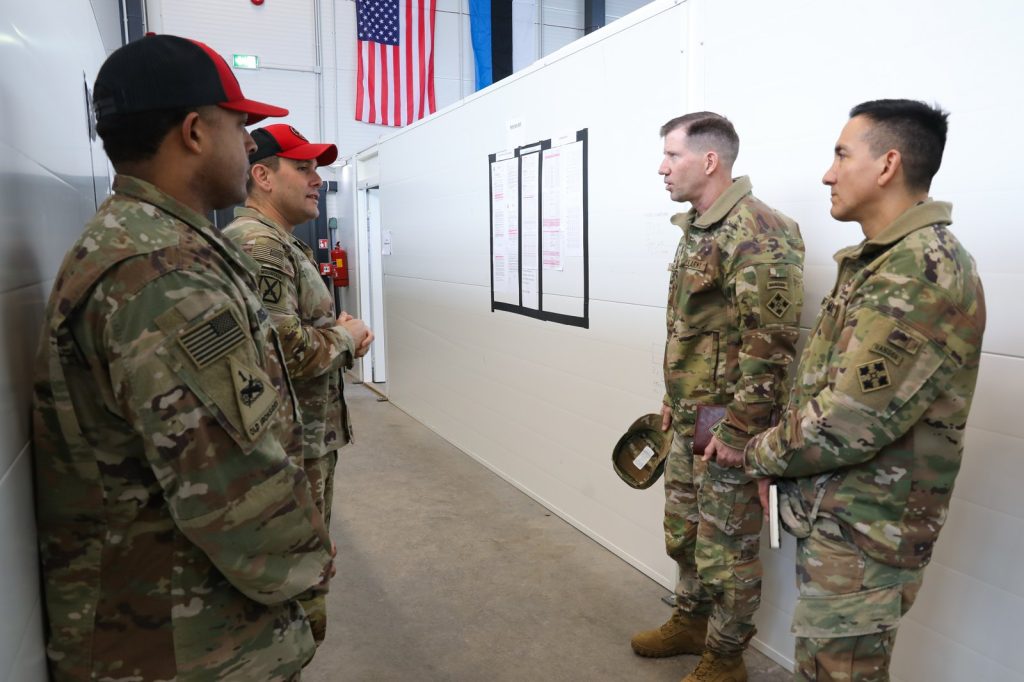
TAPA, July 6 — The United States Army is ending its rotational deployments to Estonia, a strategic shift that removes a key component of NATO’s eastern flank deterrence after more than a decade of continuous presence. The decision, driven by the 2024 National Defense Strategy’s prioritization of the Indo-Pacific, will leave only a small special operations footprint in the Baltic nation. No plans exist for permanent basing beyond 2027, effectively closing a chapter that began in 2014 under Operation Atlantic Resolve.
That operation was a response to Russian aggression in Ukraine. For years, the U.S. maintained a continuous presence of about 1,000 troops in Estonia, rotating armored brigade combat teams through Tapa Army Base and Ämari Air Base on nine-month rotations.
These heavy formations provided significant firepower on NATO’s exposed frontier, a posture designed to signal that any incursion would face immediate, lethal resistance. Strategically, the calculus has shifted. Washington is rebalancing forces toward the Pacific, and the European theater is being reassessed through that lens.
The withdrawal concentrates American ground combat power elsewhere while leaving Estonia’s defense largely to host-nation forces and allied NATO contributions. The broader stakes are clear.
Estonia shares a border with Russia and has long been one of the alliance’s most vocal advocates for robust forward defense. The removal of U.S. armor removes a visible tripwire. What this signals to Moscow — and to other NATO allies — is that American force posture in Europe is no longer static.
The Pentagon has confirmed that similar rotational deployments in Poland and Romania remain unaffected by this decision. That distinction matters. Poland, with its larger territory and deeper military infrastructure, continues to host a persistent U.S. presence.
Romania, on the Black Sea, also keeps its rotational forces. Estonia, smaller and geographically exposed, is the first to see its American garrison effectively disbanded.
For Tallinn, the timing is uncomfortable. Russian forces remain engaged in Ukraine, and the broader security environment on NATO’s eastern flank has not stabilized. The Estonian government has invested heavily in its own defense and hosts a multinational NATO battlegroup under British leadership, but the departure of U.S. heavy armor removes a layer of deterrence that cannot be quickly replaced.
Looking ahead, the question is whether this decision represents a permanent strategic adjustment or a temporary redeployment. The 2027 deadline for permanent basing suggests the administration sees no near-term need to reverse course.
Allies in the Baltic region will be watching closely for any signal that the United States intends to return.




