
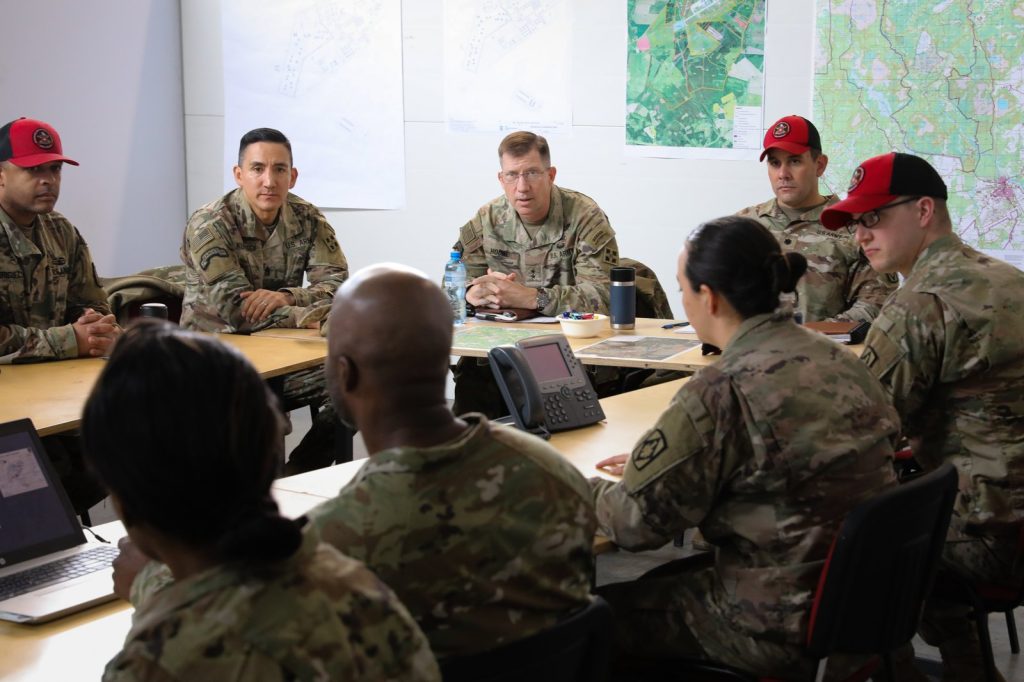
WASHINGTON, July 6 — The Pentagon is pulling American troops out of Estonia, a move the Department of Defense describes as part of a global force rebalancing toward the Indo-Pacific. The decision, announced today, flows directly from the 2024 National Defense Strategy, which places competition with China at the center of U.S. military planning. Pentagon officials insist the withdrawal does not signal any weakening of Washington’s commitment to NATO.
They frame the move as a strategic reassessment, not a retreat. The United States still keeps roughly 100,000 troops across Europe — about 20,000 of those were added after Russia’s full-scale invasion of Ukraine.
Baltic posture remains
The departure from Estonia will not touch U.S. forces in neighboring Lithuania and Latvia. Rotational deployments in those two Baltic states continue as before. The Pentagon is careful to draw that distinction: this is a single-country adjustment, not a regional pullback.
American troops remain permanently stationed in Germany, Italy, and the United Kingdom. Those longstanding basing arrangements are unchanged by today’s announcement.
Strategic logic
The 2024 National Defense Strategy, which underpins the Estonia decision, explicitly prioritizes deterring and competing with China. The Indo-Pacific theater — from the South China Sea to the Taiwan Strait — now draws the Pentagon’s sharpest focus. Rebalancing means shifting resources, including troops, away from Europe to meet that challenge.
Pentagon officials offered no timeline for the Estonia withdrawal. They did not specify how many troops would leave or where they would go next.
The announcement was brief and tactical in tone — a statement of intent, not a detailed operational plan. On the ground in Estonia, the change will be felt. American forces have been a visible presence there since the Ukraine war prompted a rapid reinforcement of NATO’s eastern flank.
That reinforcement added roughly 20,000 troops to Europe overall. Some of those troops are now being redirected.
What comes next depends on how the Indo-Pacific rebalancing unfolds. The Pentagon has signaled that more adjustments are likely, though officials declined to name specific countries or timelines. For now, the withdrawal from Estonia stands as the clearest sign yet that the 2024 strategy is moving from paper to practice.
{“@context”: “https://schema.org”, “@type”: “NewsArticle”, “headline”: “Pentagon Shifts Troops Away from Europe in Global Force Rebalancing”, “description”: “WASHINGTON, July 6 — The Pentagon is pulling American troops out of Estonia, a move the Department of Defense describes as part of a global…”, “datePublished”: “2026-07-06T09:30:00+00:00”, “author”: {“@type”: “Person”, “name”: “Isabella Moore”}, “publisher”: {“@type”: “Organization”, “name”: “InfoPulse Today”, “url”: “https://newsfeed.infopulsetoday.com/”}}




