Harvard astrophysicist Avi Loeb urged the Pentagon to install better UFO sensors on Friday, October 23, 2026. His appeal followed a government release describing federal agents’ reported sighting of a silent black triangle near a sensitive western US site. The disclosure formed part of the Pentagon’s seventh release under the Presidential Unsealing and Reporting System for UAP Encounters, known as PURSUE. Its 28 documents included an FBI statement and an All-domain Anomaly Resolution Office (AARO) memorandum about a June 2026 sighting.
The Pentagon Papers and the Persistent Gaps
The seventh PURSUE release offered the most detailed accounting to date of a June 2026 encounter, yet it laid bare the technical inconsistencies that have come to define the government’s UAP archive. According to the AARO memorandum, two federal agents were at an observation post when a third official alerted them from another position. They turned west and reported seeing a matte-black triangular object above a ridgeline. The precise location and observation date were redacted. The agents estimated its wingspan at 13 to 15 feet. AARO recorded their account of an approximately 10-second vertical ascent, followed by roughly 20 seconds of hovering. They said the object then banked and disappeared towards a canyon within another two or three seconds. They described no audible engine noise or visible exhaust. Witnesses likened its final movement to a fighter jet, although the report contains no instrumented speed measurement. What appeared extraordinary to observers remains an unverified assessment of performance.
Crucially, the records do not say infrared equipment detected no heat. The FBI statement says the object appeared warmer than its surroundings. AARO described a uniform thermal signature without concentrated hot spots or visible exhaust. There is another unresolved problem. The FBI statement estimates the entire sighting at about three seconds, while AARO’s individual phases total more than half a minute. Neither document explains the difference. The FBI statement also places the wingspan between nine and 15 feet, a wider estimate than the AARO account. Investigators did not publish raw sensor recordings establishing the object’s movements. The accompanying FBI images are illustrations, not authenticated photographs of the reported object.
Loeb’s Call for Better Data
During his 23 October interview with presenter Blake Burman, Loeb identified triangles and orbs as two reported categories of unidentified objects. He raised the possibility of foreign surveillance near strategically important facilities but offered no evidence identifying a foreign operator. “We don’t know what they are,” he said. Loeb compared the security question with the Chinese surveillance balloon shot down by the United States in February 2023. That episode illustrates a potential risk, not the identity of the triangle. “My hope is that we can get better sensors at the locations where these things are reported,” he told NewsNation. “If we’re going to take this seriously as a national security question, we need to treat it with the same rigor we apply to any other aerospace phenomenon.”
Loeb, who chairs the UAP Science Advisory Council, told NewsNation’s The Hill that the existing information was inadequate. Identifying what the witnesses encountered, he argued, requires more than descriptions of unusual movement. His appeal highlights a recurring theme in the PURSUE documentation: the gap between anecdotal report and instrumented evidence. The seventh release adds to a growing file of documents that describe sightings in vivid detail while simultaneously withholding the raw data necessary to independently verify those descriptions.
Scientific Skepticism and the Peer Review Problem
Avi Loeb’s reputation in the broader scientific community precedes his latest intervention. Since 2017, Loeb has made a series of claims that alien spacecraft may be in the Solar System, widely rejected by the scientific community. He has argued that ‘Oumuamua and other interstellar objects, including the reputedly interstellar meteor CNEOS 2014-01-08, are potential examples of such craft. In 2023, he claimed to have recovered spherules formed by the impact of CNEOS 2014-01-08 that he alleged could be evidence of an alien starship, but the location in the ocean where he recovered the spherules was based on mistaking a seismic signal from a truck for the impact of the meteor. Loeb tends to publicize his results before undergoing peer review, contributing to a climate of sensationalism around his claims.
Former Pentagon UFO investigator Jay Stratton recently claimed aliens were recovered alive from the infamous Roswell, New Mexico, crash in 1947, but later died after refusing food and human contact. Stratton said military contractors possess at least a dozen crashed spacecraft and have recovered non-human remains. His claim echoes that of other former government officials, including the director of the Pentagon’s Advanced Aerospace Threat Identification Program Luis “Lue” Elizondo and David Grusch, an Air Force veteran and former official with the National Geospatial-Intelligence Agency and the National Reconnaissance Office. Dr. Eric Davis, an astrophysicist who worked with the Pentagon’s UFO program for years, has also asserted that he has personally seen classified images and documents from the U.S. government that purportedly attest to alien life having been discovered in crashed UFOs. Also, Dr. Hal Puthoff, a former CIA-funded researcher and advisor to the Advanced Aerospace Weapon System Applications Program, also claimed that the United States has recovered “four separate types” of alien species from crashed UFOs.
Loeb casts doubt on Stratton’s claims. If there was evidence of the U.S. recovering alien spacecraft and non-human bodies, Loeb wrote on his website, it would have been shown to President Donald Trump. “This board [the UAP Science Advisory Council], with comprehensive representation across the executive branch, military and intelligence community, vigorously follows the Presidential Unsealing and Reporting System for UAP Encounters (PURSUE) and would be delighted to review any evidence for technologies of non-human origin,” Loeb wrote. “Obviously, any groundbreaking revelation about alien intelligence would be of great political benefit to the Trump administration. Why can’t anyone offer President Trump a guide?” Loeb’s skepticism of Stratton’s claims underscores a broader tension: while he demands better sensors for contemporary sightings, his own past assertions about recovered alien material have been met with sharp scrutiny from his peers.
The Technical and Political Impasse
The PURSUE archive now spans seven releases, each adding layers of description while largely preserving the same structural deficit: eyewitness accounts without accompanying sensor logs, thermal data, or radar tracks. The FBI’s estimate of a three-second sighting directly contradicts AARO’s phased breakdown exceeding 30 seconds. The wingspan estimates diverge by six feet between the two agencies. Neither document provides the raw files that would allow an independent analyst to reconstruct the object’s trajectory or velocity. In the absence of that data, every report remains a narrative, and every narrative remains open to interpretation.
Loeb’s proposal to deploy better sensors rests on a premise that the current system cannot deliver. The Pentagon’s own records demonstrate that the infrastructure for capturing UAP data is either absent or inconsistent across agencies. Until the raw recordings, calibration logs, and metadata are made available alongside the narrative summaries, the scientific value of any UAP report remains limited. Loeb’s call for improvement is consistent with that gap, but his track record of publishing unverified conclusions before peer review means his advocacy carries the weight of a scientist accustomed to courting headlines rather than awaiting consensus.
Sources
- 'Put Better Sensors At The Locations': Avi Loeb Addresses Gathering Better Data On UFO Sightings
- Avi Loeb
- Harvard Astrophysicist Challenges Ex-Pentagon UFO Investigator's Claims Of Recovered Alien Spacecrafts And Non-Human Bodies
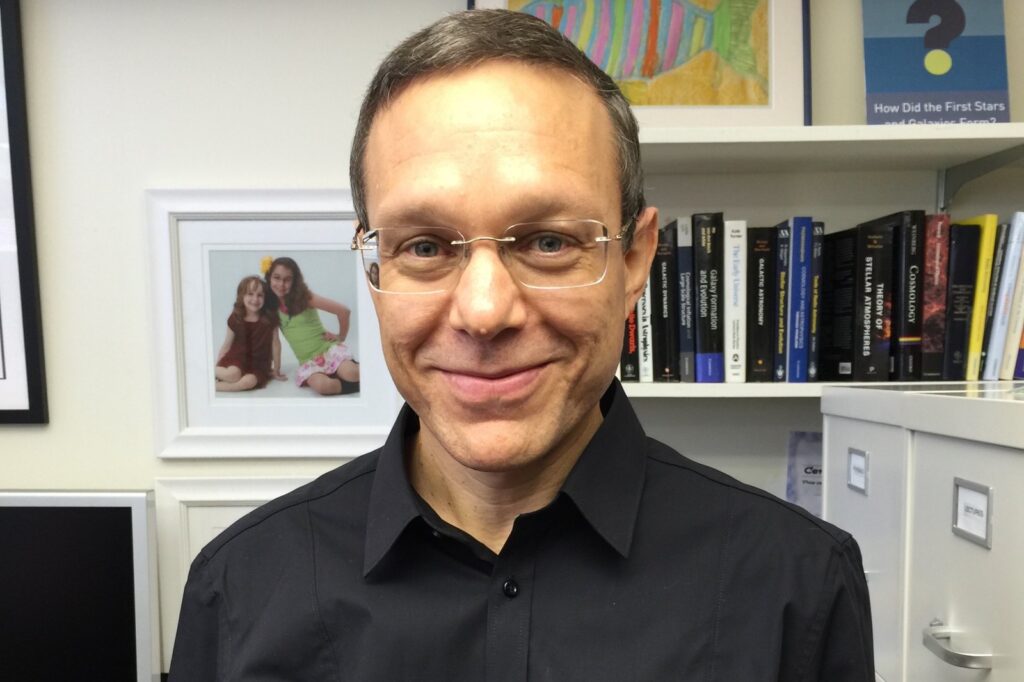
Photo: Aviloeb (CC BY-SA 4.0)