WASHINGTON, October 25, 2026 — A federal arrest has brought renewed scrutiny to the shadowy ecosystem of private defense contractors handling sensitive intelligence, after a systems integration developer was accused of leaking national defense secrets to his journalist lover. Ian Brinksman, 42, faces up to 10 years in prison for allegedly transmitting classified US reports regarding Israel and other foreign policy matters, which were subsequently published on a Substack blog according to a Department of Justice press release.
The Intelligence Architecture and Private Contractors
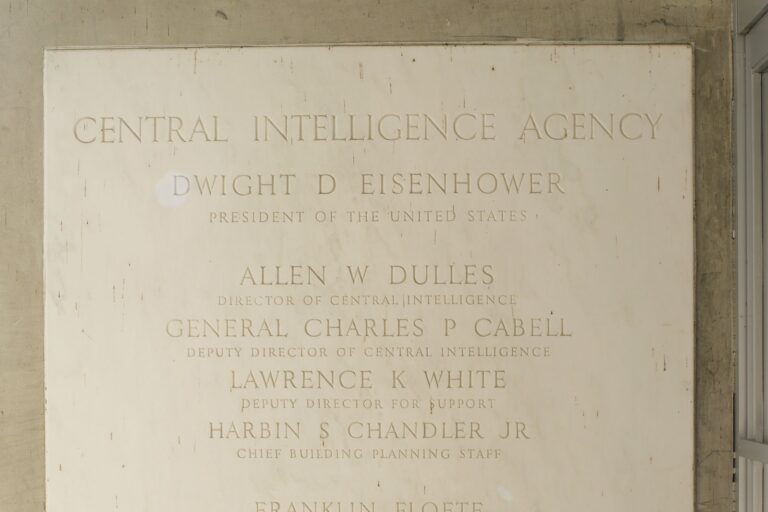
As ever, the technical reality of modern intelligence relies heavily on the private sector. The Central Intelligence Agency operates as a civilian foreign intelligence service tasked with advancing national security through collecting and analyzing intelligence from around the world and conducting covert operations, according to historical and government records. Headquartered in the George Bush Center for Intelligence in Langley, Virginia, and sometimes metonymously called Langley, the agency is a major member of the United States Intelligence Community. Since 2004, the agency has reported to the director of national intelligence, focusing primarily on providing intelligence for the president and the Cabinet, while also serving entities including the United States Armed Forces and foreign allies.
The institutional foundation dates back to the aftermath of World War II, when U.S. intelligence and covert operations had been undertaken by the Office of Strategic Services. President Harry S. Truman abolished that office in 1945 and created the Central Intelligence Group in 1946. Amid the intensifying Cold War, the National Security Act of 1947 established the CIA, headed by a director of central intelligence. The Central Intelligence Agency Act of 1949 subsequently exempted the agency from most Congressional oversight, allowing it to become a major instrument of U.S. foreign policy during the 1950s. Today, under the hood of this expansive apparatus, private firms supply specialized personnel like Brinksman, who began working for a US government agency in 2020 before joining a private contractor as a systems integration developer in September 2022.
Vetting and Managing Sensitive Access
The mechanisms designed to safeguard state secrets rely on stringent clearance procedures, though human vulnerabilities frequently test the system. Brinksman held a top-secret security clearance with access to Sensitive Compartmented Information, according to the criminal complaint filed against him. Such access requires rigorous background checks and continuous evaluation, yet the federal affidavit indicates that personal relationships can circumvent these institutional barriers. In a November 2025 email cited by officials, Brinksman allegedly told a friend he was determined to help the woman he was dating and aid her career take off, months before he began accessing the classified material. The woman’s venture focused on foreign policy, and Brinksman reportedly wrote that he was getting a surprising amount of enrichment and fulfillment from working on that.
The legal consequences for breaching this trust are severe. Brinksman was hauled into custody on Friday after authorities searched his Washington home, according to the Department of Justice. He has since been charged with unlawfully transmitting national defense information, a crime punishable by up to 10 years in prison. The FBI arrested the subject after he was caught allegedly betraying his oath and leaking classified defense information, according to FBI Director Kash Patel. Protecting America’s secrets remains a top counterintelligence priority of the FBI, and anyone caught abusing their position of trust within the government by jeopardizing national security and putting brave warriors at risk will be met with the full weight of justice, Patel added.
Technological Safeguards and Institutional Oversight
Managing the vast digital infrastructure that connects government agencies and private contractors falls to senior technology officials within the intelligence apparatus. La’Naia Jones serves as chief information officer of the CIA and director of the agency’s information technology enterprise, where she oversees all IT systems, personnel, and global communications infrastructure. Her role places her at the center of one of the most complex and mission-critical technology environments in government. Jones brings more than two decades of experience across the intelligence community, including leadership roles at the National Security Agency and the Office of the Director of National Intelligence. Most recently before joining the CIA, she served as the NSA’s deputy CIO and information sharing and safeguarding executive, overseeing IT strategy spanning cybersecurity, accessibility, data, and policy portfolios.
Recognized for her leadership in advancing artificial intelligence adoption, cloud modernization, and public-private collaboration across the intelligence community, Jones was named a 2026 Wash100 Award winner. Jim Garrettson, CEO of Executive Mosaic and founder of the Wash100 Award, noted that Jones is one of the foremost leaders in the intelligence community in harnessing evolving digital technologies to advance its national security mission. Her career includes global operational experience, including deployments in war zones and assignments in Tokyo, as well as extensive work strengthening partnerships across agencies and with international allies. These modernization efforts aim to secure data sharing and cybersecurity integration across the GovCon landscape, addressing the persistent challenge of insider threats.
Historical Precedents and Ongoing Vulnerabilities
The challenge of insider threats is hardly new for an agency with a history marked by significant security breaches and controversies. During the 1970s, investigations such as the 1975 Church Committee of the U.S. Senate revealed illegal operations, demonstrating that internal security failures have long plagued intelligence operations. The unauthorized release of classified material poses grave risks to national security, intelligence sources, ongoing operations, and agency officers, according to CIA Director John Ratcliffe. There is absolutely zero tolerance for leaking, and anyone who violates their oath will be held accountable and prosecuted to the fullest extent of the law, Ratcliffe added.
In the current case, investigators found that at least five articles published by the journalist in 2026 contained secret details and dates that matched those outlined in the FBI affidavit, while other posts hinted at having an inside source. One of the journalist’s social media profiles reportedly featured a public post reading that she also accepts leaks, according to the affidavit. As federal authorities examine how Brinksman allegedly used his systems integration access to funnel reports to his lover, the incident underscores the enduring difficulty of monitoring thousands of private contractors who hold top-secret clearances across the intelligence enterprise.
Sources
- CIA contractor allegedly leaks highly-sensitive info to his lover
- Central Intelligence Agency
- CIA CIO La'Naia Jones Wins First Wash100 Award | Wash100
Photo: Jakub Żerdzicki / Unsplash (Unsplash License)