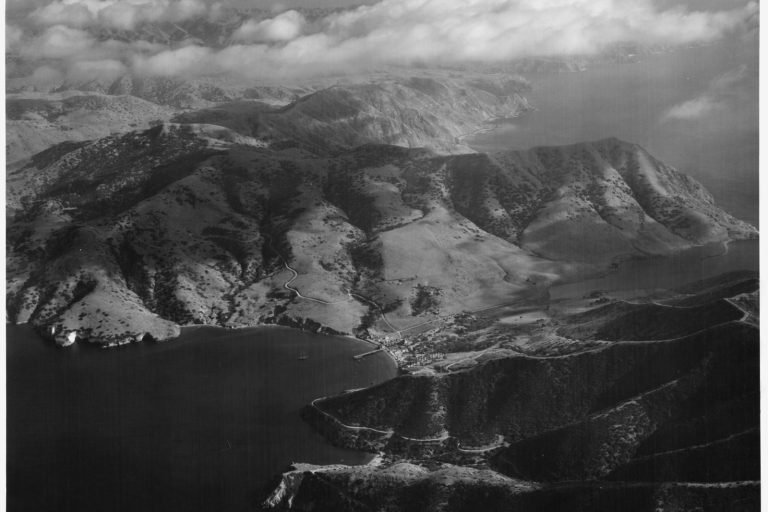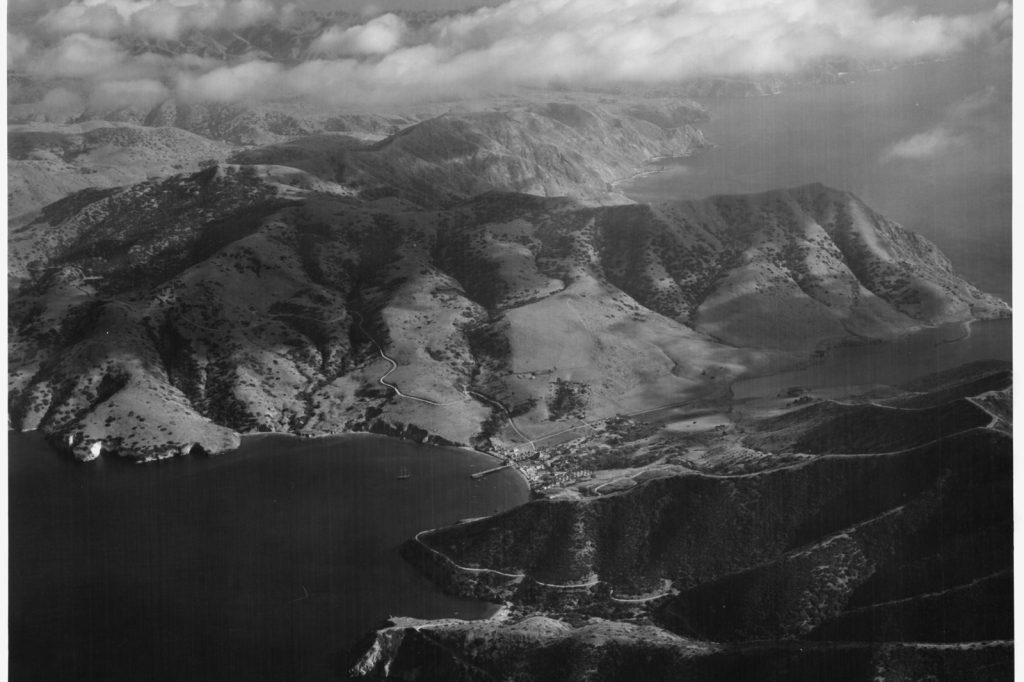
Newly released White House documents have brought fresh attention to a series of unexplained aerial sightings over Santa Catalina Island, identifying the California tourist destination as a recurring location in early government UAP reports. These records, issued under the Trump administration’s Presidential Unsealing and Reporting System for UAP Encounters initiative, confirm that the island was the site of multiple anomalous encounters dating back to the late 1940s.
A History Of Anomalous Sightings
The archival records provide a timeline of encounters that began shortly after the national surge in interest regarding flying discs. According to a hand-written letter dated May 1, 1947, a man named Percy E. Mackey reported that his wife and a school teacher observed six objects in the sky on the night of April 28, 1947. The report notes that shortly thereafter, his daughter and grandson observed four additional objects traveling in the same direction. The government assessment of this specific account concluded that there was insufficient data for evaluation.
By July 1947, reports of aerial phenomena over the island became more specific. Three visiting Army Air Force veterans reportedly observed six flying discs traveling in formation over the town of Avalon. According to historical accounts, one of the witnesses, Alvio Russo, estimated the speed of the formation at 850 mph. Aerial photographer Bob Jung also claimed to have captured an image of one of the objects, which was later published by the Los Angeles Examiner. However, the photographic evidence remains a subject of archival mystery, as the image appears to depict a nighttime sky filled with stars despite the witnesses stating the encounter occurred during the day.
The reports continued into the next decade, as detailed in an Air Force intelligence document from 1952. On August 25 of that year, three Boy Scouts hiking near Camp Fox observed a silver object moving at speeds they described as faster than a conventional jet. The report states that the weather conditions were clear at the time of the sighting, though the witnesses were unable to determine the altitude or distance of the object. A notable gap in the official record remains, as a sketch of the object originally drawn on the back of the report is missing and has not been recovered despite extensive searches of government archives.
Geographic And Military Context
The concentration of reports over Catalina Island reflects the intersection of unique geography and the post-war military environment of the West Coast. Situated just off the coast of Southern California, the island occupies a position that has long served as a training and testing zone for military aviation and maritime operations. The technical reality of the era involved a rapid expansion of experimental aircraft testing, which often resulted in confusion among civilians and military personnel alike when observing high-speed maneuvers or unfamiliar flight formations.
As ever, the detail that matters in these declassified files is the lack of corroborating data. While witnesses like the Army Air Force veterans provided specific estimates regarding speed and formation, the official government response to these incidents was frequently limited by the technology of the time. The Air Force intelligence reports from the early 1950s demonstrate that investigators often struggled to reconcile eyewitness testimony with the physical evidence, or lack thereof, collected at the scene. The missing sketch from the 1952 Camp Fox report is a prime example of the archival inconsistencies that complicate the study of these early encounters.
Under the hood, the Presidential Unsealing and Reporting System for UAP Encounters initiative seeks to bring transparency to these unresolved files. The release of this seventh tranche of records provides researchers with a clearer view of how the government initially processed reports of unidentified objects. By separating the documented accounts from the broader speculation that often surrounds such sightings, the records allow for a more precise analysis of the incidents. The Catalina reports remain a significant part of this effort, as they represent a consistent geographic focus for observers during a period of intense national concern over unidentified aerial phenomena.
The Technical Reality Of Archival Records
The discrepancy regarding the photograph published by the Los Angeles Examiner highlights the difficulty of verifying historical UAP data. While Bob Jung’s claim of capturing an object on film was widely reported at the time, the visual evidence currently held in Getty Images’ archives does not align with the reported daylight timing of the event. This serves as a reminder that even when photographic evidence exists, it does not always provide a definitive explanation for the phenomena being observed.
The reports from Catalina Island are not isolated, but they are distinct in their consistency over a five-year window in the late 1940s and early 1950s. The military presence on and around the island, combined with its status as a high-traffic area for both civilian and military transit, likely contributed to the high volume of reports. Whether these sightings were the result of classified military testing or other, less understood aerial phenomena, the documents confirm that the island was a focal point for government intelligence gathering during the early years of the Cold War.
As the administration continues to release further tranches of records, the focus will likely remain on identifying patterns within these historical accounts. The Catalina Island case demonstrates that even decades-old reports can provide insight into how the government managed the intersection of national security and public reporting. For now, the records serve as a factual account of what was reported by witnesses, while the underlying nature of the objects themselves remains a subject of ongoing inquiry. The archives indicate that while the data may be incomplete, the record of these encounters is now fully available for public review.
Sources
- Santa Catalina
- 650-pound rod-and-reel bluefin hits the scale at Catalina Island
- Exclusive | Eerie Catalina Island UFO encounters exposed in White House document dump
Photo:
Unknown authorUnknown author or not provided (Public domain)