
PARIS, November 28, 2026 — Governments invested approximately $71.8 billion in space defense and security activities in 2025, according to Novaspace’s Space Defense & Security, 2nd Edition report. The spending reflects a surge in multi‑domain military priorities as space becomes an increasingly contested operational arena.
Concentration of Funding Among the Major Powers
The record shows that the United States, China, Russia, Japan and France together accounted for roughly 90 percent of the global space defense outlay in 2025. While 49 nations each spent at least $10 million, the bulk of the investment remains clustered in the five leading space powers.
Key Capability Domains Driving Procurement
On the timeline of government procurement, Secure Satellite Communications, Counterspace and Intelligence, Surveillance and Reconnaissance emerged as the largest categories. Of the total spend, about $33.6 billion was contracted to industry, underscoring the growing reliance on commercial partners for critical space‑enabled capabilities.
Novaspace’s analysis identifies seven critical capability domains shaping the market: ISR, Secure SatCom, Position, Navigation and Timing, Space Domain Awareness, Missile Defense, Counterspace and Responsive Space. Investment across these areas signals a shift toward securing resilient communications, precise navigation and offensive‑defensive space operations.
Hybrid Sovereign‑Commercial Architectures
The report notes a continued move toward hybrid sovereign‑commercial architectures. Sources familiar with procurement strategies say governments are blending national assets with commercial services to accelerate deployment, enhance flexibility and safeguard access to space capabilities.
European Exploration of Orbital Weapons
In a related development, Atmos Space Cargo and missile manufacturer MBDA signed an agreement to study the feasibility of Precision Orbital Deep Strike (PODS), a system that would drop weapons from orbit. Atmos CEO Sebastian Klaus said the project assesses how proven defense systems and new orbital technologies can strengthen Europe’s conventional deterrence. MBDA’s managing director Thomas Gottschild added that the initiative supports the broader strategic vision of defending space and using space for defense.
Implications for the Global Defense Landscape
According to the filing, the acceleration of space‑related spending reflects the view that future military advantage will depend on freedom of action in orbit. The record shows that as nations integrate space capabilities into land, air, sea and cyber operations, the demand for resilient, sovereign‑commercial solutions and advanced counterspace tools is set to rise.
Novaspace projects that emerging in‑orbit services could generate roughly $3 billion in cumulative revenue over the next decade, indicating early growth of a more flexible and sustainable space economy.
The next scheduled release of Novaspace’s Space Defense & Security forecast is slated for June 2027, when updated expenditure and capability trends will be published.
Sources
- Governments Invest $71.8B in Space Defense as Militarization of Space Accelerates
- Space Defense and Security – Novaspace – Market Intelligence Hub
- Dropping missiles from orbit? 2 European companies sign agreement to study the idea
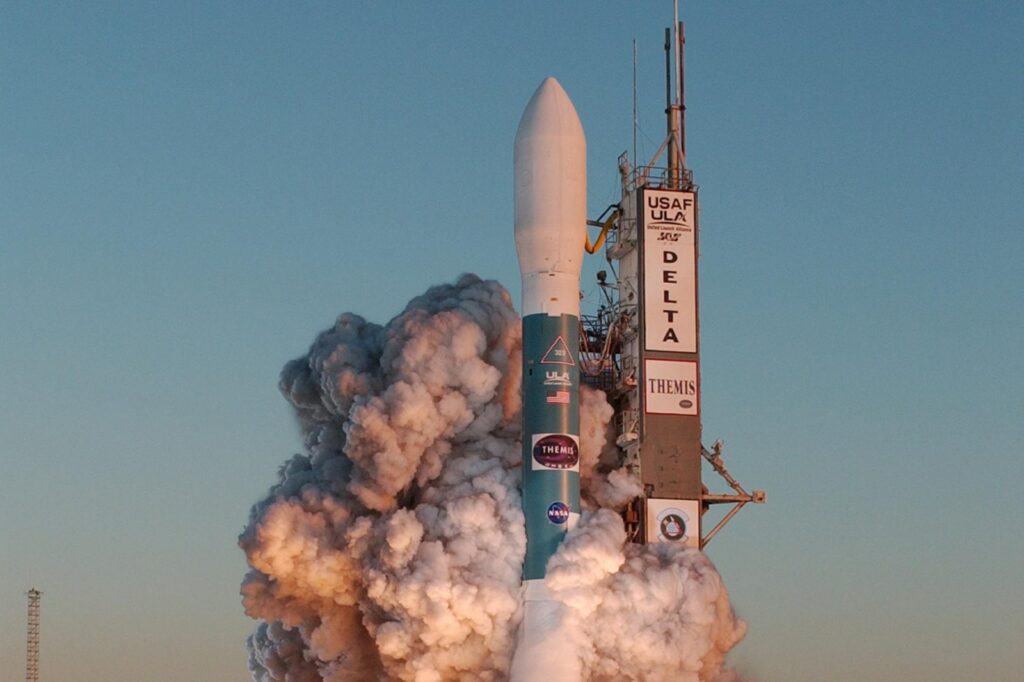
Photo: Photo credit: NASA/Jerry Cannon (Public domain)