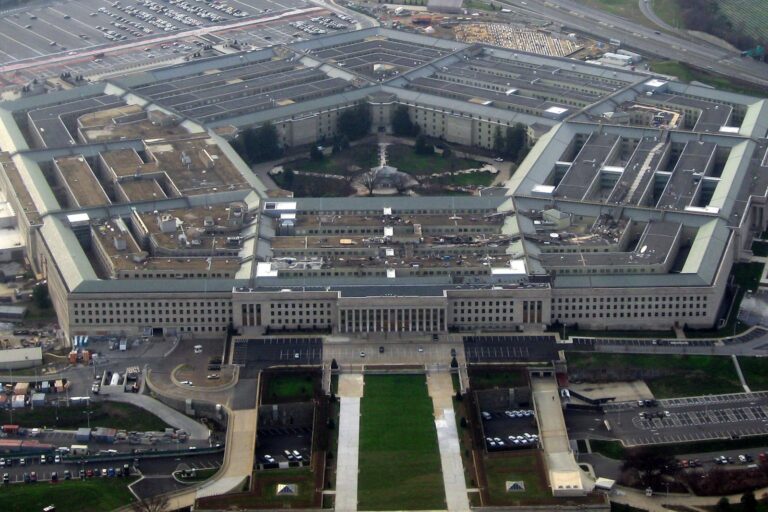
WASHINGTON, November 17, 2026 — The 2026 midterm elections have dealt a final death blow to the Trump administration’s $1.45 trillion Fiscal Year 2027 defense budget request, leaving the Pentagon to salvage a $1.1 trillion base budget before a December 11 funding deadline. The separate $350 billion reconciliation bill that underpinned the historic increase is now considered legislatively impossible.
The Math That Failed
The FY2027 request, unveiled in April, represented a 44 percent increase over FY2026 levels — the biggest year-over-year jump since World War II, according to Pentagon figures. It split the total into a $1.1 trillion base appropriation and a $350 billion reconciliation package. That reconciliation vehicle always faced steep odds; it required a simple Senate majority but demanded unity from a Republican caucus split between defense hawks and deficit hawks unwilling to cut non-defense spending to pay for it. The midterm results shattered the already narrow margins — a two-vote edge in the House, three in the Senate — and triggered Speaker Mike Johnson’s announcement that he is stepping down, evaporating his capacity to whip votes in a lame-duck session.
Frozen at $858 Billion
For now, the Department of Defense operates under a continuing resolution that freezes funding at FY2026 levels: roughly $858 billion annually. Without a new appropriations bill or another CR, the government runs out of money on December 11. The House Appropriations Committee has passed a $1.07 trillion defense spending bill that largely tracks the administration’s base request, but that measure was written assuming the reconciliation bill would backfill shortfalls in procurement and munitions. Senate Majority Leader John Thune has been lukewarm on the reconciliation concept, and Rep. Adam Smith (D-Wash.), in line to chair the House Armed Services Committee in January, is pressing to cap the total at $1 trillion.
Plan B: The Think Tank War Games
With the $1.45 trillion figure off the table, analysts at the Center for Strategic and Budgetary Assessments and the American Enterprise Institute have mapped the trade-offs. CSBA’s Travis Sharp, in a November 5 report titled “Plan B for Defense Hawks,” outlined four scenarios ranging from $1.05 trillion to $1.15 trillion. His priority list protects 85 F-35 purchases regardless of topline — “that one’s a no-brainer,” he said — and argues the Golden Dome missile defense shield should be incrementally funded at $2 billion rather than the requested $17.5 billion. On munitions, Sharp warned that execution constraints force cuts to JASSM, LRASM, and AMRAAM buys well below the request.
AEI’s John G. Ferrari, Todd Harrison, and Elaine McCusker, writing November 6, gamed nine scenarios across $1 trillion, $1.1 trillion, and $1.25 trillion toplines. All three experts would cut Air Force F-35A and Navy F-35C purchases regardless of total spending, a consensus they flagged as a likely starting point for congressional reductions. They also proposed delaying or cancelling the F-47 next-generation air dominance fighter. On Golden Dome, Ferrari would cut to $7 billion at $1.25 trillion but terminate it at $1 trillion; Harrison would preserve funding but drop space-based interceptors; McCusker would delay the program entirely at a $1 trillion cap. All four analysts agreed the worst outcome is a full-year continuing resolution, which locks in prior-year priorities and blocks new starts.
The Lame-Duck Gauntlet
Secretary of Defense Pete Hegseth said on November 10 that “this lame-duck period is critically important for funding of our department.” Chief Master Sergeant of the Air Force David R. Wolfe echoed the urgency days earlier. But the legislative calendar offers only five scheduled work weeks before the 119th Congress expires. That window must also accommodate the NDAA, the farm bill, Iran operations funding, lapsed FISA authorization, permitting reform, college sports reform, and expiring authorizations for the Export-Import Bank and highway funding. Members who lost re-election are clearing offices and eyeing post-Congressional life, further complicating whip operations. The technical reality: the reconciliation vehicle is dead, the base bill is the only live train, and the December 11 cliff is the hard deadline.
Sources
- RIP to the $1.45 Trillion FY2027 Defense Budget
- With $1.5 Trillion Defense Bill Unlikely, Congress Weighs Options
- U.S. Defense Budget Explained: FY2027 Request | VistaShares
Photo: Andy Feliciotti / Unsplash (Unsplash License)