WASHINGTON, D.C., November 12, 2026 — The Senate has introduced the PURSUE Act, a companion bill to the House-passed UAP Disclosure Act, aiming to write declassification requirements for unidentified anomalous phenomena records into permanent statute. The legislation creates an independent review board armed with subpoena power and extends disclosure duties to private contractors, a provision absent from previous failed attempts.
The Legislative Architecture
The PURSUE Act is modeled explicitly on the President John F. Kennedy Assassination Records Collection Act of 1992. That statute did not merely release a tranche of documents; it built a permanent collection at the National Archives and established an independent review board empowered to force agencies to justify every secret they wished to keep. The new bill replicates that architecture for UAP records, establishing a legal presumption of public release and a statutory deadline for disclosure.
Where the Schumer-Rounds amendment failed in prior cycles, the current legislation adds a critical mechanism: it extends the duty of disclosure to private contractors. For decades, sensitive programs have migrated into corporate entities that sit outside standard Freedom of Information Act channels. The technical reality is that the most closely held material — sensor data, airframe telemetry, alleged exotic material analysis — often resides on contractor networks, not government servers. By placing contractors under the board’s subpoena authority, the bill targets the layer where the detail that matters actually lives.
House Action and the Conference Clock
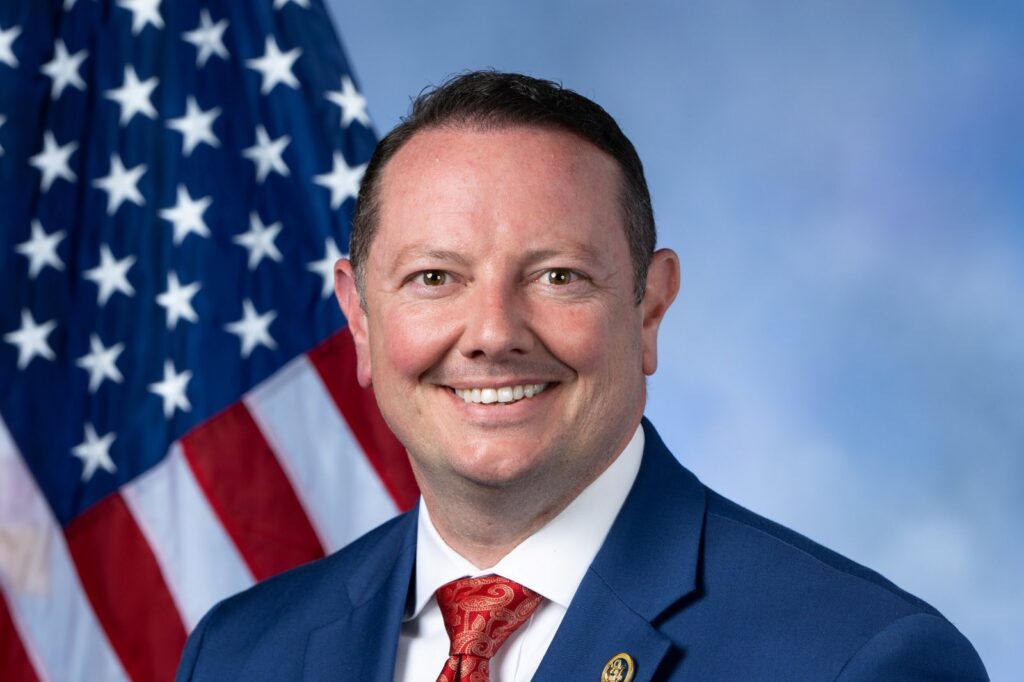
In July, the House adopted Representative Eric Burlison’s (R-MO) UAP Disclosure Act as an amendment to the Fiscal Year 2027 National Defense Authorization Act. The bill now sits in conference committee, where House and Senate negotiators will reconcile the two versions. The deadline for a final conference report is mid-December.
The timeline is compressed. In 2023, the last time UAP disclosure language reached conference, it was stripped from the final NDAA text. The same committees — and in many cases the same members — control the process this year. House Armed Services Chairman Mike Rogers (R-AL) and Senate Armed Services Chairman Roger Wicker (R-MS) steer the defense bill, while House Intelligence Chairman Rick Crawford (R-AR) and Senate Intelligence Chairman Tom Cotton (R-AR) guard the classification lines. Speaker Mike Johnson (R-LA) and Majority Leader Steve Scalise (R-LA) in the House, and Majority Leader John Thune (R-SD) in the Senate, hold the procedural levers.
Executive Disclosure: Volume Without Velocity
Since 2025, the Trump administration has pursued disclosure through the Presidential Unsealing and Reporting System for UAP Encounters (PURSUE) directive. Deputy Chief of Staff Stephen Miller has driven the effort from the White House. The administration has released more than 155,000 pages across seven tranches, alongside videos, photographs, and audio files.
Harvard astrophysicist Avi Loeb leads a UAP Science Advisory Council formed under the administration to provide scientific rigor. Former Navy pilot Ryan Graves, whose 2023 congressional testimony helped catalyze the current legislative push, sits on that council. His assessment of the executive releases is direct: they are “unsatisfactory.” The material released consists largely of short infrared clips, not the high-grade sensor data — multi-spectral, radar cross-section, electronic intelligence — required for rigorous scientific analysis.
When Loeb’s council formally requested additional material from agency custodians, the custodians refused, citing national security. The technical reality is that an executive directive lacks the compulsive force to override a classification authority determined to hold its ground.
The Governance Gap
Current disclosure is coordinated by a UAP Governance Board, an interagency body established by the Office of the Director of National Intelligence with the FBI and the Department of War. A coordinating board, however, can only surface what the agencies beneath it are willing to release. If the allegations regarding a compartmented “Legacy Program” — crash retrieval and reverse engineering efforts described under oath by former intelligence officer David Grusch — hold weight, the most sensitive records sit inside special access programs and contractor facilities that lie beyond the board’s practical reach.
As ever, the structural problem is circular: the entities alleged to be the gatekeepers are the same entities tasked with managing the release. A release administered by the departments from beginning to end will always invite the question of what they chose not to show. An independent board, armed with subpoena power and a statutory clock, retires that question.
Statute vs. Directive
The PURSUE Act preserves executive authority. The president nominates all nine civilian members of the review board; the Senate confirms them. The bill also preserves the executive’s authority to postpone the release of genuinely sensitive material on national security grounds. The president keeps the brake but gains an engine that does not stall when the bureaucracy drags its feet.
The political calculus is equally blunt. Executive orders expire with the administration. The next president can undo the PURSUE directive with a single signature on the first afternoon of a new term in January 2029. The Kennedy records law has outlived multiple administrations precisely because it was statute, not preference. The conference committee meets through mid-December. The gavels change hands on January 3.
Sources
Photo: House Creative Services (Public domain)