The U.S. Air Force has awarded Lockheed Martin a $694 million contract to move the AGM-183A Air-launched Rapid Response Weapon (ARRW) from prototyping into production, marking a formal reversal of the program’s near-cancellation in 2023.
The Strategic Reversal
The decision represents a significant turnaround for a hypersonic missile program that stood on the precipice of termination following unsuccessful flight tests. The contract was executed under the Department of War’s Enterprise-Wide Agile Acquisition Contract framework, according to an Air Force press release accompanying the announcement.
Secretary of the Air Force Troy Meink stated that this milestone marks the formal transition of the boost-glide hypersonic missile program from prototyping and flight testing into production. This move solidifies the service’s commitment to fielding standoff, high-speed strike options capable of penetrating advanced anti-access systems.
The contract was officially awarded on September 29, though it was not publicly announced until October 26, 2026. While the Air Force has confirmed the deal, details regarding the specific number of missiles to be built or the timeline for delivery remain undisclosed due to operational security concerns.
The Technical Reality
Under the hood, the AGM-183A operates as a boost-glide vehicle utilizing technology derived from the Tactical Boost Glide (TBG) demonstration. A rocket booster accelerates the payload to optimal speed and altitude before releasing a wedge-shaped, unpowered glide body concealed within the nose cone.
Once released, this fragmenting glide vehicle travels along a relatively shallow flight path within the Earth’s atmosphere at speeds up to Mach 15. The erratic maneuverability combined with such high velocity creates significant challenges for opponents attempting to spot, track, and intercept the weapon.
The design relies on kinetic energy rather than conventional explosives to destroy targets upon impact. At these velocities, the sheer force of the collision is sufficient to damage or destroy hardened infrastructure, surface warships, and other high-value targets without requiring a massive explosive warhead.
Addressing Past Failures
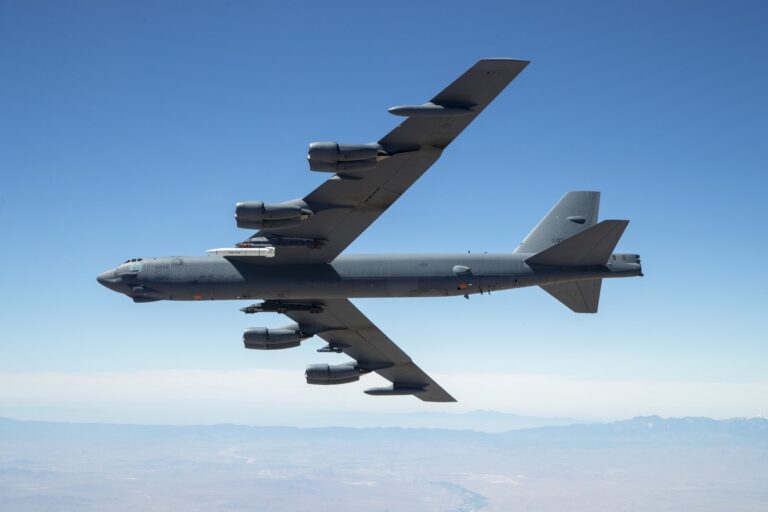
The program’s revival directly addresses the testing failures that led to its initial shelving in 2023. The demise of the ARRW procurement path began after a failed test launch on March 13, 2023, when a missile fired from a B-52H Stratofortress off the California coast did not perform as required.
Former Air Force Secretary Frank Kendall subsequently testified to Congress that the tests were unsuccessful and that the data obtained was insufficient for validating the system’s operational readiness. Consequently, USAF leadership at the time decided to halt follow-on procurement of the AGM-183A, intending to divert resources toward the Hypersonic Attack Cruise Missile (HACM) program being developed by Raytheon and Northrop Grumman.
However, internal advocacy persisted. Andrew Hunter, then-Air Force acquisition chief, recommended in written testimony that the program not be completely abandoned, urging the completion of All-Up Round (AUR) test flights to gather necessary data for future hypersonic initiatives and potential leave-behind capabilities.
The current contract effectively validates the lessons learned from those earlier failures. By proceeding to production despite the 2023 setbacks, the Air Force acknowledges that while the initial prototypes did not meet all criteria, the underlying technology remains a credible option for penetrating advanced air defense systems.
Platform and Future Capabilities
The AGM-183A is designed to be launched from standoff distances, allowing U.S. combatant commanders to strike fixed, high-value targets deep inland or against enemy military bases without exposing aircraft to the range of hostile air defenses.
Documentation indicates that once fielded, the weapon will likely be integrated onto the B-52H Stratofortress and the B-1B Lancer bombers. The Air Force has described the system as a flexible and rapid response option specifically tailored for highly contested environments.
The revival of the ARRW program underscores the Pentagon’s continued prioritization of hypersonic capabilities, even as it simultaneously pursues alternative platforms like the HACM. This dual-track approach suggests that while the AGM-183A faced significant hurdles in its initial configuration, the strategic imperative for air-launched hypersonics remains intact.
Increment 2 and Future Variants
The current production contract is not the final stage for the AGM-183A. Earlier this year, the service added a $345.7 million request in its FY2027 budget specifically designated for the weapon’s Increment 2 phase. This funding stream supports further development beyond the initial production run, signaling a long-term commitment to evolving the platform’s capabilities and integrating new technologies into the existing design.
This evolution extends beyond simple manufacturing scaling. There are already plans for another variant that will be able to use an all-new seeker to hit moving targets, including enemy warships. This shift in targeting capability represents a significant doctrinal change, moving the weapon from primarily striking fixed infrastructure to engaging dynamic naval assets. Such versatility ensures the system remains relevant as adversary tactics evolve.
The flexibility of the program also suggests that other aircraft with sufficiently large payload capacities and physical space could potentially carry AGM-183As or variants thereof in the future, even though integration has been confirmed for the B-52H Stratofortress and the B-1B Lancer bombers. By maintaining this open architecture approach, the Air Force ensures that hypersonic reach remains accessible across its strategic bomber fleet without being limited to a single airframe type.
Technical Solution: How the Boost-Glide Design Overcomes Air Defenses
The AGM-183A employs a specific boost-glide architecture to evade detection and interception. A solid-rocket motor booster propels the weapon to the upper atmosphere, where it reaches optimal speed and altitude. At this point, the nose cone separates, releasing a wedge-shaped, unpowered glide vehicle concealed within. This design allows the weapon to travel along a relatively shallow flight path within the Earth’s atmosphere, distinguishing it from ballistic trajectories that follow higher arcs.
Once released, the glide vehicle maneuvers erratically while maintaining speeds up to Mach 15. This combination of extreme velocity, low-altitude trajectory, and unpredictable movement creates significant challenges for adversaries attempting to spot, track, and intercept the weapon. The erratic nature of the flight path, combined with the high speed, makes it difficult for air defense systems to maintain a continuous lock on the target, thereby enhancing the weapon’s survivability in contested environments.
Furthermore, the system relies on kinetic energy rather than conventional explosives to achieve its destructive effect. At hypersonic speeds, the sheer force of impact is sufficient to destroy high-value targets, including hardened infrastructure and surface warships. This kinetic approach eliminates the need for a massive explosive warhead, allowing for a more streamlined design that can be launched from standoff distances. By striking from outside the range of many air-defense systems, the AGM-183A enables the Air Force to hold fixed, high-value targets at risk without exposing launching aircraft to hostile fire.
Sources
- USAF Orders ARRW Hypersonic Missile Into Production, The Same Weapon It Nearly Cancelled
- U.S. Air Force Moves AGM-183A ARRW Hypersonic Missile Into Production
- USAF Revives "Shelved" AGM-183 ARRW Hypersonic Missile Program With $694M Lockheed Contract
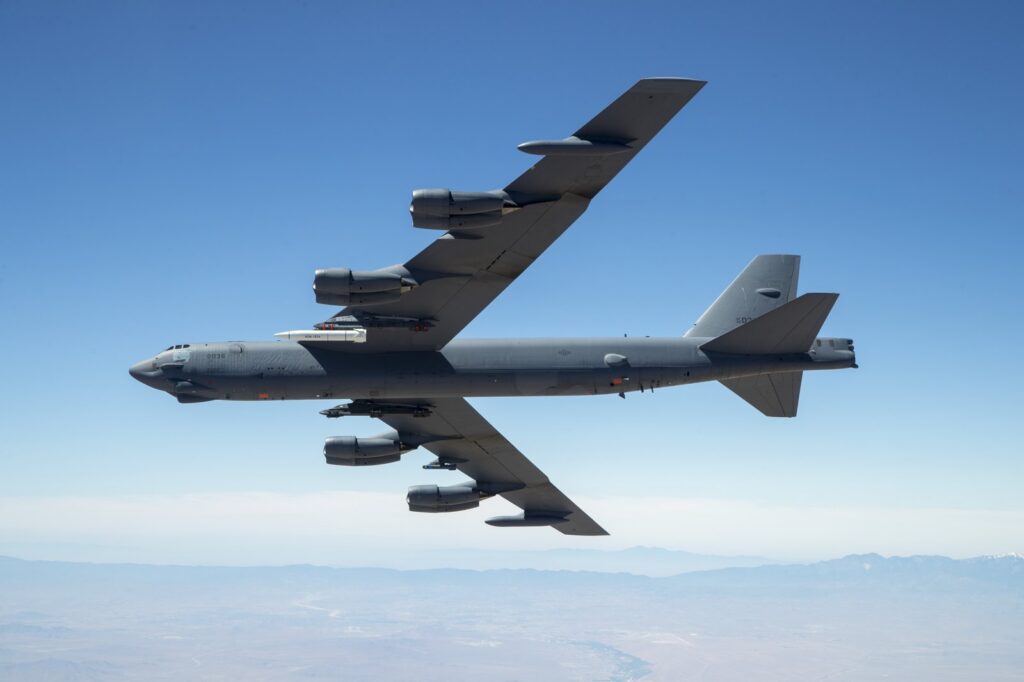
Photo: U.S. Air Force / Christopher Okula (Public domain)